

Inside Baseball PR Strategies Only Impress Other PR People
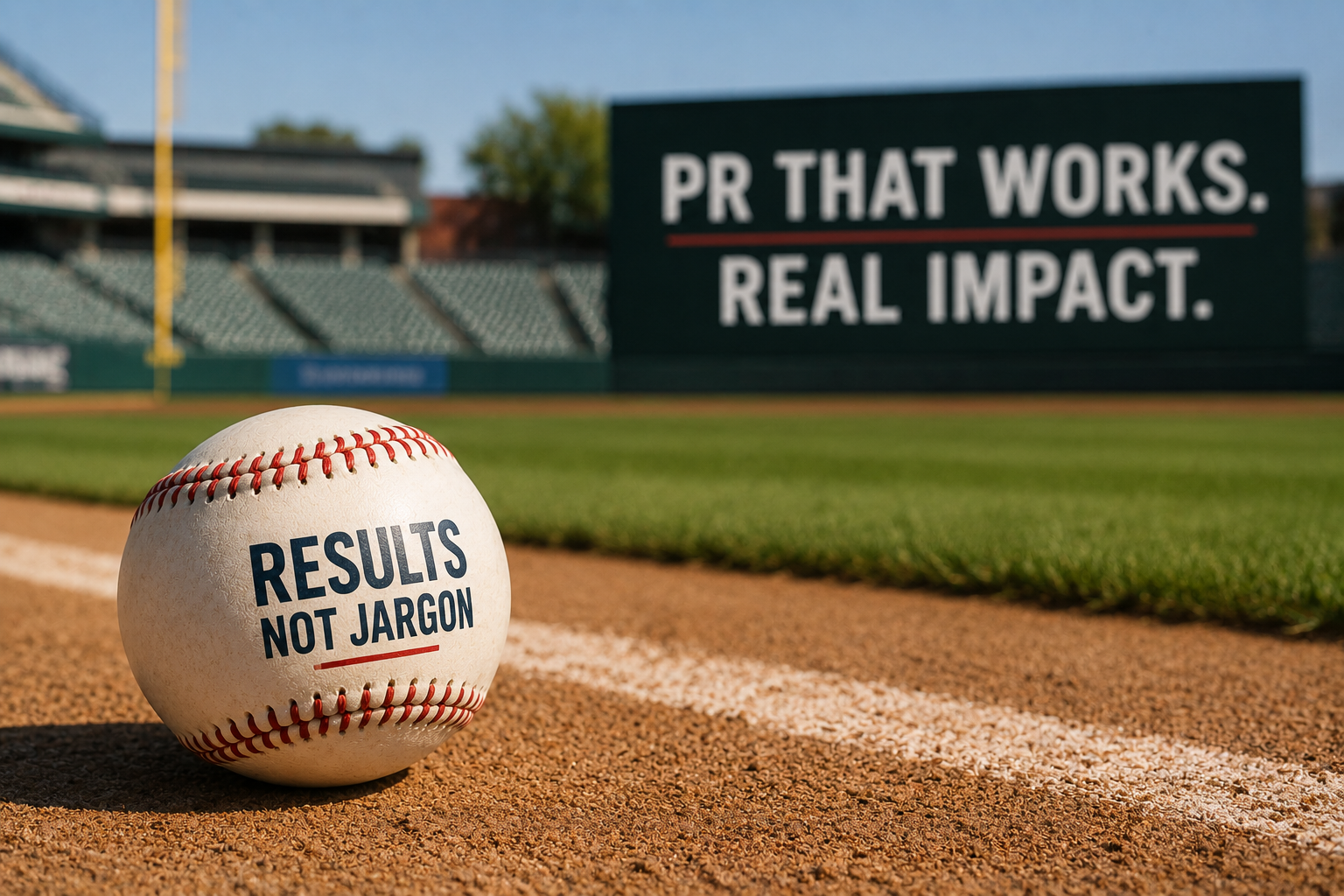
A prime reason public relations pitches to the media go unanswered may be that PR practitioners spend too much time developing “inside baseball” strategies that appeal mainly to others in the business.
The internet is full of examples showing how PR people consistently try to improve their SEO — short for search engine optimization — or how they measure media placements in relation to what it would cost for a client to purchase the space. This is perhaps one of the most nonsensical measurements in public relations because print articles, unlike advertising, rarely contain the talking points clients want.
PR people often spend hours quibbling over “strategies,” “tactics,” and “objectives” that the media has no interest in, and often clients don’t either. During a pitch to a high-ranking Gillette marketing executive when I was at Burson-Marsteller, during the days when it was the leading international agency, he interrupted the upfront portion of a presentation describing “who we are, where we are and what we do” and said, “Enough of that. We know our objectives. We gave you our objectives. Just tell me how you are going to achieve them.” (More on this later.)*
Some PR people still cling to tenets of the business that, in my opinion, no longer make sense, like keeping the pitch short, “getting ahead of the story,” insisting an immediate response during a crisis is always necessary, or releasing bad news on a Friday or holiday. That may have made sense decades ago before the 24/7 news cycle. Now, releasing bad news on a holiday or weekend often means follow-up coverage continues into the next workweek. It’s a technique that can turn a one- or two-day negative story into a four- or five-day one.
Story mining and storytelling are among the newer concepts promoted by so-called PR thinkers. But how does it help a client if the stories don’t include the client’s key talking points? In my opinion, it doesn’t.
Other hot-button PR strategies agencies tout include AI, media monitoring, proactive crisis preparation, Generative AI & Data Integration, AI-Driven Crisis Management, Generative Engine Optimization, AI and Data-Driven Insights, Owned Content Ecosystems, Influencer & Brand Ambassador Partnerships, Hyper-Local & Community Engagement, Founder-Led Branding, Social and Real-Time Marketing, Editfluencers, Search-Sourced Storytelling, Hallucination-Proof Messaging, Zero-Click Reputation, Dynamic Press Kits, Citation Parity, PR-Linked Prompts, Multi-stakeholder Orientation, Two-way Engagement and Emergent Strategies, along with a growing list of agency-created terms designed to impress clients instead of simply explaining ideas in plain English.
It’s as if agencies are telling clients they have invented something unique, when in reality most of these techniques are available to any agency, and many have existed for years in one form or another.
Example: Media monitoring is nothing new. It used to be done by clipping services searching for negative articles about a client; only the technology has changed. And I’ve practiced what is now called proactive crisis preparation for decades, except I called it “defensive PR” and stressed the importance of a “what if” strategy. Of course, advances in technology have made new tools available. But despite all the advances, what many clients still want are old-fashioned media placements that contain their talking points, not mumbo jumbo PR language.
Over the years, clients have told me they are not impressed when an agency says it is using the latest techniques. They expect agencies to stay current.
AI is the newest hot-button tactic that PR agencies tout, but it does little to help a client achieve positive media results. In fact, it can sometimes have the opposite effect because it can stifle the creativity of people who rely on it to craft story ideas and PR programs that are supposed to be unique.
*At Burson-Marsteller, during the days when it was the leading worldwide agency, in addition to managing a significant portion of the Gillette account for nine years while overseeing flagship international accounts, I also advised other divisions of the account that I did not directly manage. A top Gillette marketing executive demanded that I remain on the account when Burson management wanted to remove me after my seventh year, telling management, “Arthur doesn’t try to impress us with fancy mumbo jumbo talk. He speaks in plain English and keeps providing new, workable creative media approaches that freshen the account every year and get results.”
All the new-age techniques agencies tell management they are using will not keep an account from leaving unless those techniques produce results. Call me old-fashioned, but in my opinion, creative brainpower — not AI or the latest “inside baseball” PR techniques — is what’s necessary to craft programs that attract the attention of journalists, who care only about the news value of what you pitch, not the tools you used to create it.
(Re: AI: It’s not that I don’t believe AI can be useful in some circumstances. But when it comes to assessing and evaluating a client problem and suggesting creative, unique approaches, AI is no match for the human brain.)
During my many years in the business, I’ve often heard clients say during presentations, “Tell us what your plans are to get the results we want.” And during half-year reviews, I’ve heard clients ask, “Show me the results.”
But I’ve never had a client ask, “Tell me how AI, media monitoring, proactive crisis preparation, Generative AI & Data Integration, AI-Driven Crisis Management, Generative Engine Optimization, AI and Data-Driven Insights, Owned Content Ecosystems, Influencer & Brand Ambassador Partnerships, Hyper-Local & Community Engagement, Founder-Led Branding, Social and Real-Time Marketing, Editfluencers, Search-Sourced Storytelling, Hallucination-Proof Messaging, Zero-Click Reputation, Dynamic Press Kits, Citation Parity, PR-Linked Prompts, Multi-stakeholder Orientation, Two-way Engagement and Emergent Strategies will guarantee results.”
Nevertheless, PR practitioners continue talking about these “inside baseball” techniques as if they somehow guarantee better results than good old-fashioned PR know-how and the ability to develop storylines that appeal to journalists.
Clients certainly are not impressed by account handlers using contrived PR terminology. Journalists certainly aren’t. There’s only one way to impress clients: Deliver the results they want within the agreed-upon budget and timeframe.
All the new techniques an agency brags about, along with the glibness of account handlers, will not keep a client from walking away if they are dissatisfied.
One of the highest compliments I ever received from a client came when John Folan of the Gillette Company told me, “Whenever I speak to you, I feel like I’m talking to a reporter. You always question everything.” And I kept questioning until Gillette decided to drop the national promotion I was leading because of increased rights fees demanded by Major League Baseball.
And I never used made-up PR jargon.
Disclaimer: The opinions expressed in this article are those of the author and do not necessarily reflect the views of CommPRO or its affiliates