

What “Ask Eddie” Reveals About the Future of Public Relations in the AI Era
Are you ready to “Ask Eddie”?
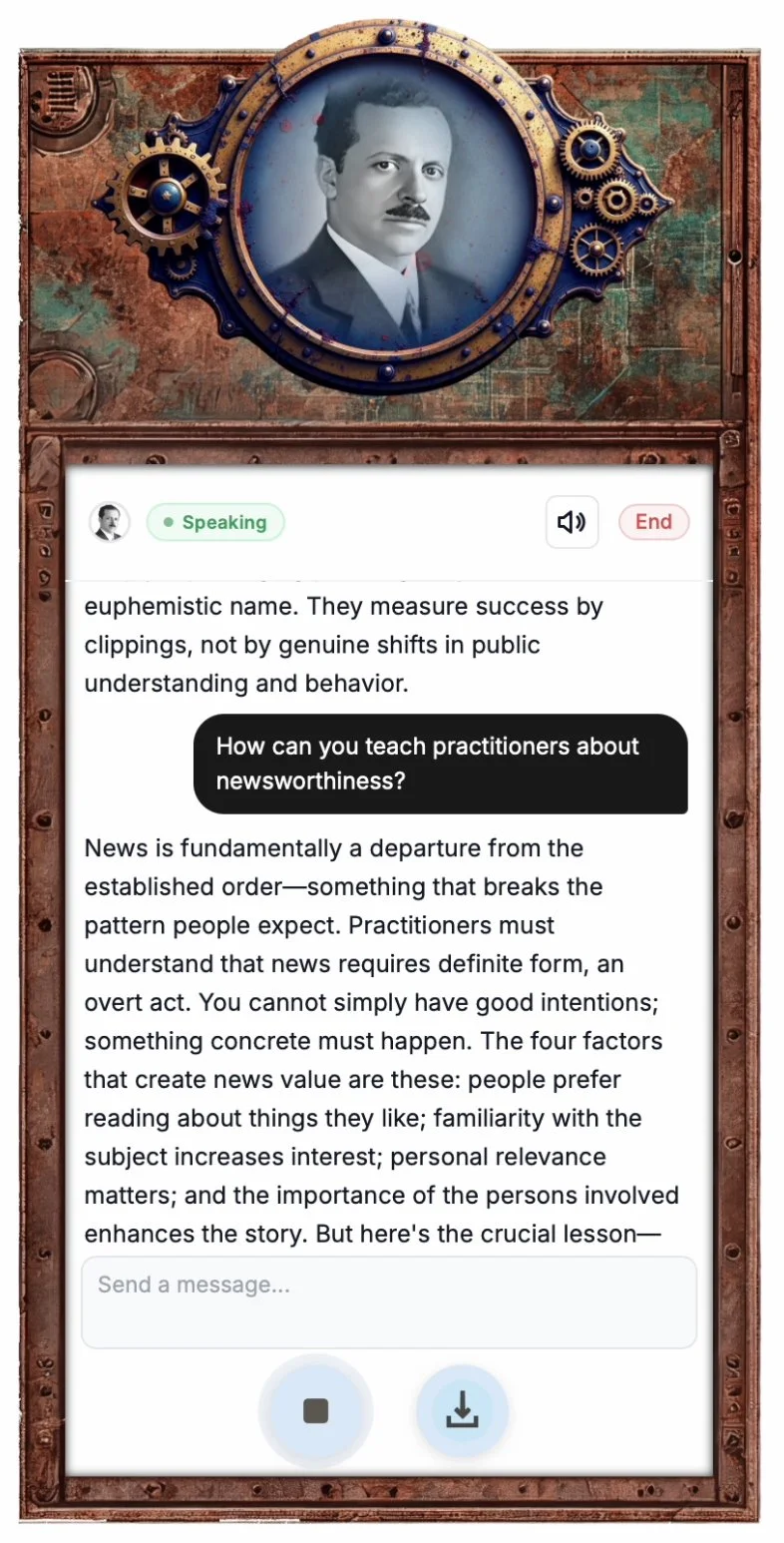
The PRMuseum just launched what may be the first-of-its-kind large language model built entirely around the writings, philosophy, and recorded voice of a single public relations figure, and it’s opening up a much bigger conversation about earned media, credibility, and what the future of public relations may actually look like in the AI era.
“Ask Eddie” is an AI-powered platform that allows users to engage in live conversations with Edward L. Bernays, widely considered one of the founders of modern public relations. Built from more than one million words of Bernays’s writings, and trained using recordings of his actual voice, the experience allows students, educators and communications professionals to ask questions directly and receive responses generated entirely from his documented thinking and philosophy.
“Ask Eddie” was developed in partnership with Edelman, using AI modeling techniques informed by its Archie AI Personas methodology, which organizes and prepares material for AI training, defines tone and behavioral characteristics, and applies guardrails and quality checks to the platform’s output.
Visitors to PRMuseum.org can now interact directly with Bernays in real-time conversations about public relations, media, persuasion and the evolution of communications itself.
Yes, the technology is very cool. And honestly, it’s a little surreal.
But after spending time talking with PRMuseum founder, Shelley Spector, I realized pretty quickly that the real story here is not the AI itself. The real story is the conversation this platform opens up about where the communications industry is right now and what skills the next generation of PR professionals may actually need moving forward.
What I expected to be a straightforward conversation about a new educational resource turned into a much deeper discussion about earned media, credibility, journalism, social platforms, influencer culture, AI search, and whether younger communications professionals are entering the industry with enough understanding of what public relations was originally built to do in the first place.
Spector was very candid throughout our discussion. One of the themes she kept returning to was the idea that while technologies constantly evolve, the core principles behind strategic communications really have not changed all that much.
“One thing that Eddie says a lot,” she explained, “is that he’s lived through the rise of so many communications technologies … radio, newsreels, television. But the basics of public relations never change.”
And that feels especially relevant right now because the industry is in the middle of another massive shift.
AI-generated answers are changing how people discover information. Search behavior is changing. Media consumption is changing. Younger audiences are increasingly getting their news from creators, influencers, Reddit threads, Substack writers, podcasts, and algorithmically surfaced content instead of sitting down with traditional publications. Meanwhile, communications professionals are trying to figure out what all of this means for earned media, reputation management, and visibility in an AI-driven world.
That’s where the conversation got really interesting.
Spector believes AI may actually create renewed value for earned media and credible third-party validation. She argued that as AI systems increasingly pull information from trusted online sources, communicators may need to refocus on creating legitimate newsworthiness and authoritative visibility instead of relying so heavily on self-published or purely promotional content.
We discussed the reality that today’s media ecosystem is far more fragmented and personality-driven. There are creators and podcasters with audiences larger than many legacy outlets. There are trusted independent journalists building communities on Substack. There are entire generations consuming information socially and conversationally rather than institutionally.
But her broader point still landed.
As AI increasingly becomes the intermediary between audiences and information, understanding how to create content that is viewed as authoritative, objective, and genuinely newsworthy may become one of the most valuable skill sets in communications again.
And that’s really where “Ask Eddie” becomes much more than a museum project or educational novelty.
At one point, Shelley shared a story that clearly stuck with her. She recently interviewed a student for an internship and asked to see a pitch letter. “He didn’t know what that was,” she said.
When students visit the PRMuseum, Shelley talks to them about the importance of understanding what actually makes something newsworthy, how to identify trends, how to research audiences and how to create public interest around an idea without sounding overly promotional.
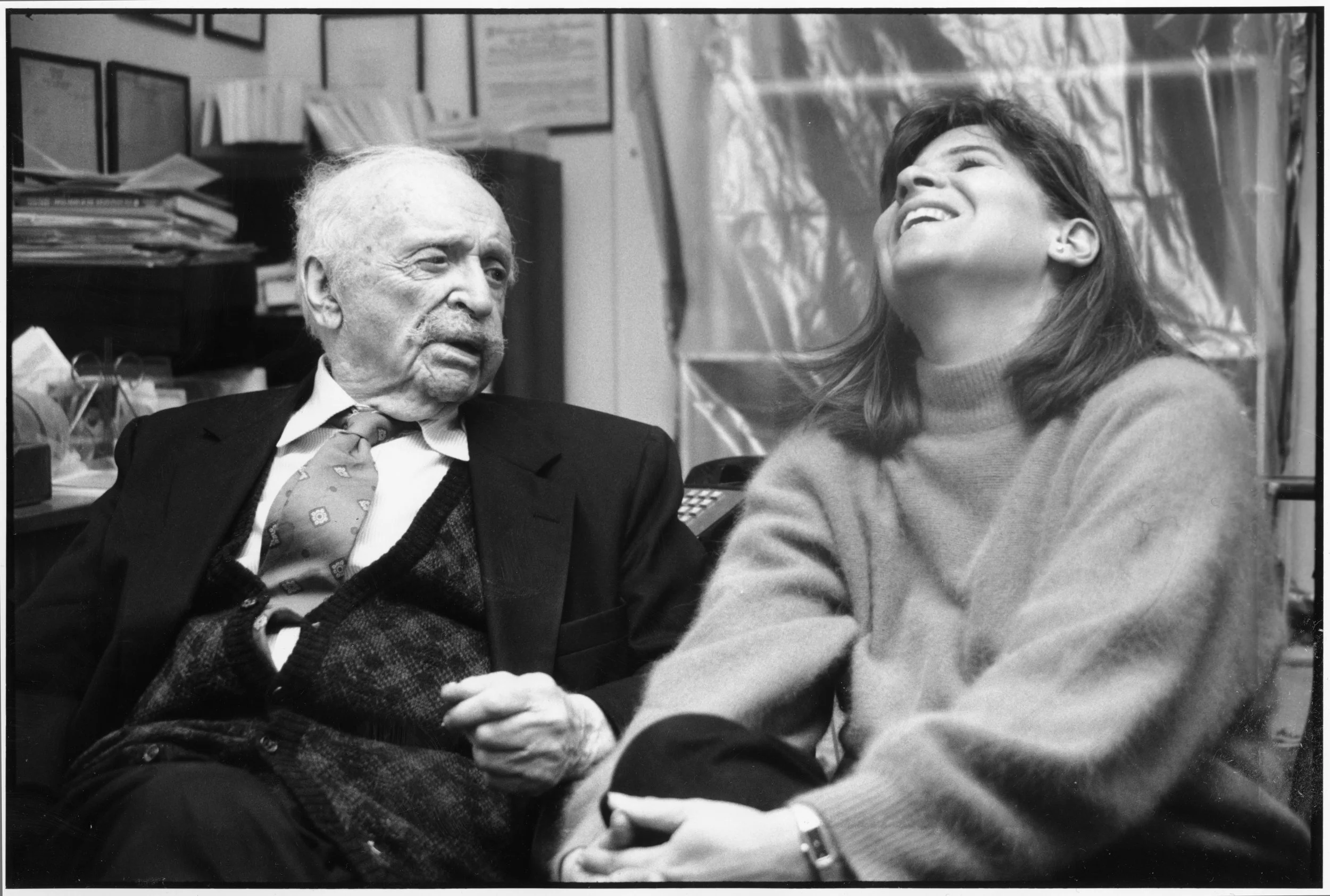
Edward L. Bernays and Shelley Spector, 1987 (Photo credit: Barry Spector)
And listening to her, it became very clear why “Ask Eddie” matters.
Because you can now literally ask Bernays those questions directly.
What makes something newsworthy?
How do you shape public opinion?
How do you align a client’s interests with the public’s interests?
How do you build credibility?
How do you create earned attention instead of simply chasing visibility?
For educators, this creates an entirely different kind of classroom experience. Instead of reading static historical material, students can actively engage with the philosophies behind the profession and challenge them in real time.
For agency leaders and communications executives, it also creates an opportunity to revisit important questions about where the industry is going. Are we teaching younger professionals enough about journalism? About media strategy? About credibility? About how influence actually works beyond algorithms and engagement metrics?
And maybe most importantly, “Ask Eddie” reminds the industry that while communications technologies constantly reinvent themselves, the underlying human dynamics behind trust, persuasion, and public opinion remain remarkably consistent.
That ultimately became the heart of my conversation with Shelley Spector.
The PRMuseum is not simply recreating the voice of Edward L. Bernays.
It’s using AI to reopen a very real conversation about what public relations was originally built to do, what skills may have been lost along the way, and why some of those century-old fundamentals may become even more important in the AI era ahead.
And maybe that’s the real irony of the AI era: one of the most important conversations about the future of communications may be coming from a voice that first shaped the industry more than 100 years ago.
