

“The Media” is No Longer Relevant
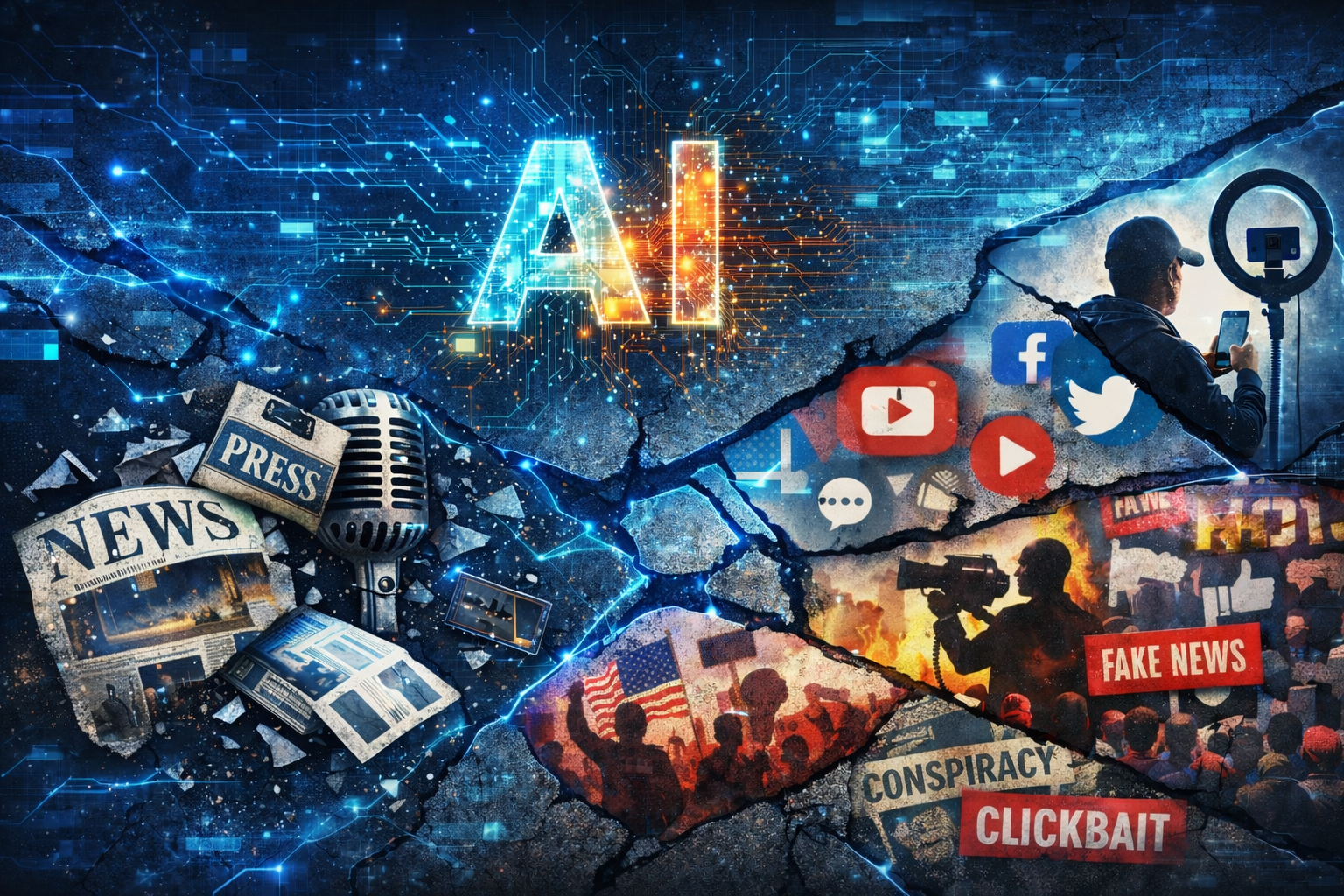
The idea of “the media” is a hangover from an increasingly distant past. A time when professional values of journalism were shared across channels, broadcasters and broadsheets. It was relevant at a time when we could rely on news to be based on the truth, reporting and facts, even if it leant left or right of a center that truly was a middle ground.
I say this without idealizing the imperfect institutions I grew up with, and without casting aspersions on mainstream media organizations that continue to prioritize the truth over politics – I’m looking at you 60 Minutes newsroom team, The New York Times, and the BBC.
There will be many that disagree with me. Depending upon the definition, for some FOX may be mainstream at least by the measure of viewership, if not by accuracy and partisanship.
The gap between publications and channels in the current media landscape underscores how much the idea of “the media” has unraveled. This is before we look beyond traditional sources of news and add in social media, YouTube, and self-publishing where citizen journalists and influencers ply their trades in the pursuit of clicks. In the clickbait economy, opinion drives views, and facts are all too often an inconvenience that get in the way of money making or ideology. The news landscape now fractured into a million atomized sources in which outrage is both equal and opposite to entertainment.
The idea of “the media” continues to live zombie-like, kept alive by both those who would use the term as a slur for organizations that do not toe the Trump administration’s line, and others who laud it with references to the fourth estate and as a pillar of democracy.
Journalists and communicators continue to use the term as though it continues to have meaning. But when used as a catchall from FOX to The New York Times, the only weight it carries is the plurality of platforms not a shared sense of journalistic values.
We would do well to move on. We need a new lexicon to differentiate between fact-based reporting and analysis underpinned by the values and ethics of journalism, in contrast to propaganda and opinion. Leading news organizations are putting a stake in the ground with campaigns to differentiate their offerings from “news slop.” The facts, clarity and calm campaign from NBC News is a case in point. MS NOW’s “We the People” is another example.
In the same way technology has untethered journalism from its roots, it has the potential to play a significant role in bringing us full circle. Content authentication to help audiences know the provenance of content and its authenticity, fact checking, trust and even some AI tools all potentially offer ways to sort wheat from the chaff, ensure balanced perspective, deeper insight into sources of information, and accountability.
Asking people to check facts or sources is not an unreasonable expectation when content is high value, but for most the inertia of inaction will be a more compelling force. To expect anything different is to tilt at windmills.
If we are to stop using “the media” as lazy shorthand for all that is good or bad about today’s sources of information, we need to ask what do we use in place? Absent the widespread adoption of terms such as fact-based or professional news media, at a minimum qualifying what we mean when the term is used or focusing on specific organizations that merit trust is essential.
Simply recognizing that “the” in front of media (or numerous other terms) is no longer fit-for-purpose is a starting point. It should help us avoid falling into the trap of seeing news organizations as one-size fits all. Starting now, we need to be far more specific about how we refer to the organizations and people who use and abuse the media mantle.