

Howard Stern’s Fade from Influence Is Proving Legacy Media No Longer Commands Attention
The Howard Stern Show is nearing the end of its run at SiriusXM, according to a report from The Sun. While contract headlines and celebrity speculation will capture public attention, communicators should focus on the bigger issue. Media is evolving, and so are the platforms and personalities that matter in a successful media relations strategy.
According to a report in The Sun, Stern’s five-year, $100 million contract is up in the fall. SiriusXM may present an offer, but a source close to the matter says the company does not expect Stern to take it. “Sirius and Stern are never going to meet on the money he is going to want. It’s no longer worth the investment,” the insider said.
That alone should raise questions. Howard Stern has been a defining voice in radio and a tentpole for SiriusXM’s identity. So why walk away? The answer sits in the data. And for marketing communicators, it is where the real story begins.
This decision is about more than cost. It reflects how the show’s digital footprint has declined and failed to keep up with changing audience behavior. Data from Tubular Labs shows Stern’s YouTube channel lost 31% of its U.S. unique viewers over the past year, dropping from 4.5 million in June 2024 to 3.1 million in June 2025. U.S. watch time declined by the same margin, from 31.4 million minutes to 21.7 million, placing Stern’s page at No. 153 among entertainment, film and movie media brands.
Stern’s YouTube performance now lags behind outlets like Complex and Pawn Stars. While the channel did outperform FailArmy and Variety in June, it has not produced breakout content. Only four videos exceeded 1.5 million views in the past year, and none surpassed 2.8 million. The top performer was a Lady Gaga live performance, likely appealing to audiences beyond Stern’s usual fan base.
This is not a blip. It is the result of a misaligned video strategy at a time when media is defined by how well content travels on digital platforms. Just 13% of uploads were under one minute long, and fewer than one in five were vertical Shorts. While most videos were under five minutes, the channel lacked consistent use of full-length episodes or purposefully designed segment clips. For comparison, other radio and podcast programs now upload entire episodes to YouTube, creating a lean-back viewing experience.
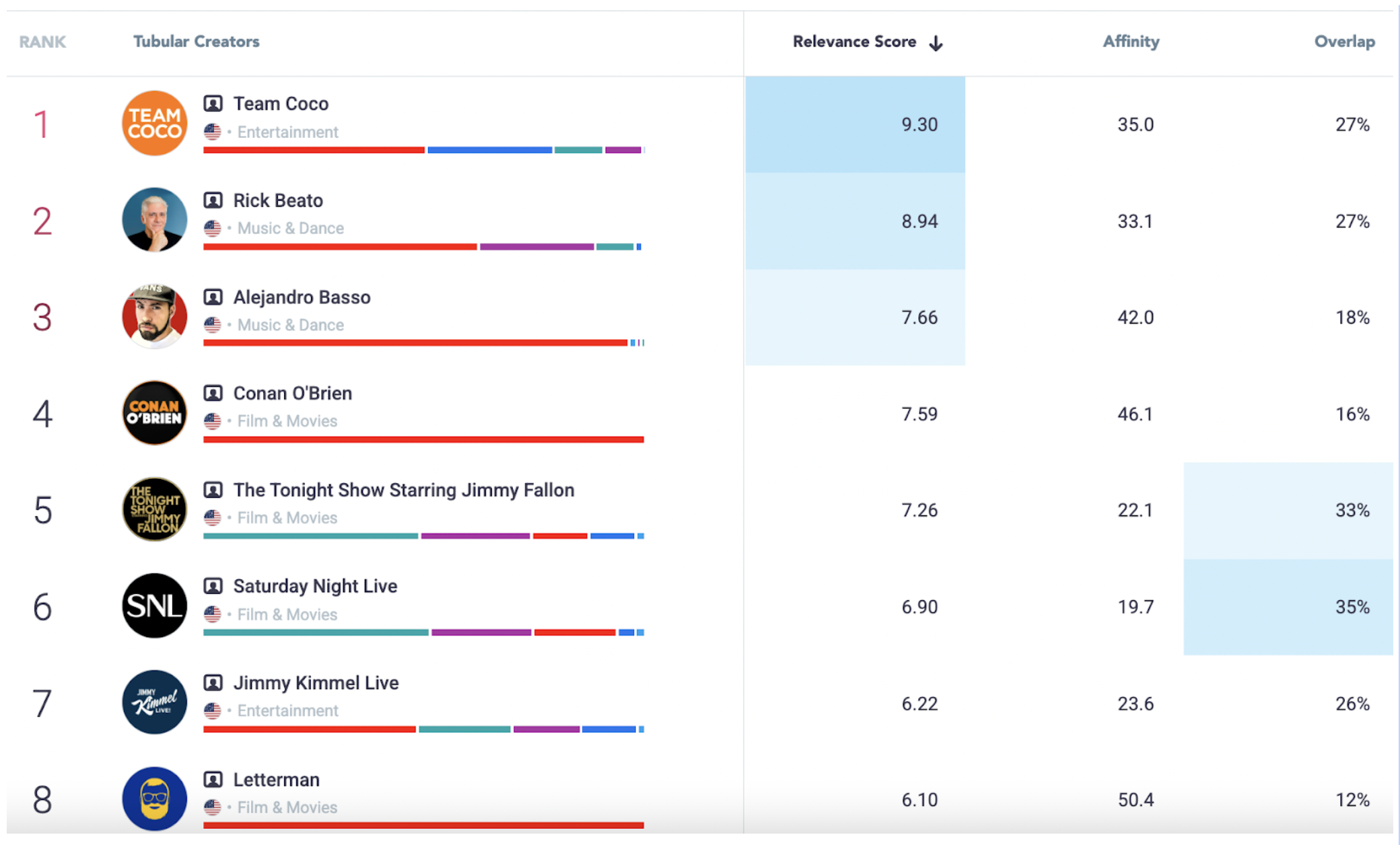
What else is Howard Stern’s audience watching? Source: Tubular Labs
Meanwhile, other shows, some of them direct competitors, have adapted. Late-night programs like SNL and Conan O’Brien upload next-day highlight clips designed for mobile viewing. They distribute long-form interviews in full and use Shorts to generate discovery. Their strategy meets the moment.
Stern’s does not.
And that’s the takeaway. For media relations teams, platform matters. Format matters. Distribution matters. If you are still prioritizing media targets based on traditional outlets, legacy titles or name recognition alone, you are likely missing where influence is actually happening.
The data also highlights demographic limitations. In June, 84% of Stern’s U.S. YouTube audience were men over the age of 13, with nearly 40% over 45 years old. This may offer value for campaigns targeting mature male viewers, but it limits broader appeal and cross-platform engagement.
There is a larger shift taking place. The next generation of influence is built by social-first publishers, creators who understand audience behavior, and video strategies optimized for relevance and just not reputation. Being known is no longer enough. Being watched and shared is what matters.
Legacy media brands and personalities are no longer guaranteed to deliver influence or impact.
This moment echoes the challenges facing The Late Show with Stephen Colbert, another legacy platform trying to keep pace with shifting audience behaviors. As CommPRO has reported, Colbert’s cultural relevance in the late-night space has leveled off, even with critical recognition and network backing. Both Stern and Colbert rose to prominence in a media environment shaped by centralized distribution, scheduled programming and a predictable relationship between platform and viewer. That framework no longer holds. For communicators, the message is clear: audience reach today is measured by how content performs on social platforms, not by the history of the brand or the size of the stage.
The next generation of media targets will not come from a programming schedule or a press contact list. They will come from digital-first channels, creators who understand distribution, and platforms that reward relevance and shareability.
For decades, Howard Stern defined shock radio and drove national conversations. But even icons must evolve or be left behind. The same is true for brands and for the agencies that represent them. It is time to reimagine who belongs on your media list.