

Why Sports Broadcasters Stay Silent While Print Journalists Tell the Truth
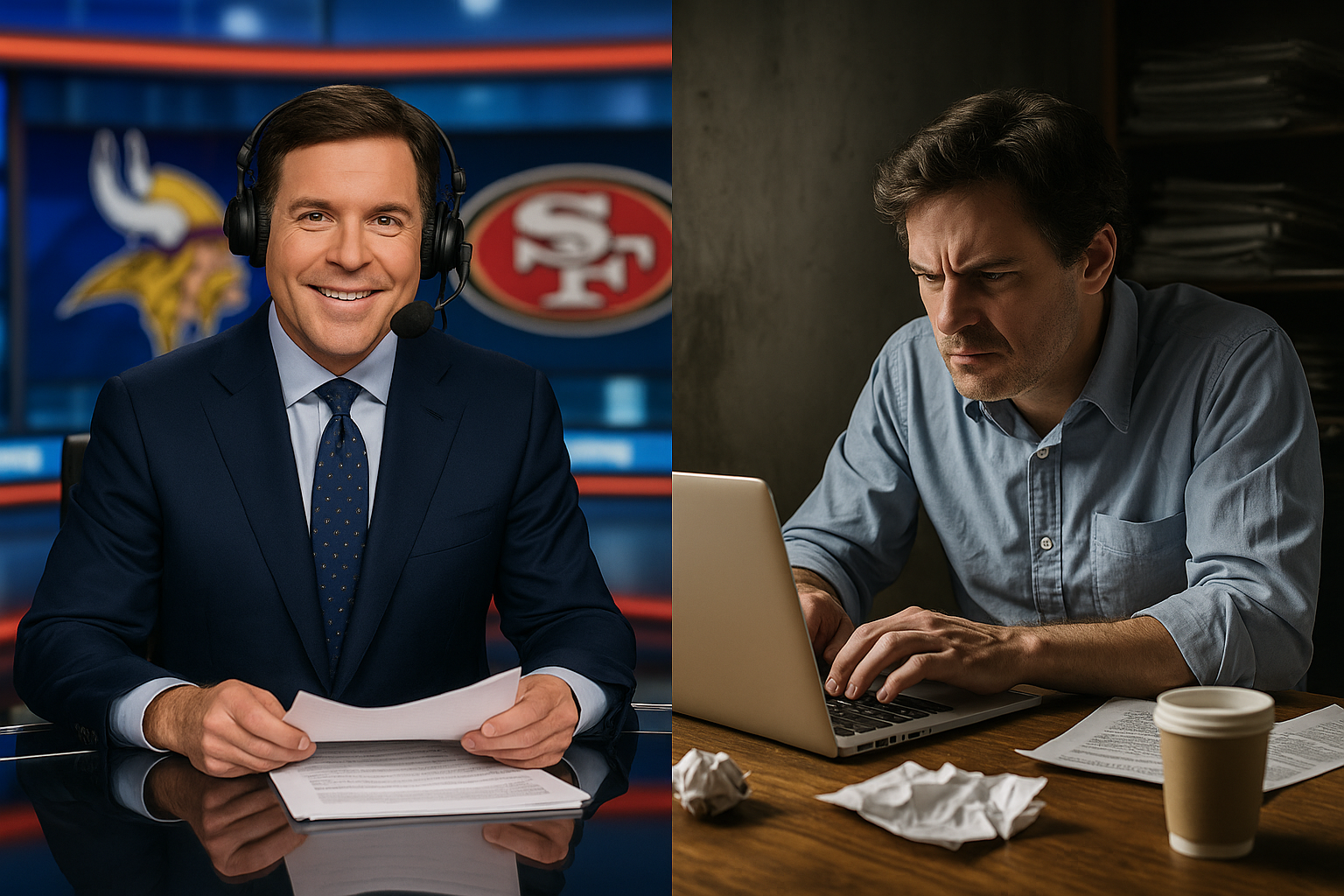
When I was a novice sportswriter many years ago, there were two unwritten rules among many scribes: 1) If it didn’t happen on the playing field, it’s not a sports story; and 2) Don’t write anything that will upset the teams, leagues or athletes.
I disagreed with those rules and wrote a story about a high school football coach’s unsportsmanlike and dangerous training methods. My editor tore it up and said, “We can’t print that. If we do, the league will be mad at us.”
Today, that article would be on page one of many newspapers.
Today, the overwhelming majority of print sportswriters tell it like it is, even if it upsets teams, leagues or players. Not so with many broadcasters, because I believe that their jobs depend upon not saying anything that will upset the moguls who control the sports industry, with Bob Costas an exception. (More on Costas later.)
That’s not to say that sports broadcasters never report on the seamy side of sports. But unless an incident makes page one news, most of the announcers I’ve heard either underplay negative sports news or often ignore it. They act more like fans, less like reporters. (A prime example is the Olympic broadcasters of NBCUniversal, who act as a PR arm of the International Olympic Committee, in my opinion, by ignoring Olympic-related controversies before and during an Olympics and are not critical when the IOC awards its propaganda-rich games to totalitarian and warmongering countries.)
Even though I strongly believe that the only way to learn the entire story of a sports (and non-sports) happening is to read a respected print publication, there is no doubt in my mind that would-be sports journalists would choose a career behind the mic over one at a newspaper.
There is a new book that all would-be sports broadcasters should read. It is Sportscasting in the Digital Age: More than the Game, a textbook “that not only dives deep into the ‘how to’ of sports play-by-play, but also gives students a broader understanding of the sports media industry and how to find their place in an ultra-competitive business.” The book also contains many aspects of the business that would be of interest to general readers.
The author is Professor John McGuire, who after a 16-year career covering news and sports and calling more than 300 sporting events, put down the mic to begin a career as an educator at Oklahoma State University, where he is now the Welch-Bridgewater Sports Media Chair.
While the entire book contains information that every wannabe announcer should know and remember, a chapter titled “The ‘Face’ of the Team” was a revelation to me.
It begins by saying what I already know: that the most powerful individuals in the sports announcing business are not the big-name announcers, but the little-known executives who make the multimillion-dollar decisions on sports rights deals and decide who should be the face of the broadcasts.
[The importance of the above paragraph—and the power of the behind-the-scenes executives who make all the decisions—was especially apparent during the past football season, in my opinion.
Behind-the-scenes boardroom executives demoted Greg Olsen, arguably the best football analyst on television, to the Fox B team because Tom Brady, an unknown broadcast talent whose analysis was criticized throughout the season, nevertheless was allowed to remain on the 2025 TV Super Bowl broadcast team. It was obvious throughout the season that reading this book and spending some time honing broadcast skills in the “minor leagues” of broadcasting could have helped him.]
I knew about the power of the suits, but what I didn’t know was how important the proper use of social media can be in helping would-be and novice broadcasters become better known. Professor McGuire clearly explains why young sportscasters should use social media to their advantage and tells them how to do it.
In the chapter on the use of social media, Professor McGuire writes, in part, that the proper use of social media can help a young broadcaster begin building a brand that can advance a career. He says profiles on sites like LinkedIn and YouTube provide places for a demo reel of their work. Also, social media provides platforms for networking and building relationships on which someone can provide commentary about sports happenings that can position the person as an expert. (In my opinion, some of these tactics are easily transferable to novice and experienced PR practitioners who are seeking to become better known in the PR world regardless of the accounts they work on.)
While written as a textbook for would-be sports announcers, Sportscasting in the Digital Age: More than the Game also provides valuable insights that can apply to non-sports announcers and to the general viewing public that thinks becoming a sports broadcaster is just showing up on game day.
They include: preparing for game day; roles of the sportscaster; unique aspects of calling specific sports; calling the game for both radio and television; conducting interviews; sports network operations; working with advertisers; and how to be “the face” of the team.
There are also breakout sections with expert insight from leaders in the field—including Cubs announcer Pat Hughes and ESPN/ABC’s Dusty Dvoracek—and profiles of great interviewers such as the late Jack Buck and ESPN host and reporter Marty Smith.
Most sports announcers today that I’ve heard are overly cautious about saying anything that might upset teams, leagues, players, sponsors or networks. Perhaps it is because I was a print reporter (before transitioning to public relations as newspapers failed) who was not fearful of upsetting executives that I hope some of the students who will be the voices we admire in the future follow the lead of Bob Costas, who The Hollywood Reporter called “the conscience of NBC Sports.”
In a business that often ignores the seamy side of the sports world, Costas—unlike the vast majority of sports broadcast journalists—is not afraid of expressing opinions on subjects that other broadcasters avoid. That’s why, in my opinion, Costas should be the role model for future sports broadcasters.
Sportscasting in the Digital Age: More than the Game provides a road map showing how student wannabe announcers can prepare for a career in sports broadcasting and how novice announcers can advance from the minor leagues of announcing to the big leagues.
This is a book that everyone who aspires to be a sportscaster should read. And it also provides insightful information about the sports broadcasting business and the education of a sports broadcaster for anyone who tunes in a game on television or listens to one on radio.