

Fred Garcia on What It Really Takes to Become a Trusted Advisor
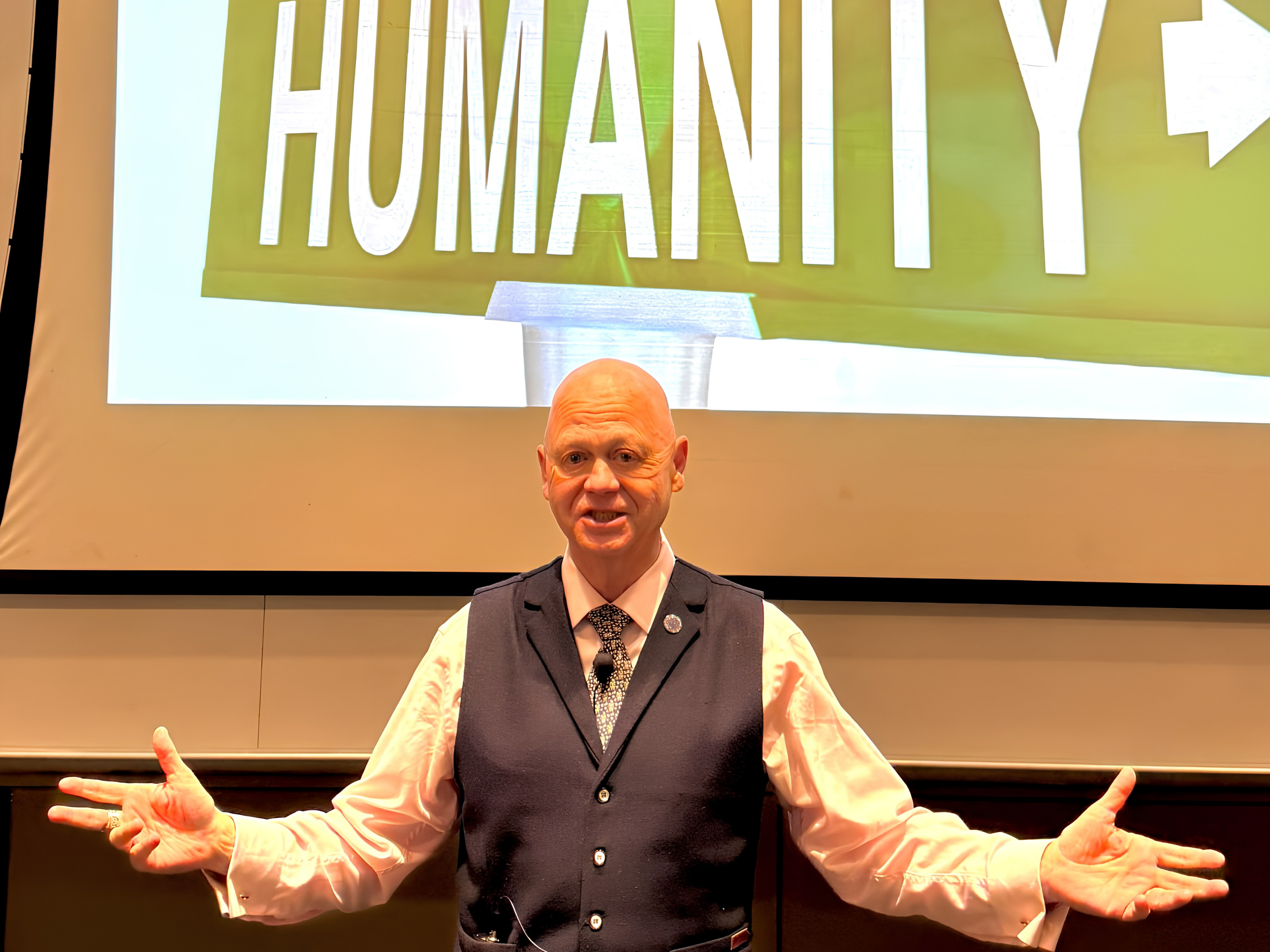
Photo credit: Claire Tsai
Editor’s Note: In the first of a two-part CommPRO conversation, Helio Fred Garcia reflects on his 43-year relationship with James E. Lukaszewski, the lessons behind Influencing Leaders and why real influence has far less to do with getting a seat at the table than with becoming someone a leader trusts when the stakes are high.
I've known Fred Garcia for years, and every conversation with him seems to go well beyond the question I originally planned to ask. That was certainly the case when we sat down to talk about Influencing Leaders, his newly released book with James E. Lukaszewski.
The book gave us the reason for the conversation, but what followed became something much broader and, I think, much more important. We talked about mentorship, leadership, trust, judgment and the role communication professionals can play when they stop defining themselves strictly by their function and begin thinking more seriously about what leaders actually need from them.
Fred has spent much of his career advising CEOs, university presidents, senior military officers, government officials and other leaders facing consequential decisions, and his view of trusted counsel is refreshingly uncomplicated at its core. A trusted advisor is not there to advance a department's agenda or make the case for the communication function. The advisor is there for one reason: to help the leader succeed.
That philosophy did not come from a textbook. It grew, in part, from one of the most important relationships of Fred's professional life.
When I asked why he and Jim decided to write Influencing Leaders now, Fred didn't begin with the state of leadership or the changing business environment. He began with Jim.
"Among the many blessings that I've experienced in my career," Fred told me, "for the last 43 years, Jim has been my mentor."
Fred was only a few years into public relations when he found himself working in crisis communication, something he admits happened almost accidentally. "I didn't know anything really about crisis," he said. "I was essentially making it up as I went along."
Then he attended a PRSA meeting where Jim Lukaszewski was speaking.
Fred was so impressed that he gathered the courage to ask Jim if he could buy him a cup of coffee after the conference. Jim agreed, and over coffee Fred told him plainly, "I really want to do what you do. Could you help me learn how to do what you do?"
Jim didn't immediately take him under his wing. Instead, as Fred remembers it, he watched him.
A few weeks later Jim called and asked Fred to write a 150-word sidebar for an article he was preparing for Public Relations Strategist. Fred understood what was happening. "He was testing me, which a good mentor does."
Fred delivered. The sidebar was published and became his first professional publication. A short time later Jim invited him to participate on a PRSA panel. Then came more collaboration, writing and teaching. Years later, when Fred was recruiting faculty for NYU's public relations program, he invited Jim to join the faculty, where Jim would go on to teach for more than two decades.
About 20 years ago, Jim published Why Should the Boss Listen to You? The Seven Disciplines of the Trusted Strategic Advisor. Fred read the manuscript, endorsed it and began teaching its principles, particularly the Three-Minute Drill, to students and clients. Over time, those ideas became part of Fred's own approach to advising leaders.
Then, about three and a half years ago, Jim called again.
The book, he told Fred, needed to be updated for a world that had changed dramatically. Leadership had changed. Business had changed. The communication environment had changed. Would Fred help him refresh it?
"When your mentor asks you to refresh his book," Fred said, "there's only one answer."
Fred initially expected to play a supporting role. Instead, Jim invited him to become co-author.
There was something very moving to me about the way Fred told that story, because the arc is much larger than the publication of a new book. A young professional once sat across from someone he admired and asked, essentially, Will you teach me? More than four decades later, the two are working together to pass those lessons on to another generation.
And the lesson at the center of the book is one Fred has spent most of his career living.
When I asked him what being a trusted advisor really means today, he came immediately to the principle that anchors his thinking: "The only agenda in the room is the leader's success."
That sounds simple until you think about how most organizations actually work.
HR comes into the room with the HR perspective. Legal brings the legal perspective. Security brings the security perspective. Communication brings the communication perspective. Each is doing exactly what their function requires.
But the leader, Fred argues, needs something different.
"The leader needs someone in the room to talk about the leader's perspective."
That doesn't mean abandoning your expertise. It means getting what Fred calls "to altitude" above the function.
"You can be in any one of those functions and be a trusted strategic advisor," he said. "You just need to get to altitude beyond that function."
For communication professionals, that distinction is especially important. If the CEO sees you exclusively as the PR person, you will probably be called when there is a PR problem. If the CEO sees you as someone who helps them think through difficult decisions, you become relevant long before the issue is framed as a communication problem.
Fred has seen that difference repeatedly during his career.
He recalled a client who had been the chief speechwriter for the CEO of a large company for roughly 20 years. What Fred noticed was that the speechwriter wasn't present only when there was a speech to write. He was in the room for virtually every important decision.
Curious, Fred asked him over coffee what actually happened in those meetings.
The answer had almost nothing to do with speeches.
The CEO used him as a sounding board.
That story captures the distinction Fred is trying to make. Being in a staff function is not limiting in itself. Being seen as nothing more than the function can be.
"The trusted strategic advisor," Fred said, "gets called when they need to make a difficult decision, or discern something differently."
And that is where our conversation turned to the "seat at the table," a phrase our profession has used for years as shorthand for influence.
Fred believes we have spent far too much time worrying about the seat.
Jim's formulation in the book is much stronger: "You are the table."
Fred explains the problem through what they call the "FaceTime Fallacy." People in staff roles often equate time spent with the CEO with influence over the CEO. An invitation to the executive committee meeting feels like proof that the function has arrived.
But Fred says the more revealing moment often comes after the meeting.
The room clears, and the CEO says, "Fred, could you hang back for a couple of minutes?"
That is when the leader begins testing what they heard, sorting through competing arguments and thinking aloud about what to do next.
"That's how you move from being the representative of the staff function to being the advisor to the boss," Fred said.
That idea really stayed with me because it changes the way we should think about influence. Being present is not the same as being influential, and access is not the same as trust. The better measure may be whether the leader wants your perspective after everyone else has left and a difficult decision still needs to be made.
Fred believes that is especially important because senior leaders are often operating with less information and less candor than people around them realize.
They need someone who can recognize patterns, anticipate what may be coming and offer perspective before a problem becomes unavoidable. They also need something many internal functions find difficult to provide: advice in the moment.
When a leader says, "I have a problem," the instinct inside an organization is often to go away, conduct research, build a deck and return with a recommendation.
Fred and Jim take a different approach.
"We give advice in the moment," Fred said. "It's not our job to figure out the solution. It's our job to help the CEO or the other leader understand the challenges, the issues in making a decision, and then help the CEO make a smarter decision than the CEO would otherwise have made."
What leaders need, he said, is "unbiased, unvarnished help."
To provide that kind of counsel, the advisor has to understand much more than the immediate communication issue. You have to understand the leader's objectives, pressures and vulnerabilities. You have to understand how the board is looking at them, how investors may judge them and what consequences different choices may create.
And sometimes, before any of that can happen, you have to overcome the leader's resistance to being advised at all.
Fred told me about a senior executive at a large company who initially wanted nothing to do with him. The executive distrusted the outside consultant who had "parachuted in" from New York and had no interest in having Fred anywhere near the CEO.
Months later, after the two had worked together, the executive invited Fred to dinner at his home.
As Fred was leaving, the executive stopped him and finally explained what had changed.
He said that outside consultants often arrived and made everyone inside the company feel stupid.
"You don't make us feel stupid," he told Fred. "When we're with you, we know you're smart. But you make us feel as if we're smart, too."
That may be one of the best descriptions of a trusted advisor I've heard.
The job is not to demonstrate that you know more than everyone else in the room. It is to help the people in the room think better.
And that kind of trust cannot be manufactured.
Fred is very clear that credentials, books, academic appointments and decades of experience can create an initial presumption of credibility, but they only get you so far.
"They may get you into the room," is essentially how he describes it. They do not get you invited back.
Jim writes about trust as "the absence of fear," an idea Fred embraces. Leaders need to know that the advisor isn't there to embarrass them, threaten their authority or make them feel inadequate. The relationship only begins to work when the leader understands that the advisor's agenda is their success.
Fred puts it simply: "I'm here to help you succeed, and I will tell you the truth, even if that truth is difficult."
When that trust takes hold, the relationships can last for years and sometimes decades. Fred has worked with executives who brought him into one company, then another, and continued to call as they moved from vice president to executive vice president to CEO and beyond.
That, to me, says far more about influence than any seat at any table.
The real question for our profession isn't simply whether we're being invited into the executive meeting.
It is whether leaders believe they make better decisions when we're there.
And if the answer is yes, Fred Garcia believes they will keep calling us into the room, whatever the issue happens to be.
That leads directly to the second part of our conversation, because Fred believes communication professionals are fully capable of becoming those trusted advisors. But first, he thinks we need to confront something much more fundamental: we may be describing the value of our own profession all wrong.
