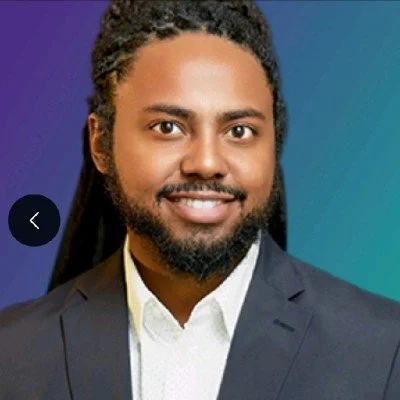

Capitol Communicator Editor on the New Expectations Facing Communicators
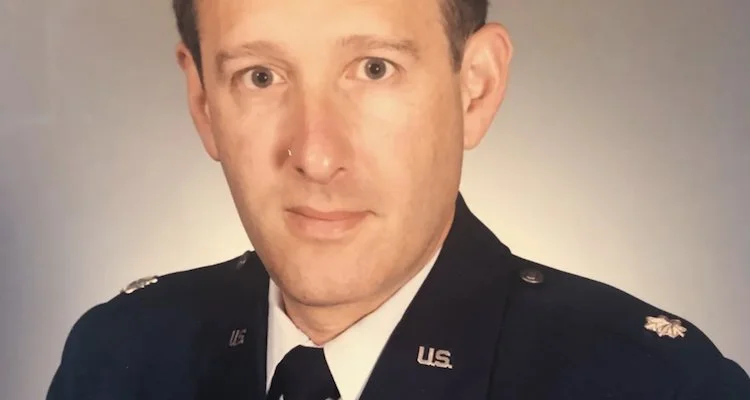
Could artificial intelligence proficiency tests be part of the future of comms jobs? Love it or hate it, AI is becoming ingrained in nearly every major industry, including public relations — and it’s not just a fad.
And while technology accelerates, so do expectations that communications professionals showcase measurable results from their PR work, said Phil Rabin, a veteran PR practitioner, journalist and editor of Capitol Communicator.
In an exclusive interview with EIN Presswire, Rabin expounded on how the industry has transformed with AI and major mergers among PR firms. He also addressed a taboo subject for many communicators: showing measurable results from public relations campaigns.
For Rabin, whose career spans print, broadcast and communications, the transformation is here to stay. He has also been involved for almost two decades with Capitol Communicator, an online resource for communicators in Washington, D.C., Maryland and Virginia.
As for AI, Rabin believes it is quickly becoming a necessity for communicators. In fact, about 75% of PR professionals use AI tools in their work, and 80% of communications leaders consider AI essential to the future of the industry, according to a 2025 report.
Rabin pointed to a Capitol Communicator post, stating “employers will increasingly ask candidates who want to join the organization’s communications staff “to take AI tests … and may hire the proficient AI users.”
In addition, the post reads, as time progresses, “employers will demand continued (AI) testing as part of ongoing employment.”
Rabin said: “I don’t know of any other profession where employers will continue to test employees to see if they are current with what’s happening in their field…(and) wouldn’t it be embarrassing if your CEO’s children know more about AI and social media than members of the communications staff.”
But technology is only part of the equation, he argues. The larger challenge is credibility, particularly when communications teams fail to align their work with core business priorities.
In our interview focusing on his industry takeaways, Rabin talks about the moment it became clear how much the business world is beginning to expect ROI from PR, his early work in media relations for America’s space missions at Cape Kennedy, and the guidance he now shares with rising PR professionals.
(ROI, short for return on investment, tells a business whether it made or lost money compared to what was invested.)
Q: How did you get your start?
A: When I was in my senior year at New York University, I also had an entry-level job at NBC/WNBC-TV News in Rockefeller Center in Manhattan — I went to NYU in the morning and early afternoon; and then went to NBC, where I worked until 11:00 or 11:30 p.m. At NBC/WNBC, I did everything from answering phone calls, to getting sports scores on the 11 p.m. WNBC newscast, distributing wire service stories to reporters, and assisting in NBC’s coverage of America’s manned spaceflight endeavors. At the time, the U.S. was involved in the Vietnam war and there was a good chance that after graduating from NYU I could be drafted into the Army and sent to Vietnam.
A correspondent who I worked with on NBC’s space coverage suggested that, because of my knowledge of the space program, I could be an asset to the Air Force if I was sent to Cape Kennedy/Cape Canaveral. (Cape Canaveral/Cape Kennedy refers to essentially the same area but, when I was there, the military portion was called Cape Kennedy Air Force Station.) It turned out that most manned spaceflight activities from the Cape had a military component. So, I joined the Air Force, was sent to Officer Training School in Texas, and then to Patrick Air Force Base, which is close to the Cape in Florida. At Cape Kennedy, among other things, I worked with the national news media covering launches, produced audio reports on Air Force activities, wrote for the base newspaper, and was the countdown “voice” for Air Force unmanned launches.
Q: What did you do after you left the Air Force?
A: I joined the Air Force Reserve at Andrews AFB where, among other things, I worked with the national and local news media covering VIP arrivals and departures, and was the narrator for the annual “open house” that attracted hundreds of thousands of people yearly. I retired as a Lieutenant Colonel.
While in the Reserve, a part-time job, I had a number of full/part-time and freelance jobs including producing film and news media material for a national trade association, working for two communications agencies, holding senior-level communications positions at two non-profit organizations, being co-author of a weekly newspaper column for 17 years on developments in communications, writing for PR Week, being co-owner of a four-color magazine and website on trends in communications, being a news anchor on all-news WTOP radio, running meet-the-media seminars nationwide for communicators who wanted to stay current with developments in PR and the media, and had a one-time walk-on role in a local theater production of “Hello Dolly.”
Q: What changes have you seen during the decades you have been in communications?
A: The changes have been — and will continue to be — profound. But, perhaps, the biggest change has not been the tools we use, but the fact that our success — and perhaps continued employment — will be measured based on ROI, the return on investment that an organization wants from its communications program.
Also, one of the fundamental changes facing the PR community is how to reach the audiences we need to reach. For those who have not followed the recent fate of newspapers, The Washington Post, recently announced it was cutting 30 percent of its workforce, including 300 reporters. And, the Atlanta Journal-Constitution, which stopped print editions and went all-digital at the end of 2025, announced it was cutting roughly 15% of its staff. And, change is also impacting broadcasting.
In addition, agency consolidation will result in significant job shifts. In fact, the recent merger of two large agencies — Omnicom and IPG — may have resulted in the loss of 10,000 jobs. Then, Omnicom merged Golin and Ketchum, and is folding Porter Novelli into FleishmanHillard. It did not announce how many people would be impacted by these changes.
Q: How important is it for PR professionals to focus on ROI?
A: A few years ago I attended a conference where one of the speakers was a former CEO and he talked about how members of his senior staff understood the importance of measuring ROI — everyone but his communications team. He described, with some disdain, how his communications staff was talking to him about an exhibit they created for a conference. And, the CEO said he wondered if his communications team had an understanding of the goals of his business – not how attractive the display was. In fact, he asked, did you ever wonder why so few communicators became CEOs? His answer was that communicators don’t talk ROI, the language of business.
As another example: I was at a social event with a man who was the head of a trade association based in D.C. We were there because we knew his wife. At one point, he asked me what I did for a living and I told him I was in communications and he responded with “I have no need for people like you.” Based on these experiences, communications professionals will not be taken seriously in the C-suite until they show measurable value to those they serve.
Q: What advice do you have for those entering the PR field or those who want to stay in it?
A: Here are two points: You have to stay nimble. Business, in general, will continue to be focused on the bottom line and if you can not show your worth to your organization’s leadership, which will change from time to time, you might find yourself searching for another job or career. The second is to hang around people brighter than you. I met a number of them when I was in the Air Force. One of them was a Colonel who led Air Force operations at the Cape. He had three college degrees and was so bright that he was sent to the Naval Academy in Annapolis to teach engineering to Navy cadets. And independently, I got to spend 10 hours on a Navy ballistic missile submarine undergoing sea trials. I saw the caliber of the officers — former Naval Academy cadets now officers — and they were the brightest group of people I have ever been around. It was eye opening to me. So, hang around bright people. They force you to think and produce to your highest potential.
Reprinted with permission of Capitol Communicator, a sister company.