

Avatar’s Fan Energy Surges as Mainstream Buzz Lags Ahead of Release
What you will learn from this article:
How Truescope’s data reveals a divide between Avatar’s passionate fan engagement and its weaker mainstream momentum
Why legacy franchises can no longer rely on past cultural dominance and must engineer fresh social relevance
What communicators and marketers can learn from Avatar’s emotional storytelling, global audience patterns, and shifting platform behaviors
The social buzz around Avatar: Fire and Ash tells a revealing story about how modern blockbusters build momentum. A review of recent news and social media by media intelligence firm, Truescope, shows an energized, emotionally connected fanbase driving heavy engagement inside dedicated communities, and a noticeably softer mainstream conversation that remains surprisingly muted for a film positioned as one of 2025’s biggest global releases. With the next installment set to premiere in the United States on December 19, 2025, marketers now have a rare look at how franchise loyalty, platform behavior, and cultural reach collide in real time.
This release date matters. Both earlier Avatar films leveraged December corridors to historic effect. The original Avatar, released in 2009, became the highest-grossing movie globally with more than 2.9 billion dollars. Avatar: The Way of Water repeated the strategy in 2022, finishing with roughly 2.3 billion dollars worldwide and dominating the global box office for months. Cameron’s December timing is deliberate and proven, and the franchise’s box office endurance has always outperformed its early buzz. That long-tail strength gives Fire and Ash a foundation that few franchises can match, and the social landscape now offers clues to whether it can expand its cultural footprint or simply maintain it.
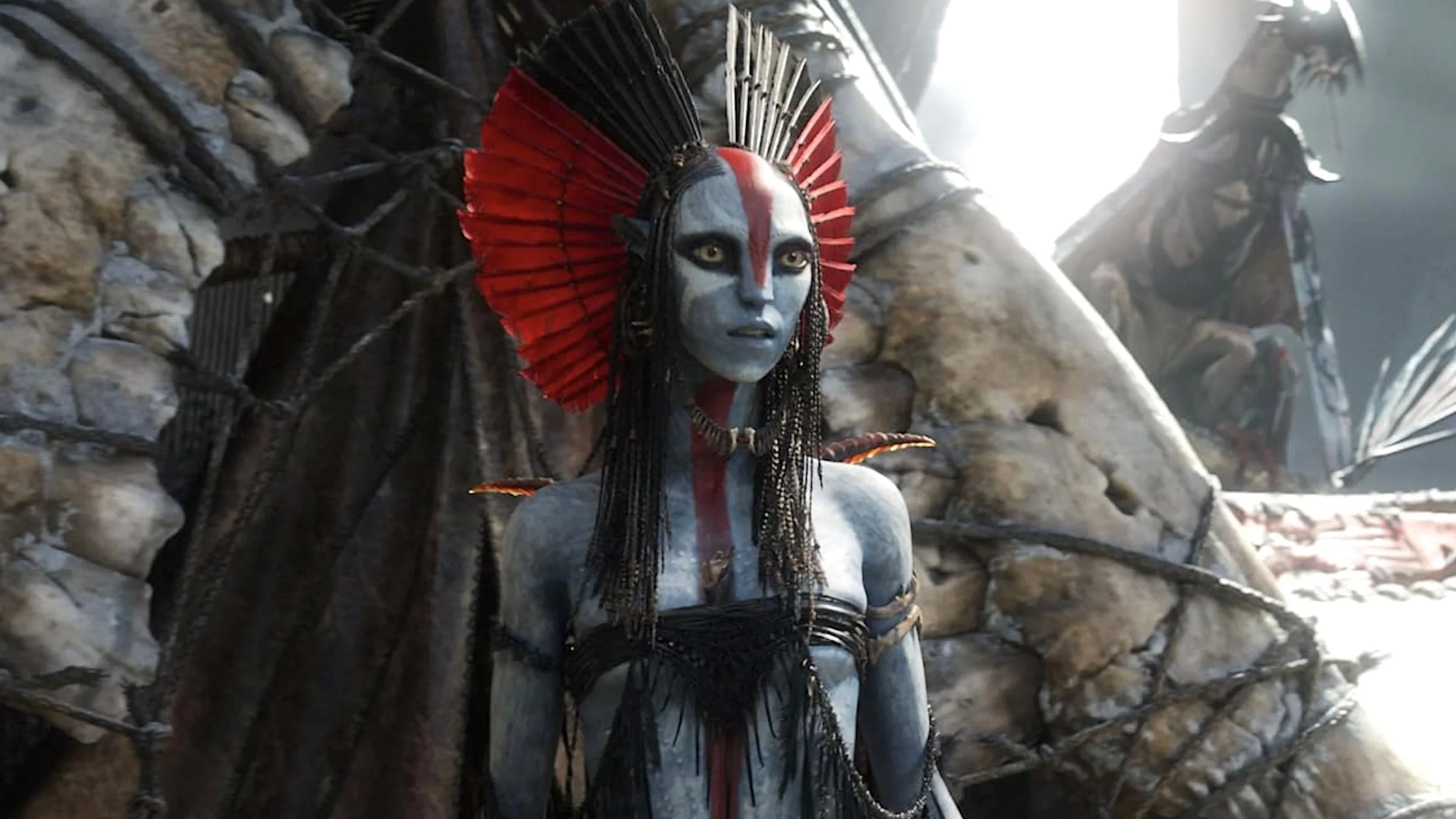
Truescope’s platform-specific data underscores the paradox. TikTok delivers the most explosive peaks. The official trailer reached nearly 20 million views and more than a million likes, confirming that when audiences see Avatar content, it lands with force. The issue is consistency. Most of the ongoing conversation occurs inside avatar-specific circles rather than spilling into wider TikTok culture. That containment shows up on Instagram and Twitter as well. Posts about the Sully family’s emotional arc or anticipation around the new antagonist Varang spark meaningful fan dialogue. These are deep, highly literate conversations from fans who have followed the mythology for more than a decade, and that intensity is one of the franchise’s biggest assets.
Still, the broader public is not participating at the same scale. Even news that typically ignites mass conversation, such as the 3 hour and 15 minute runtime, generated concentrated engagement mostly among existing fans. Legacy platforms like Facebook show the weakest organic activity, especially among older audiences who once helped propel Avatar into cultural dominance. For communicators, this signals the rise of a new attention dynamic. Even the most visually ambitious franchise no longer commands automatic cultural ubiquity.
Cross-promotional content provides one of the few breakout opportunities. Celebrity tie-ins, sports moments, and theatrical previews for other films often outperform Avatar’s own core announcements. This reflects a modern truth for marketers. Borrowed relevance outmuscles brand-first messaging in a fragmented media environment. Strategic partnerships, creator collaborations, and cultural adjacency now act as multipliers. Without them, even massive IP risks staying inside its fan bubble.
International signals reveal a more varied story. Markets such as Germany, Vietnam, Thailand, and Australia are generating stronger conversation than the United States relative to population size. This underlines a global fanbase that is active and vocal, and it highlights the uneven nature of Avatar’s current cultural penetration. For communicators managing global campaigns, this reinforces the importance of region-specific content strategies rather than assuming global alignment.
Truescope’s sentiment analysis also shows the franchise’s most powerful connective tissue. Fans are not sharing Avatar content because it looks expensive. They are sharing it because it feels emotional. Posts about Jake Sully’s self-doubt, Neytiri’s warnings to her children, and the evolving relationship between Jake and Quaritch draw significant engagement. This demonstrates the core lesson for marketers. Emotion drives participation, not spectacle. Big ideas attract awareness, emotional arcs build community. Avatar’s emotional arcs are working but not yet unlocking broader culture.
The franchise’s challenge is not interest but urgency. Unlike the Marvel ecosystem or event films like Barbie, the social conversation around Fire and Ash lacks meme culture, mass speculation, and spoiler anxiety. This indicates that audiences believe they can wait, even though Cameron’s films are built for theatrical viewing. The absence of “see it on opening weekend” pressure is one of the strongest signals that Fire and Ash risks becoming a dedicated-fan success rather than a cultural wave.
Yet the film’s long-term outlook remains strong. The franchise has a history of converting quiet pre-release periods into massive global performance. The December 19 premiere date positions Fire and Ash to dominate the holiday corridor, and premium formats like IMAX and RealD 3D will continue to attract the enthusiasts who treat Avatar as an experiential event. However, to achieve breakout cultural relevance, marketers will need to manufacture broad cultural participation through partnerships, humor, mainstream influencers, and simple narrative entry points that welcome casual audiences rather than intimidate them.
For marketers across industries, the Avatar data reveals a fundamental shift in franchise marketing. Brand scale no longer guarantees cultural conversation. Emotional storytelling outperforms spectacle. Community depth does not equal cultural reach. And virality requires intentional engineering rather than legacy momentum. Avatar’s next chapter will be a global test case of whether even the most technically ambitious storytelling can retain cultural dominance without evolving its promotional playbook.