

Why Public Relations Is Fueling the Great American Consumer Scam
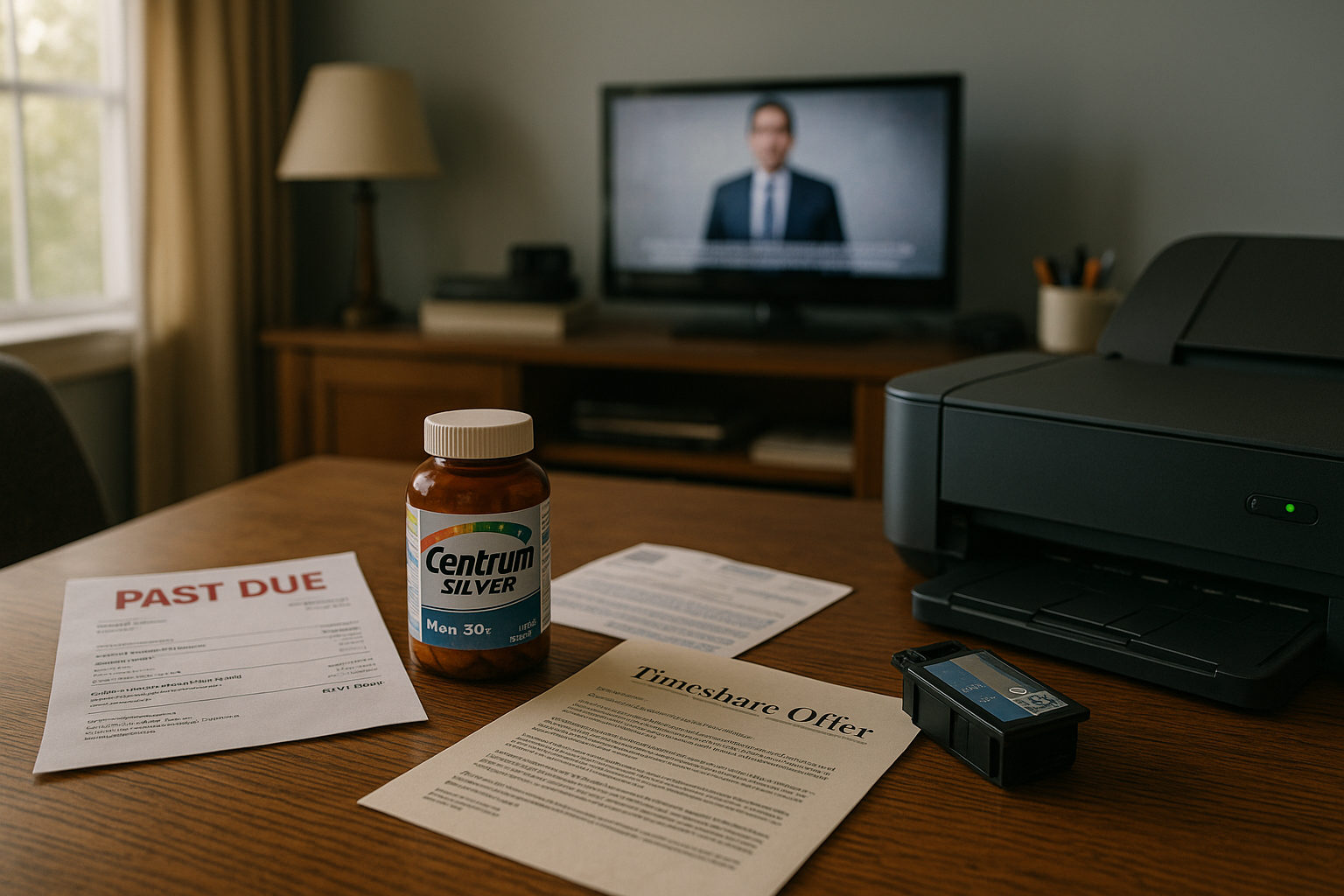
(Author's Note: I wrote this essay some weeks ago. But because of the tumult regarding the firing of Stephen Colbert and the Epstein files, I put it aside until I submitted it on August 4. I’m glad I did, because on July 27, my opinion was seconded by Andrew Cuomo, who was quoted in the New York Times saying, "Consumers get defrauded every day. I ran the consumer fraud section as attorney general. People get defrauded every day into buying all sorts of things. This is a fraud." The governor’s quote referred to Mamdani’s campaign promises, which I also believe is a pie-in-the-sky fraud. Fraud is inherent in our marketplace.)
Let’s face it. We live in a rip-off society. Businesses use any ploy they can get away with to squeeze every last penny from their customers.
Not that I think socialism, communism or any other economic system is better. History has shown they’re worse. But we live in a rip-off society and since Trump 2 took office, it has gotten worse.
On July 15, the Associated Press reported, "In the nearly six months since the Trump administration has had control of the Consumer Financial Protection Bureau, the bureau’s leadership has focused almost exclusively on rolling back any punishments, fines and penalties made against companies during the Biden administration.
"In some cases, companies that were supposed to refund their customers or pay a penalty for unfair or deceptive practices are no longer bound to make their customers whole. Other companies facing charges of fraud or deceptive practices saw their lawsuits dropped in the early days of the Trump administration."
The fact that we live in a rip-off society wasn’t news to me. See below reasons why it wasn't.
Examples: It took government action before insurance companies were required to write policies in plain English, without "inside baseball" industry-only terms, so policyholders would know what they purchased.
In fact, it was the latest invoice from my insurance company, Liberty Mutual, that generated the idea for this essay. The notice said that the renewal premium for the policy had to be submitted 15 days prior to the renewal date "to ensure proper renewal processing." Fifteen days. Cynical me doesn’t believe it takes that long for the company’s records to show that the policy’s renewal premium has been received. I believe it's just a ploy to get our money earlier than necessary so they can use it for their own purposes. Another thing: Does it make sense for me or you to have our insurance rates increase because of what occurred to other individuals?
Below are other common techniques that businesses use to get your money. While legal, they are on the cusp of being a scam.
Magazine renewals: Renewals are sent out months in advance, hoping that readers forget when their current subscription expires. The same applies to memberships in organizations like the AAA.
Charities: Contributing once a year is never enough. Shortly after a contribution, a follow-up letter will say an additional gift will be matched by an anonymous donor, making your contribution double. What’s worse, once you contribute to one charity, you’ll receive pleas from dozens of others. Your name and address will not be kept confidential. They will be sold or rented without your permission.
Computer ink cartridges: When printing, a message appears saying to replace the cartridge. I stopped doing so years ago and kept printing until a warning appeared saying that a cartridge is out of ink. (Caution: These warnings might not apply to all printer models. Mine is Canon.) Replacing cartridges when they still have ink helps manufacturers, not consumers.
"Best by" and "use by" dates on food packaging cause consumers to throw away good food. Why not a declaration saying, "Do not use if the product is discolored or smells"?
Cookies and candy packaging often exaggerate the size of the product. Those large Oreos and Vienna Fingers pictured have no relation to the actual cookies inside.
Vitamin supplements promise health benefits but often have not been evaluated by the Food and Drug Administration. Centrum Silver, for men over 50, suggests it helps the heart, brain, eyes and muscles. In small print, it says these statements have not been evaluated by the FDA.
"Bait and switch" tactics: Businesses advertise a product at a low price, then say it's unavailable and try to sell you a higher-cost product.
Hidden fees are common in some businesses. These are not disclosed upfront and are added at the checkout counter.
Another tactic is the use of "automatic renewals," designed to keep consumers locked into products they no longer need. As someone who traveled frequently for work, I was victimized by these. A more honest approach would be to end the relationship and let me decide to renew.
Even medical commercials are not above airing misleading ads. A National Library of Medicine study found that 52 percent of ads from top cancer institutions were either transgressive or borderline, often implying unrealistic expectations or exclusive treatment availability.
The sports and television industries also play their part. Athletes endorse products as if they know the difference between them. TV allows ads offering "no lose bets" or claims with disclaimers in tiny, unreadable fonts.
On July 6, the New York Times published an "Ask Real Estate" article detailing the difficulty of escaping timeshare contracts. Some companies that claim they can sell your timeshare are scams. (Personal story: I once visited a timeshare and asked for a contract to review. They refused. Only after the death of our friend's husband and a doctor’s note was she released from her contract.)
After the Texas flood, warnings circulated about scam artists pretending to be charitable organizations. Tragedies are often exploited.
Which brings us to our own business.
Public relations and our advertising counterparts are eager participants in the rip-off society.
Examples: TV commercials with disclaimers often use fonts too small to read or disclaimers spoken too fast to understand. I freeze the screen to read them. Most disclaimers say the claims have not been evaluated by the FDA.
Advertising excels at crafting misleading ads. Dietary supplements, skincare, weight loss products, and household goods are frequent offenders. Much of public relations backs these claims.
Actors portraying doctors were once common in commercials. In 1959, the National Association of Broadcasters banned these portrayals unless clearly disclosed. FTC guidelines also require disclosure if the endorser is paid.
Entertainment also contributes. "Oldies" groups perform under famous names without original members.
No essay on scams would be complete without politicians. President Donald Trump, despite promising not to cut Medicare or Medicaid, signed a bill with the biggest health care and nutrition cuts in generations. The Congressional Budget Office estimates 17 million people could lose health insurance coverage by 2034. Medicaid cuts are already affecting rural clinics like one in Curtis, Nebraska.
Social media platforms now host much of the false advertising. Influencers, or paid pitchpersons, often fail to clearly disclose their paid status. The FTC monitors them but lacks resources to catch all violations.
A March 2025 Reuters article reported the FTC warned nearly 700 companies they could face civil penalties if they cannot back up claims. Ads with wild claims have changed after such warnings.
The volume of misleading advertising across media has made it a game of catch me if you can.
One final area of concern is research studies. Many are funded by businesses with an agenda. Because they are conducted by respected institutions, people assume the results are impartial. That’s not always true.
Even worse are some practices within public relations:
Using paid spokespeople with limited knowledge.
Providing incomplete material to journalists.
Coaching clients to dodge questions.
Providing inaccurate information.
Hiding the truth.
Taking credit for others’ ideas.
Public relations and advertising can cause harm, especially when backed by big budgets. They are part of the rip-off society.
As I’ve written, I have refused to work on certain accounts because I disagreed with their mission or products. Once, I told top management at Burson-Marsteller I couldn’t work on an account. When asked why, I said, "Because I have to look in the mirror each morning when I shave." That ended the conversation.
Too often, because of the help of public relations and advertising firms, consumers must follow caveat emptor — let the buyer beware.
It would be better if the warning applied to sellers. That might reduce the dishonesty that pervades our rip-off society.
Marketers may argue these practices are legal. But that doesn’t make them ethical.
One of the biggest scams is "planned obsolescence," defined as designing a product to last a short time so people must buy another.
That applies to many products we use daily.
People should know that Trump’s bill not only affects Medicare and Medicaid but also cut funding for the Consumer Financial Protection Bureau by almost 50 percent.
Finally, as someone living in the New York area, I know many people who believe calling the New York Giants and New York Jets "professional teams" is false advertising.
Caveat emptor indeed.