

The Onion Outsells the Boston Globe and It’s Not Even Trying to Be Real
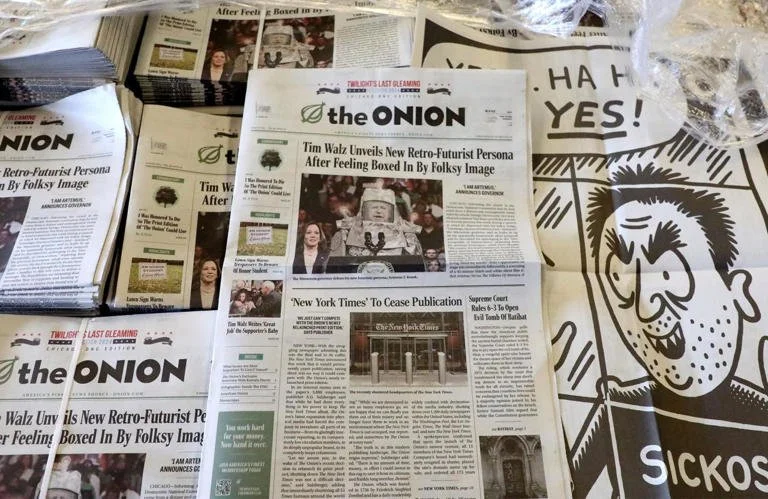
Photo credit The Onion
Here’s what you’ll learn when you read this article:
Why The Onion’s print comeback is turning heads in a supposedly dead medium
How media brands are using nostalgia and physical products to cut through digital fatigue
What communicators can take from this trend to build more trusted, differentiated audience relationships
When Jeff Lawson, the co-founder and former CEO of Twilio, acquired The Onion in 2024, it seemed like a curious bet. The satirical news brand had long ditched its physical paper and was coasting along as a free, ad-supported website. But Lawson and Chief Executive Ben Collins had a different vision, resurrect the print edition and make people pay for it.
A year later, the gamble is paying off. According to a recent Wall Street Journal article, The Onion now boasts nearly 54,000 monthly print subscribers, making it the 13th largest print newspaper in the United States, nestled between The Boston Globe and the Chicago Tribune. The company expects to hit $6 million in revenue this year, up from less than $2 million in early 2024.
“The Onion is now the 13th largest print newspaper in the United States,” Collins said in a LinkedIn post. “This week last year, we had zero. In short, it’s a miracle and it’s working. We did it without using AI to write jokes or make art, we did it while keeping the website and videos free for everybody, and we did it without bending the knee to anybody in power.”
For communicators and marketers, The Onion’s revival offers a critical lesson—print isn’t just nostalgia. It’s differentiation in an increasingly noisy digital media landscape. Collins added, “People like getting something in the mail that’s not f—ing awful.” For a generation overwhelmed by emails, push alerts and algorithmic feeds, a printed paper feels almost luxurious.
The Onion’s return to form isn’t isolated. Publications such as Saveur, Creem, and Tablet have also launched or rebooted print editions, leaning into the idea that scarcity and tangibility can boost reader loyalty and brand equity. Kat Craddock, who purchased Saveur in 2023 and relaunched its biannual print edition, told the Journal the publication is now profitable—thanks to $25-per-issue pricing and custom ad packages across print, digital and live events.
John Martin, CEO of Creem magazine, said the decision to revive the print edition in 2022 has made the publication not only sustainable but strategically valuable. “You can develop your IP in the pages,” he said, “and you can grow that into merchandise, into events, into video content, into podcasts.”
Even digital stalwarts are rethinking print. The Atlantic increased its print issues from 10 to 12 annually in 2025, with Editor in Chief Jeffrey Goldberg emphasizing the medium’s emotional value: “A print magazine doesn’t flash and beep at you. It’s not trying to constantly switch your attention to the next best thing.”
As traffic from platforms like Google and Facebook continues to decline and as AI agents disrupt how users discover content, more publishers are turning to print subscriptions and direct reader relationships. In The Onion’s case, this analog approach is paired with sharp digital strategy. The publication recently launched an ad agency staffed by comedy writers and is attempting to acquire Infowars out of bankruptcy, with support from the Sandy Hook families.
That bid was rejected by a judge last year, but it hasn’t stopped Collins from pushing the envelope. The message is clear. This isn’t a retro stunt. It’s a blueprint for building sustainable, distinctive media brands.
For communicators, that blueprint is packed with insight:
Nostalgia is powerful, but it must be matched with relevance.
Print builds emotional trust, especially when digital feels transactional.
Integrated experiences—merging print, digital and events—are the future of audience loyalty.
Collins summed it up best: “The Onion has almost 54,000 paying subscribers in all 50 states and over 50 countries. We did it without bending the knee. And people love it.”