

Small Businesses Shift More of their Budgets Toward AI and Digital in 2025
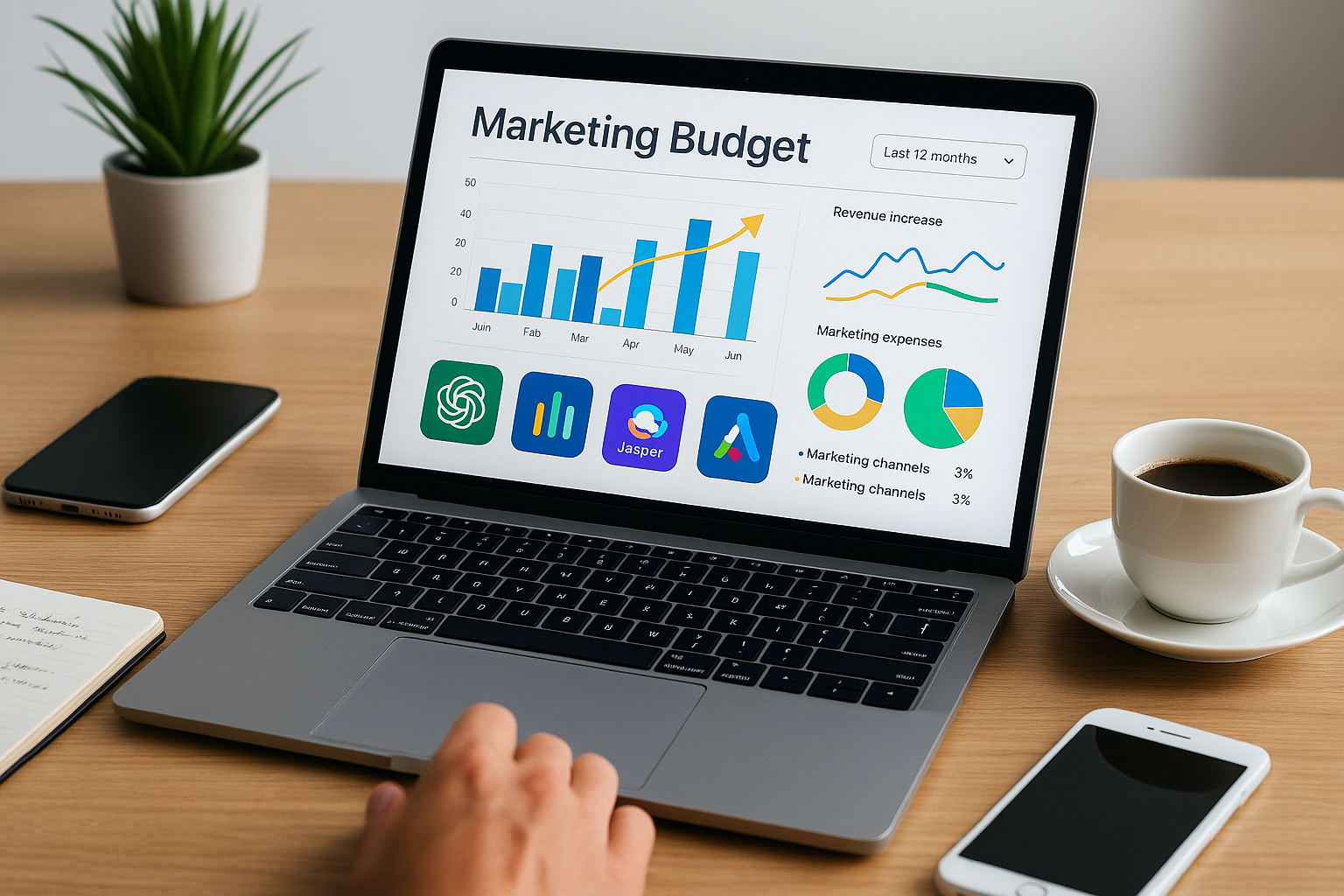
New for 2025…generative AI imagery.
Two years ago, when Chad Harwood-Jones first published his article “Building a Marketing Budget for an Effective Communication Strategy for Your Small Business,” small business marketing strategies relied on a more traditional digital mix. Since then, the field has rapidly evolved. Artificial intelligence, automation, and real-time analytics are now central to how companies plan, allocate and adjust their marketing and communications budgets.
Back in 2023, many small businesses were focused on brand awareness, digital engagement, and cautious experimentation with online tools. In 2025, those same businesses are increasingly investing in AI-powered content creation, predictive analytics, and performance-based automation to increase efficiency and improve return on investment.
“A marketing budget is an outline of how much you’re planning to spend on promotion,” Harwood-Jones wrote in the original piece. “It doesn’t have to be completely specific, but it needs to include all the major parts of your marketing plan.”
That foundational advice still applies. What’s changed is the expectation that a portion of that budget now be allocated to software subscriptions, AI integrations, and training for employees to effectively use these tools. Budgeting itself has become more dynamic. Rather than setting plans annually, small businesses are revisiting and adjusting quarterly or even monthly, based on real-time data.
Setting goals remains essential. “The goals should always be easy to track,” Harwood-Jones advised, “and it’s helpful to have both short-term and long-term goals.”
Today, tracking those goals is often done through integrated platforms such as Google Analytics 4 or HubSpot, with insights surfaced automatically via AI-driven dashboards. Market research—once reliant on manual surveys—is now increasingly conducted using automated tools that analyze customer behavior, preferences, and feedback at scale.
Campaign development and channel selection also reflect the times. In 2023, Harwood-Jones emphasized balancing brand awareness, inbound marketing, and outbound outreach across platforms. In 2025, the emphasis has shifted toward a fluid mix of organic and paid media, with AI tools helping to generate and test campaign elements like email copy, ad variations, and social media posts.
“You will likely want to blend a combination of different marketing approaches to get the best return on your investments,” Harwood-Jones noted. That blended approach now often includes AI as a creative partner, particularly in small teams or resource-constrained businesses.
Tracking expenses and performance remains critical. “One of the best ways to track your outgoings is through using a business credit card that allows you to see all your purchases in one place,” he wrote. With modern fintech tools now layering AI categorization and expense forecasting, this practice has only become more effective.
Common mistakes Harwood-Jones identified—such as underfunding successful channels, not using data, or ignoring customer retention—are still relevant. A new challenge in 2025 is ensuring AI is used to enhance, not replace, strategic human oversight
“Give your marketing techniques time to show their worth,” he advised. “Don’t give up on a method if it’s not successful right away.”
That patience, paired with experimentation and agility, remains a winning formula in a rapidly changing landscape. As small businesses build their budgets today, the goal is not just visibility—but adaptability, intelligence, and long-term growth.