

March Madness Coverage Gap Men Lead Women Surge, AI Accelerates the Shift
March Madness is more than a sports moment. It is a real-time case study in how media attention builds, how audiences behave and how narratives scale. This year’s data, including insights from Truescope, tells a story that goes beyond a simple comparison between men’s and women’s tournaments. It is a story about scale versus momentum and what that means for communicators navigating an increasingly fragmented media landscape.
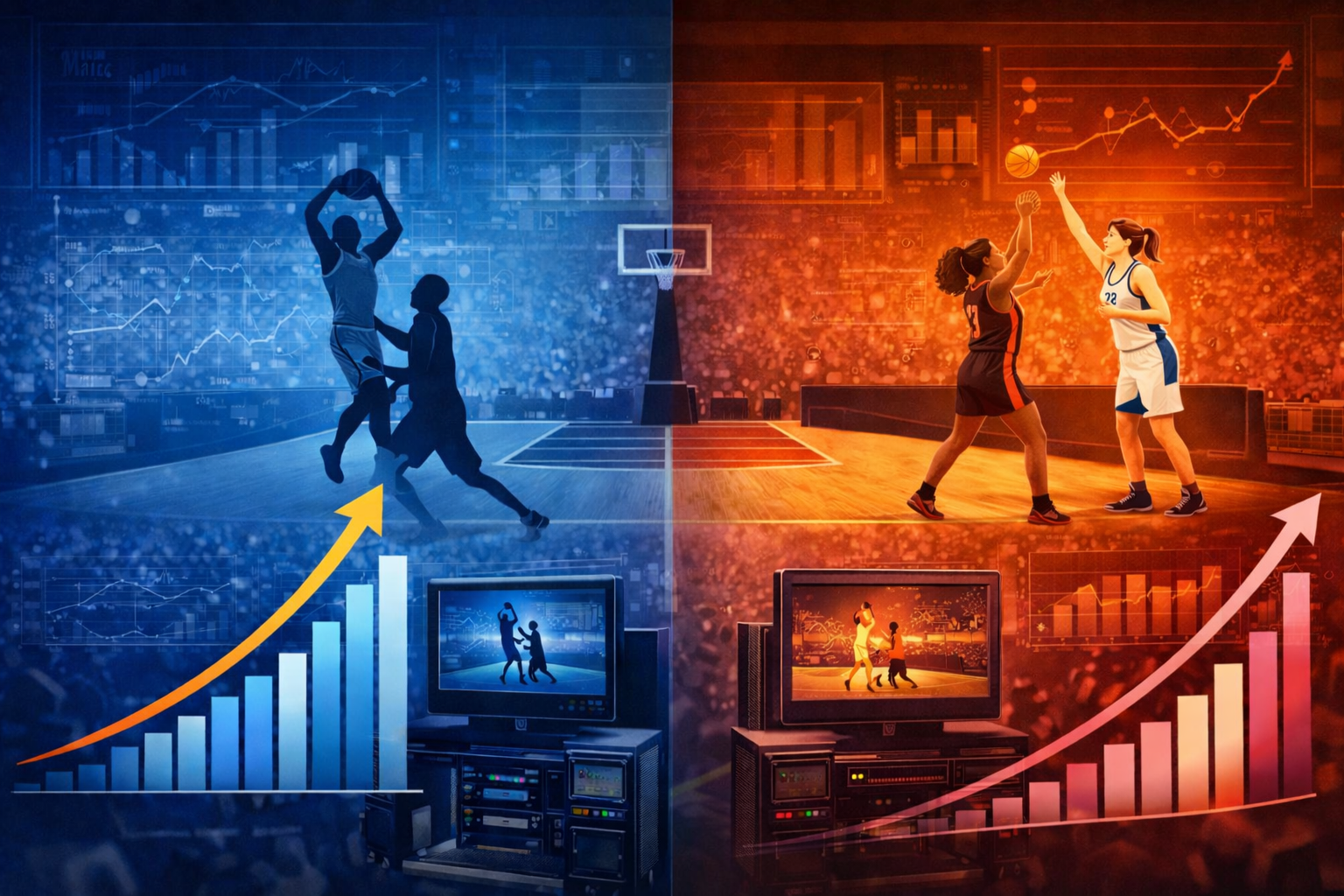
The coverage gap between men’s and women’s March Madness is still evident, particularly in viewership. Men’s basketball continues to deliver significantly larger audiences, with viewership up roughly 45 percent this season and games averaging more than 900,000 viewers across ESPN networks. Marquee matchups are drawing more than 2 million viewers. Women’s basketball, while starting from a smaller base, is showing meaningful gains, with overall growth around 15 percent and some reports pointing to increases closer to 39 percent on ESPN. The difference is clear in absolute numbers, but the trajectory tells a more important story. Women’s basketball is not just growing, it is accelerating.
That acceleration is being matched by increased investment. ESPN has expanded its commitment to the women’s tournament, deploying on-site reporters for early rounds, enhancing production with additional cameras and super slow motion capabilities and taking studio coverage on the road during regional play. This shift reflects a broader recognition that audience interest is building and that coverage quality plays a role in sustaining that momentum. For communicators, it is a reminder that visibility is not accidental. It is shaped by where resources and attention are directed.
Structural differences between the tournaments also continue to shape coverage and storytelling. The men’s tournament operates within a long-established format built around neutral sites, while the women’s tournament incorporates early-round games hosted at home arenas for top seeds. These differences influence everything from crowd energy to broadcast dynamics and ultimately how stories are experienced. Format is not just logistics. It influences how audiences connect to the moment.
Distribution strategy further defines the landscape. The men’s tournament benefits from the combined reach of CBS and TNT Sports, while the women’s tournament has been anchored by ESPN and its network ecosystem for decades. Both tournaments now span multiple channels, creating a multi-platform environment where audiences engage across touchpoints. For communicators, this reinforces the need to think beyond a single channel and instead design stories that can travel across platforms and formats.
At the same time, local markets are playing an outsized role in driving engagement. Cities like Louisville and Hartford-New Haven consistently rank among the strongest performers for both men’s and women’s basketball viewership. These pockets of intensity demonstrate that national momentum is often built from regional passion. For brands and communicators, identifying and activating these high-engagement communities can be a powerful way to build broader visibility.
Artificial intelligence is also beginning to shape how March Madness is covered and experienced. From AI-assisted production tools that surface real-time insights for broadcasters to automated highlight generation and personalized content feeds, the tournament is increasingly becoming a dynamic, always-on media ecosystem. AI is enabling faster storytelling, more tailored fan experiences and broader distribution of content across platforms. It is also helping expand coverage by lowering production barriers and allowing more games and moments to be captured and shared.
The most important insight from this year’s data, reinforced by Truescope’s analysis of media and audience trends, is not simply that men’s basketball remains dominant in scale. It is that women’s basketball is gaining traction as a fast-growing and increasingly visible part of the sports media landscape, while technology is accelerating how quickly those shifts are recognized and amplified. The men’s tournament represents reach and long-standing dominance. The women’s tournament reflects growth and shifting audience interest.
For communicators, March Madness offers a clear lesson. Scale matters, but momentum matters too. Investment influences coverage, structure shapes how stories are told and AI is accelerating how quickly those stories move. In a media environment defined by constant change, the most valuable opportunities are often found not only where audiences are largest, but where they are growing and becoming more engaged.
As organizations think about how to position their own stories, the takeaway is straightforward. Pay attention to where interest is building, how coverage is evolving and how technology is reshaping distribution. The biggest story is not always the one with the largest audience today, but the one that is gaining ground and capturing attention in new ways.
