

Fred Garcia on AI, Human Judgment and Why Communication Must Rethink Its Value
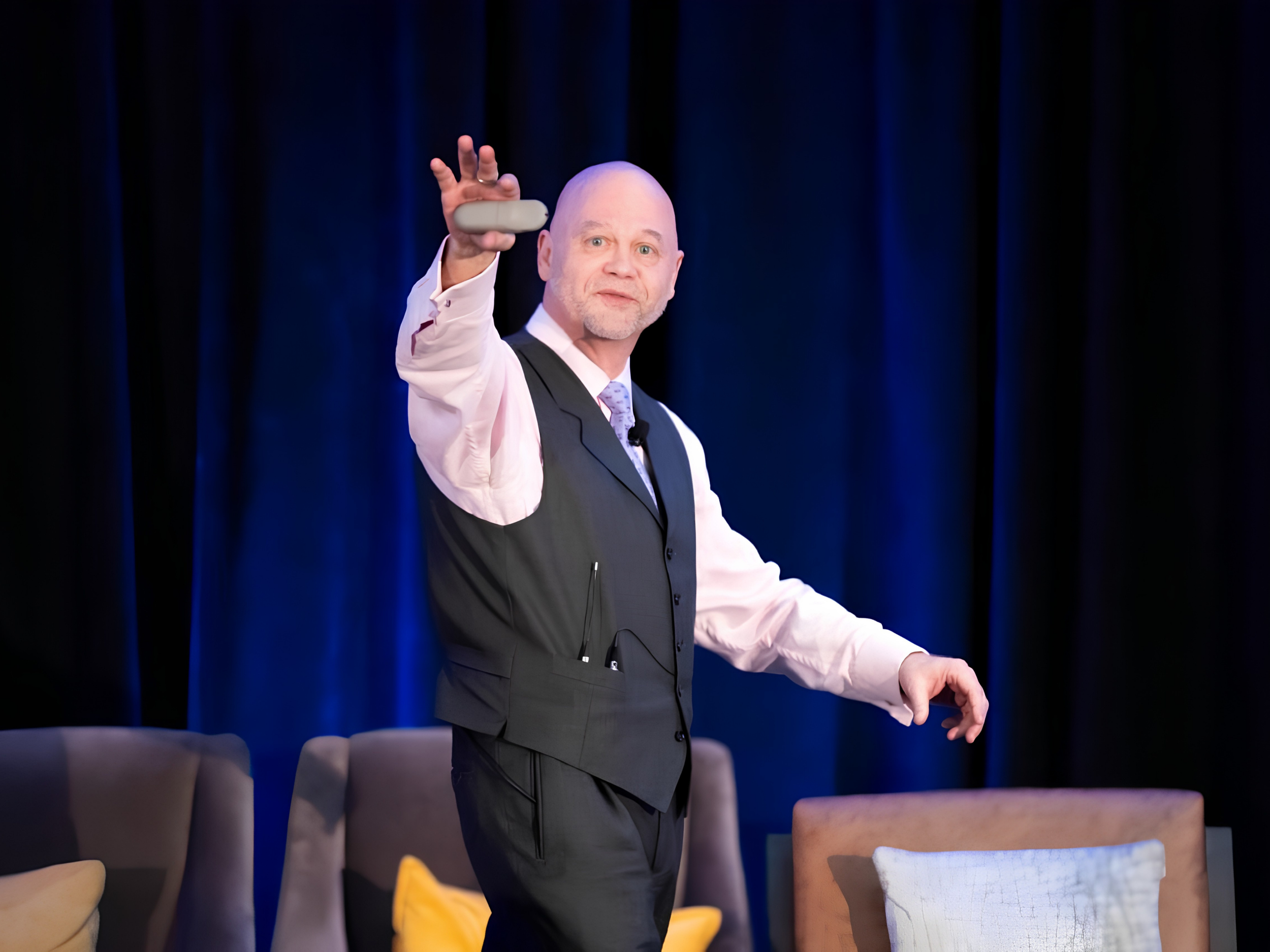
Photo credit: Claire Tsai
Editor’s Note: In Part Two of our CommPRO conversation, Helio Fred Garcia talks about what AI can and cannot replace, why communication professionals may be underselling their value and what he believes the profession needs to become.
In the first part of my conversation with Fred Garcia, we talked about trust, leadership and what it really means to become the person a CEO wants in the room when a difficult decision has to be made.
But as our conversation turned to AI and the future of communication, Fred took the discussion somewhere I wasn't expecting. His concern isn't simply how artificial intelligence will change our jobs or which parts of our work machines may eventually be able to do. He is asking a much bigger question about how we define our value in the first place.
And Fred believes we may have been defining it incorrectly for a very long time.
I began with AI because, frankly, how could we not?
I asked Fred what impact AI is having on the role of the trusted advisor and, just as importantly, what it means for the next generation entering the profession. Should young professionals be concentrating on becoming great communicators, or should they be thinking much more broadly about becoming leaders, counselors and trusted advisors?
Fred was quick to say that he doesn't consider himself an AI expert, but he has something younger professionals don't have: the perspective that comes from watching one technology after another arrive with promises that it would transform the profession.
When Fred started at Edelman 45 years ago, his technology was a manual typewriter and yellow copy paper.
He would type a draft, hand it to his boss, get it back marked in red and revise it until they agreed on the final version. Then it went to a secretary, who typed it neatly on letterhead, put it in an envelope, added a stamp and mailed it to The New York Times.
"That's how we distributed press releases back then," Fred reminded me.
Then one day a magical new machine arrived: the fax.
Everyone gathered around wondering what it was, how it worked, why they should care and what they might possibly do with it. Eventually the fax became part of everyday business. Email followed. Then the internet, social media and all the technologies that have reshaped the way we work and live.
Fred sees a pattern in all of it. A new technology arrives and we try to understand it. Then we become excited about it, frightened by it, figure out how to use it and eventually stop thinking about the technology itself because it has become part of the background.
He believes AI will eventually follow a similar path.
What interests him more is what AI reveals about the things humans still do differently.
AI can process enormous amounts of information. It can summarize and analyze. It can increasingly produce sophisticated work, and Fred readily acknowledges that there are circumstances where an AI system might generate advice comparable to advice he himself could offer.
But giving advice isn't simply about producing the right answer.
"When I'm in a room with a CEO, or I'm on a Zoom with a CEO, and I'm giving advice in a difficult circumstance," Fred explained, "it's possible that AI could have given equivalent advice."
Then he described everything else happening in that room.
Did the CEO's eyebrow suddenly go up? Did the person's eyes begin to glaze over? Was there a look of fear or alarm? Did something Fred said create confusion, resistance or perhaps a moment of realization?
Those signals matter because advising a human being is an intensely human exercise.
"What it can't do, or at least what it can't do yet, is have genuine empathy," Fred said.
AI can mimic empathy, he believes, but a trusted advisor is doing something more subtle. The advisor is constantly reading the other person, their face, posture, movement and attention, and adjusting accordingly. That ability to interpret the human dynamic remains enormously important.
I think that distinction should matter a great deal to our profession.
We're spending an enormous amount of time debating whether AI can write a press release, create content, summarize a meeting, draft a speech or produce a strategy document. Those are legitimate questions, but Fred's point made me wonder whether we're focusing too much on what we produce and not enough on why an organization needs us in the first place.
If our greatest value is the production of words and content, then increasingly capable technology presents an obvious challenge.
But what if our value is something much larger?
That was when I asked Fred the question that really opened up the second half of our conversation: If he could change one thing about how our profession thinks about itself, what would it be?
His answer was immediate.
"I believe that our profession fundamentally misdefines our central value proposition," he said. "And this is something I've been preaching for about 40 years."
The problem, in Fred's view, begins with one of the words we use most often to describe ourselves.
Communicators.
There is nothing wrong with being a communicator, Fred stressed. The problem is what happens when communication becomes the primary way we explain our value to leadership.
Most leaders already believe they know how to communicate. They have been speaking their entire lives, reading and writing since childhood, and communicating at work every day. They may readily acknowledge that they don't know as much about engineering as the engineers, law as the lawyers or supply chain as the people running supply chain, but communication feels different because it is something everyone does.
So when we define ourselves primarily as communicators, Fred argues, leaders can begin to see us as the people who help execute something they already understand rather than as professionals bringing a distinct discipline and perspective to the business.
That distinction gets to the heart of Fred's argument.
The most valuable communication professionals aren't valuable simply because they know how to put words together. Their greater value is that they understand the people an organization needs to reach and can anticipate how those people are likely to behave.
As Fred put it, our value comes from being able to "anticipate what will matter to stakeholders who matter to the leader, and then advise on how to engage those stakeholders to get them to behave differently."
Fred has been thinking about this for almost four decades, going back to when he first joined the faculty at NYU.
Coming from an academic family, he assumed that becoming a professor meant he needed to write a book. As he began thinking about what truly distinguished public relations, he arrived at a description that still shapes his thinking today.
At our best, Fred believes, we operate as applied anthropologists.
An anthropologist studies people within a defined group, looking at the social dynamics, power relationships, values and behavioral triggers that shape what people do. Fred argues that the best communication professionals do essentially the same thing inside organizations and across stakeholder groups.
We study employees. We study investors. We study customers and the news media. We try to understand what matters to them, why they are behaving as they are and what may cause that behavior to change.
The "applied" part is where our work becomes particularly valuable to leadership. We don't simply observe stakeholder behavior. We help organizations decide what to do about it.
Fred believes that allows our profession to answer two questions that keep leaders awake at night.
The first is, "Why did they do that?"
Why aren't investors giving the company credit for its innovation? Why aren't employees embracing a new operating system or strategy? Why are customers reacting differently than leadership expected?
Then comes the second question: "How do we get them to behave this way?"
Neither question, Fred pointed out, is fundamentally a communication question.
They are business questions about human behavior.
That was one of the moments in our conversation when I thought Fred had put words around something many of us in this profession instinctively know but don't always articulate very well.
We spend a great deal of time describing what we make: messages, speeches, content, media strategies, employee communication, social campaigns and countless other deliverables. Those things matter, of course, but they aren't necessarily the reason the CEO should want us close to the decision-making process.
Our greater value may be what we understand about people.
We understand trust and resistance. We understand how different stakeholders interpret the same action differently. We understand that what makes perfect sense inside a conference room may land very differently once employees, customers, investors or the public encounter it. And, at our best, we can help leadership anticipate those reactions before a decision is made rather than explain them afterward.
Fred thought he had come up with something fairly original when he began describing public relations as applied anthropology nearly 40 years ago.
Then, as he told me with typical Fred humor, he did what he tells his students to do before writing a book.
He read one.
And he discovered that someone had essentially beaten him to the idea by about 65 years. To make matters worse, it was another NYU professor, Edward L. Bernays.
Fred points to Bernays' early description of public relations as a vocation practiced by a social scientist who advises clients on social attitudes and the actions needed to gain the support of the publics on whom the organization depends.
For Fred, that is an early description of the same idea he had been calling applied anthropology: understand the people who matter to the organization, understand what drives their behavior and advise leadership not only on what to say, but on what to do.
And that led Fred to what I think is the central idea of this entire conversation.
"Communication is the how. The why is in order to change stakeholder behavior."
When leaders understand that communication professionals can do more than produce the communication, that we can help anticipate a future outcome and influence what happens next, Fred believes they begin to see our work differently.
"We make companies more competitive," he said. "We help organizations better achieve their missions by energizing the people whom they need on their side in order to succeed."
For me, this is where the conversation about AI and the conversation about trusted counsel come together.
AI will continue to get better at producing things. Some of those things are tasks communication professionals have traditionally performed, and pretending otherwise isn't going to help anyone.
But Fred's argument is that production was never the highest expression of our value.
Our value is understanding the organization, the leader and the people whose behavior ultimately determines whether that organization succeeds. It is recognizing patterns, anticipating reactions, seeing the human consequences of decisions and having the judgment and courage to bring that perspective into the room before the decision is made.
That is also why Fred keeps returning to the idea of "altitude."
Operating at altitude doesn't mean abandoning communication expertise. It means bringing that expertise into a much broader understanding of the business and the leader's objectives. It means resisting the temptation to walk into every discussion talking in PR language and instead talking about the issues the way the leader sees them.
As we came to the end of our conversation, I asked Fred what he most wanted people in this profession to take away from it.
His answer brought us right back to where we began.
"Leaders need people they trust to help them make smarter decisions," he said.
And Fred is convinced that public relations and communication professionals are fully capable of becoming those people.
Doing so requires us to get beyond our own jargon, understand the leader's challenges from the leader's perspective and help that person make and execute smarter choices. If we can do that consistently, Fred argues, our specific staff function becomes far less important.
"They'll want us in the room regardless of what the challenge is they're facing," he said, "because they know that when we're in the room, they make better choices."
I've been thinking about that since Fred and I finished talking because, in many ways, it answers the question our profession has been asking for years about how we prove our value to leadership.
Maybe we don't prove it by insisting that communication deserves a seat at the table. Maybe we prove it by bringing something to that table that leadership genuinely needs.
The ability to understand stakeholders, anticipate behavior, recognize what isn't being said, tell a leader a difficult truth and help that leader make a smarter decision is not a small contribution to an organization. It is an extraordinary one.
And at a moment when AI is forcing all of us to think seriously about which parts of our work will change, Fred's message is an important reminder that the future of this profession shouldn't simply be about becoming faster or more efficient communicators.
It should be about becoming better advisors.
Because communication may be how we do the work, but understanding people, earning trust and helping leaders make better decisions is why the work matters.
