

Executives Retreat From LGBTQ+ Messaging as Corporate Strategies Shift
In recent years, many Fortune 500 executives built reputations as vocal supporters of the LGBTQ+ community—especially during Pride Month. Social media activity frequently featured supportive messaging, event sponsorships, and commitments to inclusive workplace policies.
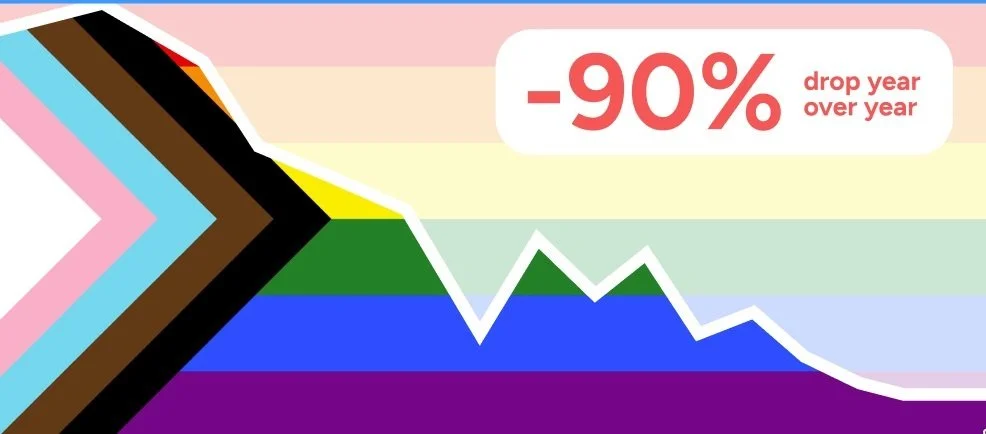
However, a sharp and measurable decline in LGBTQ+ messaging is now emerging across corporate America. According to Cometrics, there has been up to a 90% drop in communications featuring LGBTQ+-related themes across all tracked industry sectors.
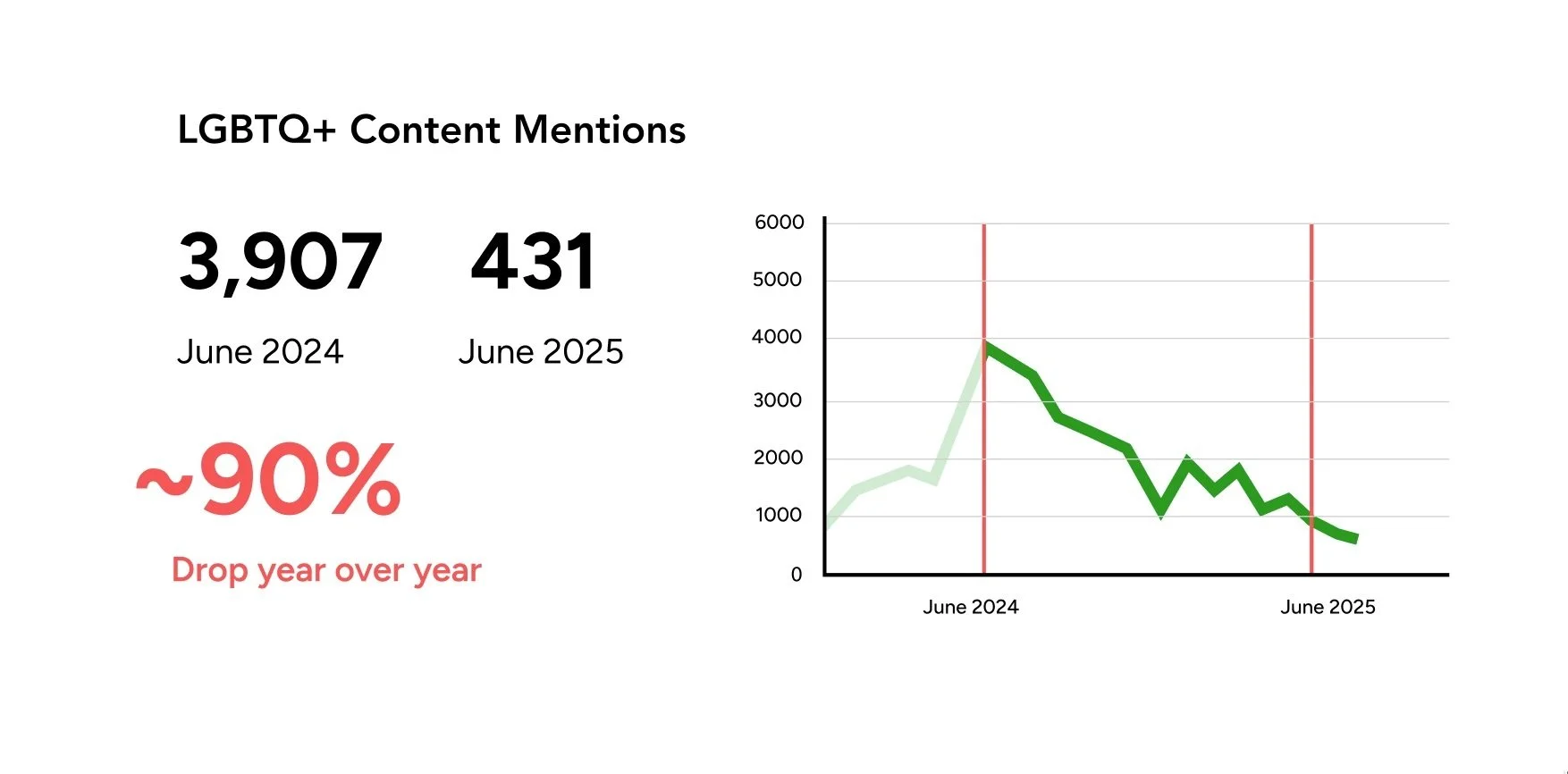
Aggregate Fortune 500 Executive and Corporate communications using LGBTQ+ themes taken from all owned communications, including executive socials and LinkedIn
Cometrics analyzes executive, corporate, and boardroom communications across key societal themes including geopolitics, sustainability, and technology. The platform tracks alignment—and dissonance—between executive voices and corporate messaging, highlighting reputational risk and opportunity.
Decline Across All Sectors
The drop in LGBTQ+ messaging has been relatively uniform across all 12 sectors tracked by Cometrics. Technology showed the largest year-over-year decline at 93%, followed by pharmaceuticals (89%) and finance (80%).
So, what’s behind the widespread retreat?
1. Shifting Internal Communications Strategies
The silence may not indicate indifference. In some cases, executives are shifting focus to internal audiences—such as employee resource groups or HR initiatives—as messaging becomes more centralized through corporate communications departments.
This trend suggests a deliberate, controlled approach to brand voice, especially within large corporations wary of public missteps.
2. Polarization Fatigue and Risk Management
In an increasingly divided political landscape, corporate leaders face heightened scrutiny. Once viewed as progressive and safe, LGBTQ+ advocacy now risks triggering backlash—especially from groups opposed to DEI initiatives.
In some cases, DEI teams are being restructured or reduced, signaling a more cautious corporate posture. Silence or neutrality may be seen as a risk-averse choice amid growing external pressures.
3. Responding to “Rainbow Capitalism” Criticism
Public skepticism is rising around brands that only spotlight LGBTQ+ support during Pride Month. The term “rainbow capitalism” has gained traction, pointing to performative gestures lacking real action.
Executives may be pulling back to avoid accusations of virtue signaling—especially if internal efforts don’t yet reflect measurable year-round commitment to LGBTQ+ equity.

4. A Broader Cultural Reset
The corporate activism surge that followed 2020’s social justice movements is slowing. While private support for inclusive values remains, public-facing advocacy has decreased. The shift reflects both political calculation and evolving stakeholder expectations.
Whether driven by fear, fatigue, or a strategic realignment, this change raises a critical question: What does authentic advocacy look like in 2025?
Measuring What Matters
As the next phase of executive communications unfolds, Cometrics.io offers real-time insight into how companies balance risk, reputation, and values—providing a data-informed lens on the evolution of corporate leadership in a divided era.