

Why Zohran Mamdani’s Win Could Reshape American Politics and Public Relations
What you will learn from this article:
How Zohran Mamdani’s win could redefine Democratic Party strategy and messaging
Why polarized political narratives threaten bipartisan collaboration and media trust
What communications professionals can learn from shifting public sentiment and campaign missteps
When Donald Trump won the presidential election in 2016, it should have been a wake-up call for the Democratic Party. It wasn’t.
When Donald Trump won again in 2024, it should have been another wake-up call. It wasn’t.
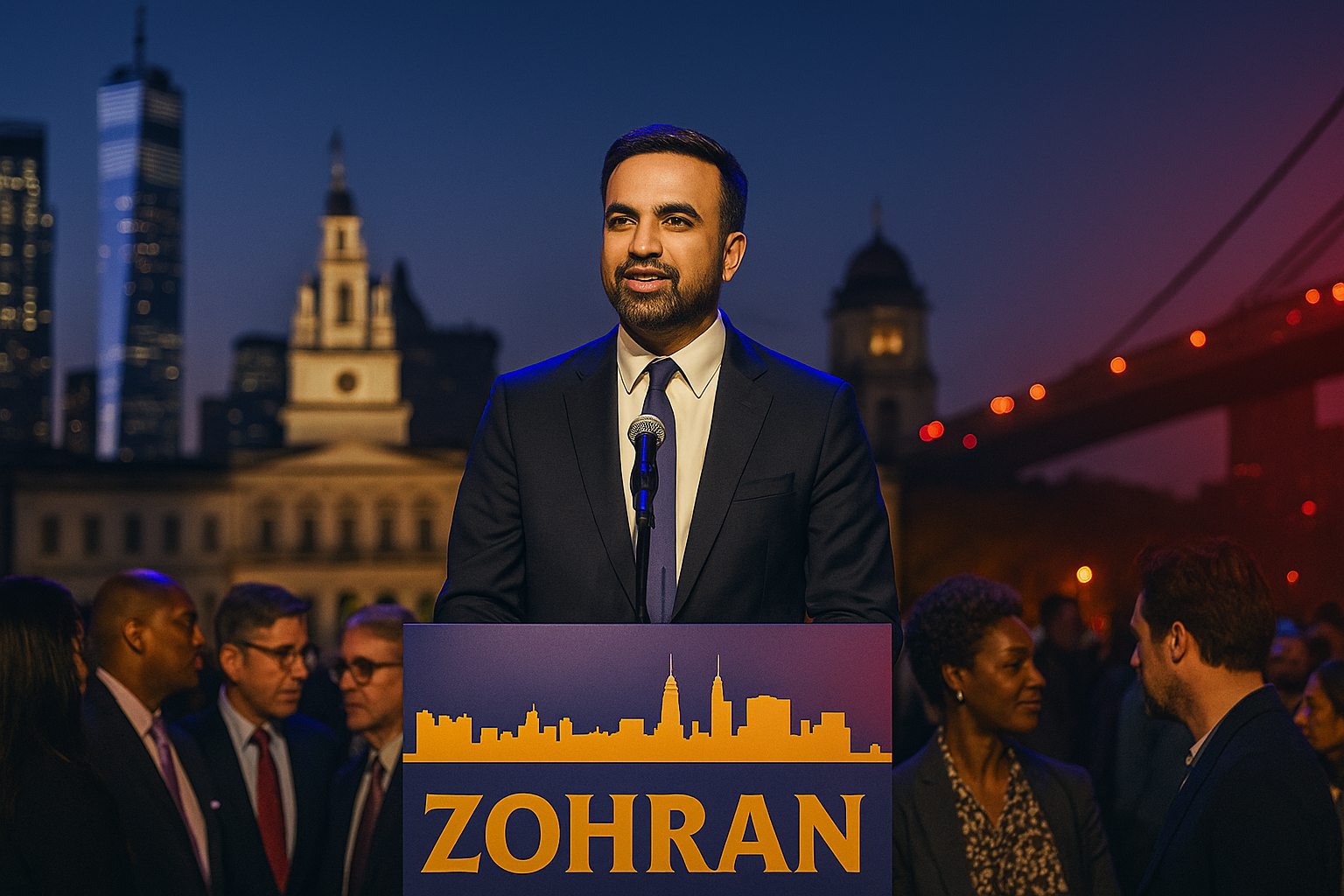
When Zohran Mamdani, a socialist, was elected mayor of New York City, it should be a wake-up call for Democrats. It’s too early to tell if it will be.
What is clear is that Mamdani’s victory is bad news for Democrats because it gives Republicans the chance to define the party as far-left and out of touch with most Americans. They’ll use the many Democratic politicians who endorsed Mamdani to make their case.
The economic and political fallout
The Mamdani victory could also hurt New York City. While many of his far-left policies will require state approval, even the few he can implement as mayor could drive wealthy individuals and businesses away—taking millions in tax revenue with them. For decades, upstate New York has suffered economically because businesses fled. Mamdani’s policies, if enacted, risk extending that exodus to the city.
If his agenda moves forward, the impact on both major political parties could be significant. Democrats may feel pressured to move further left to retain progressive voters, while Republicans will double down on right-wing messaging. The result could be a weakened political center, leaving fewer moderates in Congress to build compromise and common ground.
Why Mamdani won
In my view, it’s not difficult to see why Mamdani won both the primary and general elections:
Most voters ignore primaries and only show up for the general election.
Fanatical voters always show up for primaries, and Mamdani’s socialist backers did exactly that.
Former Gov. Andrew Cuomo sleepwalked through most of his campaign, waking up to reality too late to close the gap.
Traditional liberal Democrats are losing ground because they try to be all things to all people—a strategy doomed to fail.
What Democrats must do
If Democrats hope to recover, they need to stop speaking only to narrow constituencies and refocus on issues that unite rather than divide. Here are 12 steps I believe they should take:
Craft message points that appeal to all Americans, not just special interest groups.
Stop ignoring rural America.
Disavow socialists who infiltrate the party instead of having the courage to run as socialists.
Stop relying solely on anti-Trump messaging; present real alternatives.
Reconnect with non-college-educated and rural voters who feel ignored.
Speak to current voter concerns—not just promises about the future.
Win back younger voters by addressing technological job displacement and AI disruption.
Build new leadership that reflects generational change.
Run local campaigns focused on local issues while maintaining unified national messaging.
Reclaim the center by elevating pragmatic voices like Joe Manchin’s.
Target Republican incumbents in their districts with clear, localized media campaigns.
Engage right-wing media audiences directly rather than denigrating them.
The Jewish vote and the Israel question
Mamdani’s record on Israel adds another dimension to the problem. His statements have been widely criticized as anti-Israel and, in some opinions, anti-Semitic. The Wall Street Journal, The New York Times, and other outlets have documented his comments that equated Israeli self-defense with apartheid and genocide.
This rhetoric threatens to push Jewish voters—historically loyal Democrats—toward the GOP. Although Jewish Americans represent just over 2% of the U.S. population, they vote at high rates and can swing local elections.
As columnist Bret Stephens wrote, Mamdani’s one-sided focus on Israel while ignoring other global abuses reveals an ideological blind spot. Elisha Wiesel, in a WSJ essay, argued that Mamdani “helps promote anti-Semitism” by spreading falsehoods about “occupation” and “genocide.” Bernard-Henri Lévy warned that his victory would “imperil Jews and embolden totalitarians everywhere.”
Lessons for communicators
For communicators, Mamdani’s victory is a masterclass in both messaging success and failure. His team leveraged energized ideological storytelling to mobilize a base—but alienated broader audiences. The Democratic Party’s inability to unify around a clear national message shows what happens when internal divisions override disciplined communications.
As communicators, we know that perception drives momentum. Whether you’re managing a brand or a political campaign, allowing others to define your narrative is fatal.
The future of politics and PR
If Democrats are to recover, they must campaign with authenticity, consistency, and a focus on shared American values. As my mentor once told me, the goal is simple: get the candidate elected. That means speaking to people’s immediate needs, not their aspirations for others.
Our industry—public relations—is not immune to polarization. The deeper the national divide grows, the more likely agencies will be labeled “Republican” or “Democratic,” mirroring Washington’s partisanship. That would be disastrous for the credibility of our profession.
Young PR professionals should pay attention. The polarization threatening democracy also endangers the integrity of communications. The lesson from the Mamdani victory and Cuomo defeat is that complacency kills campaigns. The same rule applies to brands: never assume loyalty, and never stop telling your story with clarity, consistency, and conviction.