

Sustainability Fatigue: How to Communicate Environmental Impact Without the Greenwash
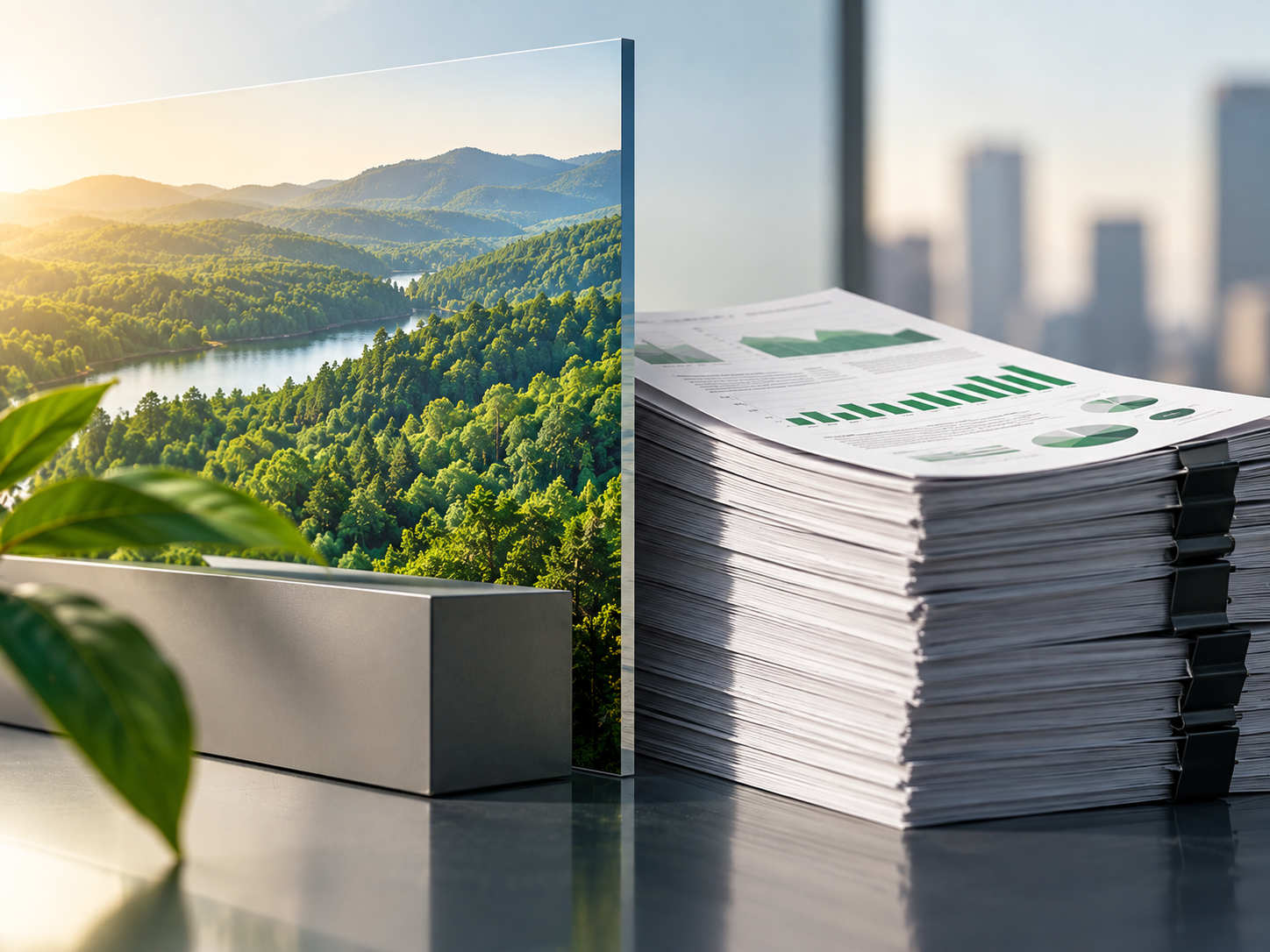
At some point, consumers started hearing (or not hearing) “sustainable” the same way “authentic”, “holistic” or “world-class service” became so ubiquitous and overused that their impact disappeared. With sustainability, it wasn’t about apathy, but rather exhaustion. People still care, but they’re burned out from hearing another brand talk in broad strokes and with vagueness about how they were doing their part to save the world.
This isn’t just a theory: the numbers back it up. Greenwashing concern jumped from 8% of consumers in 2022 to 43% in 2025, and is now the second-biggest barrier to buying from sustainable brands, behind only cost. And the stakes are real: NielsenIQ found that 77% of consumers would stop buying from a company caught greenwashing. Skepticism, it turns out, is now the default setting.
Despite this situation, many brands are still making the same mistakes. Some lean in harder with more badges, more indistinct “eco” language, more earnest hero videos, and dig that credibility hole deeper. Others take the other approach and go silent, a move so common it has its own name: greenhushing. Only 36% of consumers recalled seeing any sustainability messaging from brands in 2025, down from 49% just two years earlier. But neither shouting nor hiding is a strategy.
As we’ve said before, sustainability is now a credential, not a campaign, and credentials have to be earned and proven, not announced. Here are some tips on how to talk about your environmental impact in a way people will actually believe:
Get specific, not superlative. “Committed to a greener future” means nothing. “We cut our water use by 19% over the last year” means something. Specificity is the fastest way to signal you have nothing to hide.
Let someone else speak your truth. Third-party validation is always the most effective approach. This can be through a certification, an audited number, or a journalist who did the digging. All of these carry the independent authority your own marketing cannot. When you’re not the one making the claim, the claim is much more likely to be believed.
Show progress, not just perfection. Admitting what you haven’t solved yet is disarming precisely because so few brands do it. Naming the hard problem is more persuasive than pretending you’ve got it all figured out.
Match the claim to the proof. Ask the uncomfortable question: could we defend this in front of a skeptic (or a regulator)? With authorities tightening the rules on vague green claims, the copy your legal team can back is the only copy worth publishing.
Don’t go silent. Disappearing and avoiding the topic doesn’t read as humility; it reads as having nothing to say. The answer to fatigue isn’t silence, instead it’s substance, delivered consistently, in plain language.
The Bottom Line
Sustainability fatigue isn’t a good reason to stop communicating about your efforts and successes in the space. What separates the brands doing the work from the ones talking about it is the brands that say less, prove more, and let credible outside voices carry the message. When everyone claims to be green, the brand people trust won’t be the loudest, it’ll be the one that can back up every word.