

Global Brands to Confront Climate Messaging During Climate Week
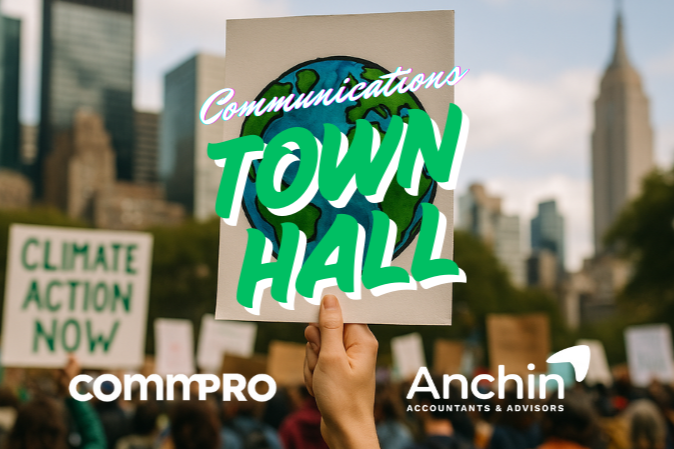
Some of the world’s largest companies will face hard questions about how they communicate the climate crisis during Climate Week 2025. On Thursday, September 25, the Communications Town Hall, sponsored and hosted by Anchin, will gather senior executives from PepsiCo, Edelman, Infosys, Mars, CRH, McCormick & Co., and KIND Snacks.
The forum will focus on the credibility of corporate climate communications at a time when accusations of greenwashing, political polarization, and misinformation are mounting. Discussions will be held under Chatham House Rules, allowing participants to speak candidly.
CommPRO and its publisher Fay Shapiro, who are organizing the event, said the session will move beyond set-piece presentations, beginning with short provocations before opening the floor for dialogue. Topics will include how to balance climate storytelling with accountability, how companies can demonstrate measurable progress, and how communicators can accelerate public understanding while navigating partisan divides.
The challenges set for communicators are stark: How do we move beyond greenwashing to authentic climate storytelling? What does true accountability look like in corporate climate communications? And how can communicators accelerate public understanding and action while navigating political polarization and misinformation?
Participants will explore what it takes to move past surface-level sustainability messaging toward storytelling rooted in transparency and measurable impact. The Town Hall will also examine how corporate communicators can define and demonstrate accountability, and what strategies can most effectively counter misinformation while motivating public action.
“Because climate communication isn’t just a corporate responsibility—it’s a public imperative,” Shapiro said. She will co-host the Town Hall with Paul Kontonis, CMO-in-Residence at CommPRO and Fabric Media.
For communicators, the event offers insight into how multinational brands are aligning messaging with climate commitments while managing reputational risk. The discussion also reflects the increasing pressure on communications professionals to bridge the gap between corporate sustainability pledges and public trust.