

Why Serving Kids Better Means Being BOLDER – The Mr. Magazine™ Interview
Editor's Note: It takes a bold person to launch a magazine in today's media environment. It takes an even bolder person to launch a print magazine for kids and families at a time when screens dominate so much of our daily lives.
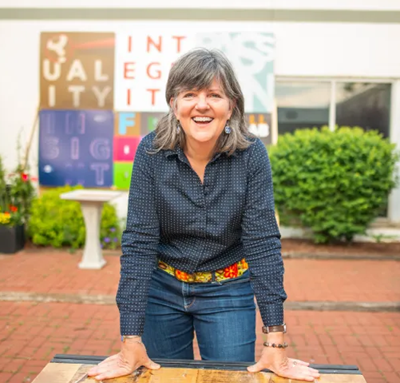
That's exactly what Bronwyn Weaver Archibald has done with BOLDER magazine, a monthly publication for readers ages 8 to 80 that explores "Where Things Come From & Why We Care." Part earth science, part family discovery, and part celebration of curiosity, BOLDER is built on the belief that learning should be engaging, hands-on, and shared across generations.
When Mr. Magazine™ Samir Husni sat down with Bronwyn, the conversation quickly became about much more than publishing. They discussed the value of print in a digital age, inspiring children to explore the world around them, creating a magazine designed to be kept rather than discarded, and the challenges of building a mission-driven publication from the ground up.
What emerges is a fascinating look at a publisher who is swimming against the current and proving that there is still a place for thoughtful, high-quality print content in a digital world. For communicators, publishers, educators, and anyone who believes curiosity still matters, Bronwyn's perspective is both refreshing and inspiring.
Before we get to the interview, here are a few highlights from the conversation:
On the BOLDER idea:
"It was our big idea about two years ago to create a magazine that would engage not only the kids but the whole family about where things come from and why we should care about it. So, BOLDER was born."
On why print matters today:
"Print is so important for, especially for engaging anybody under the age of 18."
On creating a magazine for readers 8-80:
"We've found since we introduced our magazine is that we're writing about things that are enjoyable to discover and to learn about from truly the whole spectrum in a family."
On using BOLDER in schools:
"Some public schools are using the magazine to encourage reading to learn. We've got some schools that are using us for enrichment programs."
On keeping the magazine ad-free:
"We wanted to have a safe space where somebody isn't being sold something."
On what keeps her up at night:
"Getting to kids that are fixed to their devices and interrupting that by getting them outside or giving them something in print to read."
And now, please enjoy this lightly edited interview with Bronwyn Weaver Archibald, editor in chief of BOLDER magazine.
The Interview
Samir Husni: Please tell me about BOLDER.
Bronwyn Weaver Archibald: So, it was our big idea about two years ago to create a magazine that would engage not only the kids but the whole family about where things come from and why we should care about it. So, BOLDER was born.
SH: Why a print magazine in this digital age?
BWA: Print is so important for, especially for engaging anybody under the age of 18. I think that the way that studies have shown that the way that a young brain works, it is a much healthier environment for them to read information and to be able to enjoy it, to be able to engage with the information when it's in print.
Being on devices is something parents, grandparents, schools, I think everybody is thinking second thoughts about having children only consume information that they see on devices. And so, we think the experience of holding something in your hands, of being able to read it kind of back and forth, to be able to pick out a pencil or a pen. We've got art exercises in the magazine to be able to engage with it, put it down, be able to pick it up and go back to it later.
Those are, we think it's not just old school or nostalgic, but it is something that is joyful that we want kids to experience.
SH: Your tagline, "A Monthly Magazine For Kids 8-80": care to explain?
BWA: Yeah, exactly. And that's what we've found since we introduced our magazine is that we're writing about things that are enjoyable to discover and to learn about from truly the whole spectrum in a family.
For the kids to share it with parents or grandparents, for parents to engage the kids with and not have it be boring. So many things written for children are not engaging. They don't allow a child to use their imagination through discovery.
If you've ever seen the original Toy Story movie, it had content that engaged children, but there was also a subtext that engaged the parents or adults watching the movie so that everyone enjoyed it together.
That's what we try to do in the magazine. No matter what age you are, you can learn something and discover something you never appreciated before.
SH: What gave you the idea for BOLDER?
BWA: Well, my background is in geology. And on our team we've got subject matter experts that understand discoveries in earth science, whether it's discovering a resource and then figuring out how that powers a power station, goes into road building, or how those resources are used.
We also have people on our team, including our managing editor, who was a teacher for 15 years. So we delight in making it interesting for kids.
We're very passionate about our mission to connect the dots about where things come from. We didn't begin this exercise, begin BOLDER Magazine, to be a profitable enterprise. We started this magazine because we thought it was an important thing to do. We're hoping it becomes more sustainable as more people find out about us.
We're pretty passionate about our mission.
SH: I see you are, so to speak, spreading your wings to reach schools now.
BWA: Yes. We've been very well received in schools, whether private or public. Some public schools are using the magazine to encourage reading to learn. We've got schools using us for enrichment programs and others incorporating us into earth science classes.
Our magazine is designed to be supplemental. We're not trying to replace curriculum. We simply want kids to be curious about getting outside and exploring nature and earth science.
SH: You've done a wonderful job with the issues that I've seen. Has it been a walk in the rose garden?
BWA: It's not been a walk in the rose garden. In some ways, it's been a walk in the briar patch.
We underestimated the impact of the digital creep on printed materials. We didn't appreciate that it had been a long time since people got excited about a magazine arriving at their home every month.
We're having to show people not only what we've created, but remind them what it's like to receive something in the mail that the whole family can enjoy.
I grew up with National Geographic. Whether you looked at the pictures or read the articles, it was something the whole family enjoyed and then kept on a shelf. That's part of what we're trying to create.
SH: So it's timely but timeless?
BWA: Exactly. Our first issue had a date on it. After that, we decided to use Roman numerals. In our disposable world, we're encouraging subscribers to keep every issue and build a collection.
SH: Besides the digital creep, what other challenges have you faced?
BWA: One big part of our mission is addressing climate anxiety. There is so much fear and negativity. We want to communicate that people are solving problems every day and that innovation is happening all around us.
We don't talk about controversial issues. We want kids to be curious, grateful, and interested in becoming part of the solution.
We're not anti-technology. Every issue includes audio stories so readers can listen while they read. We simply believe there is tremendous value in print.
SH: You're a positive voice in a sea of negativity.
BWA: Thank you for saying that.
SH: Which do you like more, being a geologist or being an editor-in-chief?
BWA: I recently reached out to a geology professor who inspired me when I was in college. Through the magazine, I feel like I have the opportunity to inspire curiosity in others the same way he inspired me.
Maybe something a child reads in the magazine becomes a lifelong hobby, passion, or even a career. That's incredibly rewarding.
SH: What question have I failed to ask you?
BWA: Why we don't have advertising.
We do need subscribers. Another few thousand subscribers would make a huge difference to our economics. But our team felt it was important to create a space where readers aren't constantly being sold something.
We wanted the focus to remain on storytelling, discovery, and learning.
SH: Anything else you'd like readers to know about BOLDER?
BWA: We formulated the magazine around our mission. We wanted it to feel substantial, almost like getting a book every month. Every issue has a theme and includes enough content that somebody in the family will find something that sparks their curiosity.
SH: If I came uninvited one evening, what would I find you doing?
BWA: You'd probably find us on our farm. I'm sitting in a barn that was built in 1870. We might be feeding baby goats, tending the garden, feeding chickens, or caring for horses.
We love being outside. That's a big reason we feel called to get kids interested in exploring nature and the world around them.
SH: So you are as BOLDacious as the magazine itself?
BWA: Yes. When we were naming the magazine, we originally considered spelling it like a boulder. But we decided we wanted kids to feel confident and optimistic about the future. That's why we chose BOLDER.
SH: My final question. What keeps you up at night these days?
BWA: Getting to kids that are fixed to their devices and interrupting that by getting them outside or giving them something in print to read.
"Interview conducted by Mr. Magazine™ Samir Husni and republished with permission."