

Why Goodness Should Be Copyrighted
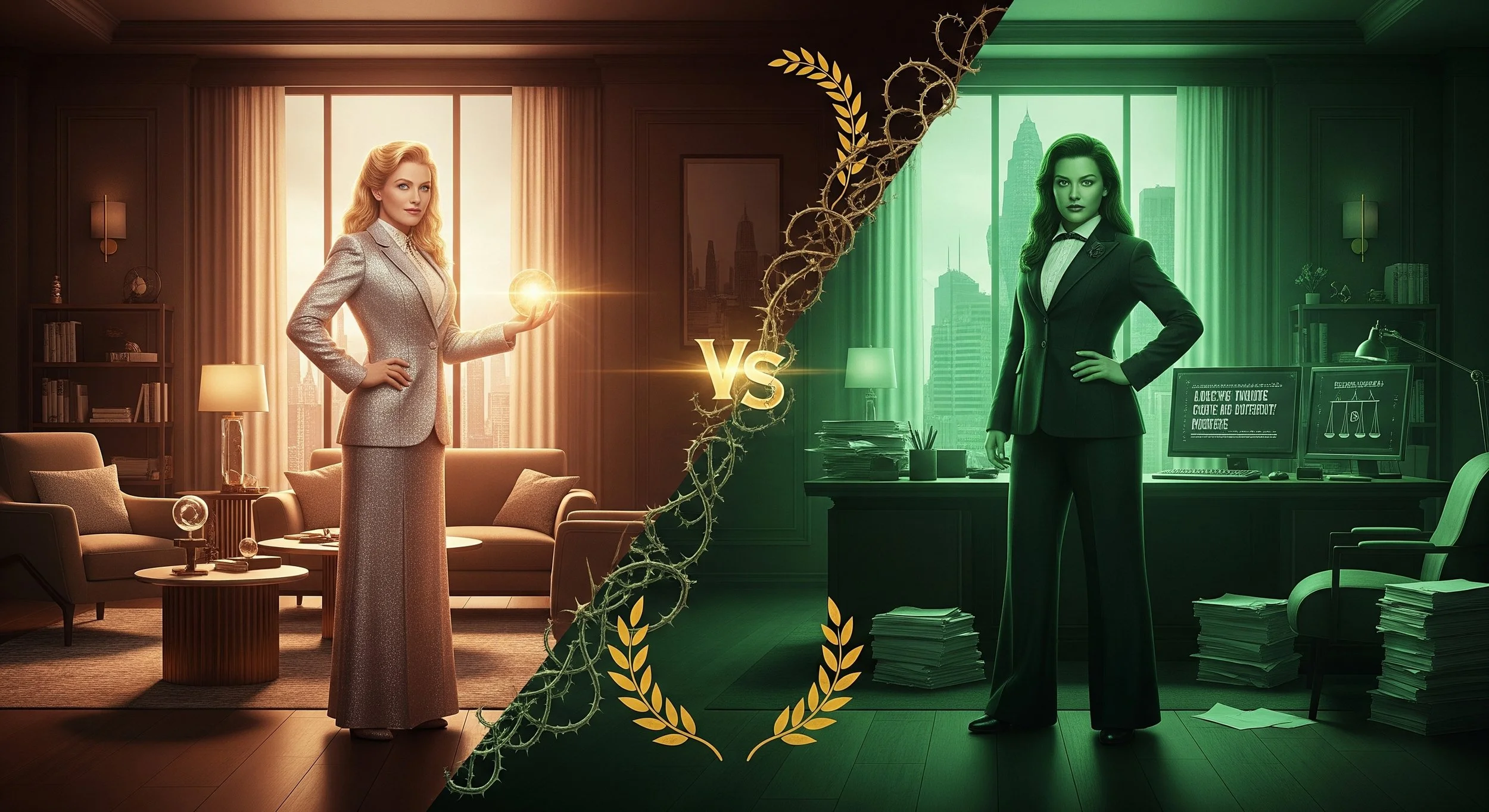
“Are people born wicked, or do they have wickedness thrust upon them?” Glinda’s opening question hangs over Wicked like a verdict. In the new film, there’s a moment when the polished, beloved and perfectly good Glinda declares, “We must be vigilant against her!” The “her” is Elphaba, the so-called Wicked Witch, whose greatest crime is refusing to follow the script. She questions authority, challenges how power is used and refuses to sweeten the truth, which is enough to get her rebranded as dangerous. Watching the film in 2025, it feels less like fantasy and more like a case study in how power structures decide who gets to be trusted.
In one of the trailers, Cynthia Erivo’s Elphaba insists, “We can’t let good be just a word. It has to mean something.” In Oz, “good” might as well be a trademark: reserved for Glinda, revoked for Elphaba with a few posters, a podium and a persuasive script. Goodness becomes a state‑sanctioned label, controlled by whoever owns the microphone. Anyone can be recast as wicked with the right headlines and enough repetition. And that’s how reputations are destroyed: not through truth, but through storytelling.
Fast forward to 2025, and we still live inside that emerald‑tinted world. The characters have changed, but the dynamics haven’t. Recent research on shareholder activism found that women made up roughly 8% of Russell 3000 CEOs in 2025 but accounted for about 15% of activist campaigns explicitly targeting CEOs, making female leaders around twice as likely to be singled out as men. At the same time, commentary has flagged a troubling perception shift: trust in women leaders is eroding even as more of them reach the top of politics and business. In the court of public leadership, “goodness” is a gendered performance — admired when it’s gentle, punished when it’s firm. Elphaba would understand that perfectly. After all, “No one mourns the wicked.”
The narrative burden is heavier when you’re a woman in power. McKinsey & Company’s Women in the Workplace 2025 report, developed with LeanIn.Org, found that about six in ten senior‑level women frequently feel burned out, compared with roughly half of men at the same level. Flexible work still carries stigma, caregiving infrastructure remains thin and the emotional labor of constantly proving credibility falls disproportionately on women. It’s a constant double bind: be excellent, but not intimidating; empathetic, but not emotional; ambitious, but not “wicked.”
Even in the corporate Oz, image management determines who’s celebrated and who’s scapegoated. The shadow of Elizabeth Holmes still hangs over the conversation about women and trust in leadership, especially in tech and biotech, but centering her too heavily risks letting one high‑profile fraud become a distorted archetype for countless unrelated women leaders, while male scandals are more often treated as isolated failures. The danger isn’t just perception; it’s the erosion of faith in women’s credibility as a class and a narrowing of who is allowed to lead without being cast as a threat.
This is where communications professionals must step in — not as spin doctors, but as truth defenders. The work lies in ensuring that the truth is well told, protecting narratives from distortion before they calcify into myth and challenging mis‑ and disinformation early, rather than letting rumor become “reality.” Reputation, especially for women leaders, has become a form of intellectual property: it needs to be actively developed, documented and defended, not simply assumed. Transparency, authenticity and courage should be treated as proprietary assets, as fiercely protected as any trademark.
If Elphaba were leading today, she wouldn’t need Oz’s approval. She’d need a skilled communications team. One who knows how to challenge rumor with reality, one headline at a time and build values‑aligned communities ready to counter bad narratives before bad‑faith actors define her first. In Wicked: For Good, Glinda’s loneliness underscores the cost of being “Glinda the Good.” To maintain her brand, she must accept a narrative that sacrifices Elphaba’s reputation and, for a time, their relationship.
That question now belongs to communicators and organizations: Why does one woman have to be cast as wicked so another can be seen as good? If women leaders are going to do more than survive the current cycle of activism, bias and burnout, they need systems and storytelling that let them be complex, demanding, visionary and occasionally unpopular without being branded irredeemable. Good should not be just a word, and it should not be a copyright controlled by whoever holds the microphone; it should be a story leaders co‑create with their stakeholders, grounded in action rather than propaganda.