

What Every Communicator Should Know Before Their Next Business Dinner
What you will learn from this article:
How your nonverbal cues at the table communicate credibility, confidence, and composure — and why communicators should view dining etiquette as an extension of their leadership presence.
How to navigate business meals with cultural intelligence and emotional awareness, strengthening professional relationships and showing respect in global communications settings.
How mastering dining etiquette reinforces your personal brand and communication strategy, helping you project authenticity, authority, and professionalism in every interaction.
Picture yourself seated next to a prospective client at a conference dinner, having lunch with your boss at a nice restaurant, or dining with global team members you’ve only known virtually.
Now imagine that you’re making solid points about the product, service, or idea you’re trying to promote. How do you think it’s going?
You might not realize that your credibility can erode before you even start the pitch and not because of your words, but your nonverbal cues at the table.
Like any other professional encounter, a business meal is an opportunity to build relationships, enhance your leadership presence, collaborate, influence others, and even make deals. That’s why learning or refreshing dining etiquette has become a frequent request when I coach high-level business professionals. For communications leaders, these skills are not about memorizing rules; they’re about demonstrating awareness, empathy, and adaptability, the same qualities that make messages resonate across audiences and cultures.
You don’t need perfect table manners to make a positive impression, but making several etiquette errors during a single meal will be noticed, and often judged, by those who know better.
Starting with something very basic, here are a few of the errors that diminish your professional presence and what to do instead:
Don’t slump or lean forward with your elbows on the table.
Do sit up straight; good posture signals confidence and comfort.
Don’t put your cell phone on the table or anywhere it’s visible, and don’t answer calls or check messages.
Do keep your phone out of sight and on silent.
Don’t start eating as soon as your food arrives.
Do wait until everyone is served. If the table has a host, wait until they begin.
Don’t use your neighbor’s bread plate or drink from the wrong glass.
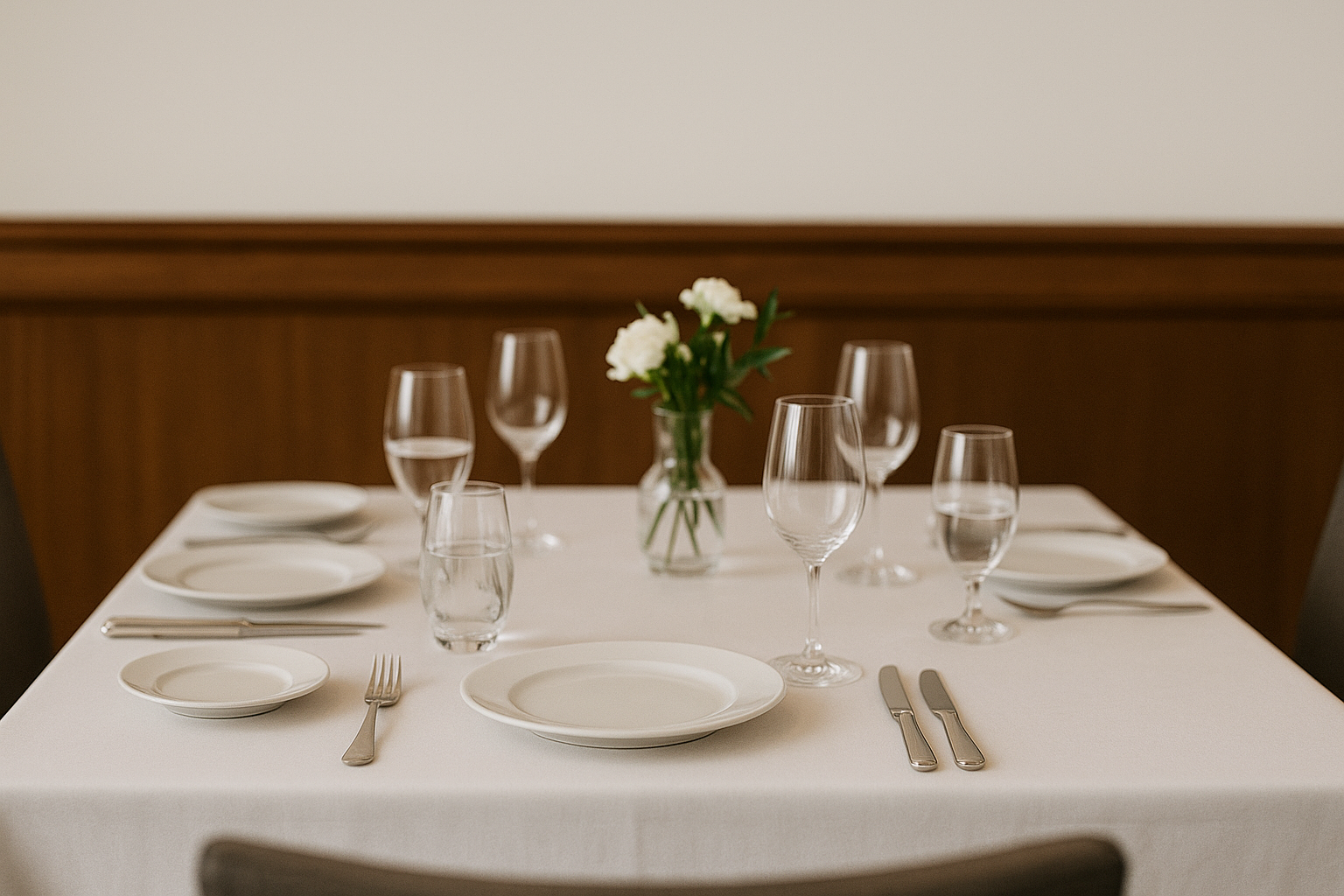
Do remember: the bread plate is on the left above the forks, and all glasses are on the right above the knife and spoon.
Don’t leave your napkin on the table.
Do place it on your lap for the entire meal. If you leave the table, place the napkin on your chair or to the left of your plate to signal that you’ll return. When the host places their napkin on the table, it signals the meal is over.
Don’t push your plates away or stack them when finished.
Do leave them as they were originally placed. Lay your fork and knife diagonally across the plate, side by side, pointing at 10:00 and 4:00. This tells the waitstaff that you’re finished.
Don’t monopolize the conversation.
Do ask questions and encourage others to participate. Conversations — not monologues — build relationships, promote collaboration, and project confidence. The same principle applies to media interviews, team meetings, or stakeholder discussions. The ability to listen actively and draw others in shows emotional intelligence, a trait that defines today’s most effective communicators.
Don’t be rude to the waitstaff.
Do treat them with courtesy. If there’s an issue, address it politely and quietly. People at your table will draw conclusions about your character from how you treat others.
In a global communications environment, cultural etiquette reflects respect and adaptability.
Don’t assume your familiar table manners automatically apply.
Do recognize that cultural courtesy varies — like eating fried chicken with a knife and fork in most of Europe, or using your hands for many dishes in parts of Africa.
In communications, these small behaviors may seem trivial, but the way you conduct yourself at the table is a form of storytelling. Composure, respect, and awareness in these moments demonstrate the same discipline that shapes clear, persuasive messaging. When you show grace under pressure, even over dinner, you’r