

It’s hard to rationalize writing about certain topics that you don’t want to dignify with attention. Sydney Sweeney’s skin-baring ad for sports betting firm Novig embodies that tension. If the ad were objectionable in only one way, it might be best to let it slide into obscurity, but its dual concerns demand closer scrutiny.
Sweeney is known for her acting roles in series such as Euphoria and The White Lotus, as well as serving as the spokesperson for another controversial ad campaign, American Eagle’s “Great Jeans.” While AE's ads were contentious because of sensitive wordplay, Sweeney’s spot for Novig is far less subtle.
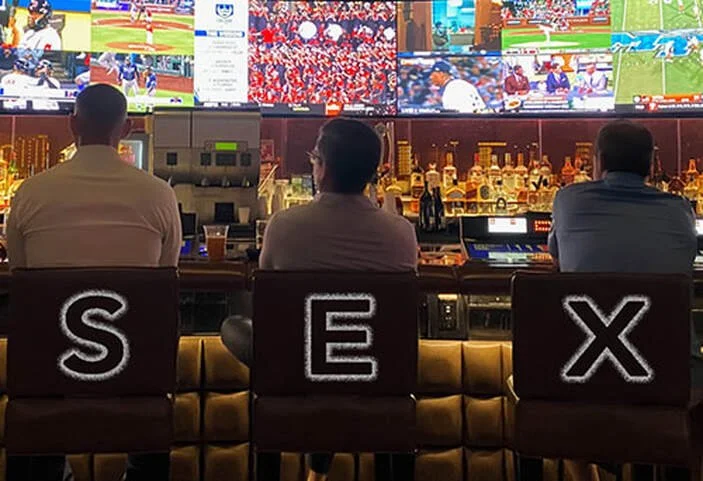
The ad for the all-sports prediction market company leaves little of Sweeney to the imagination. In a combination of clips evocative of “ESPN meets Playboy,” the actress strikes several highly suggestive poses, covering parts of her otherwise nude body with footballs, hockey gloves, shoulder pads and other sports equipment. It’s ironic that a spokesperson in a sports-related ad wears no uniform.
I won’t provide a link to the ad because I don’t recommend watching it, but you can find it through search if you feel you need to see it. My reticence suggests the first and most obvious reason for censuring the spot: its extreme sexual explicitness. In my view, it pushes well beyond what most advertising typically depicts.
One might wonder, “If the spot is so salacious, why would regulators allow it to air? Surely federal law should censor it.”
If shown on broadcast media, the ad could be subject to Federal Communications Commission (FCC) rules governing obscene, indecent and profane content.
The ad apparently has avoided such restrictions through digital-only distribution. A patchwork of laws, age-verification requirements on certain websites and digital platforms’ ability to regulate their own content creates a very different environment for sexually explicit material online.
Those are some of the reasons why Novig’s Sweeney ad is available, but what makes it unseemly? Over millennia, there has been great diversity of opinion about what constitutes indecency, including sexual impropriety, ranging from public acceptance of prostitution in ancient Rome to Puritans’ repudiation of sex outside of marriage.
Such diverging perspectives about sex-related communication exist within societies today, as evidenced by some who have applauded Novig’s ad for celebrating the beauty of women, while others suggest that the same spot objectifies them.
Because such disparity exists about which moral principles are relevant to sexual explicitness, it may be helpful to consider possible consequences of Novig’s ad. The following are four potential outcomes:
1. Greater appreciation of women’s beauty: Because some claim this benefit, it would be disingenuous to dismiss it. However, in projecting the possible outcome, we also should consider a key target market for sports betting, young men, and ask: To what extent do most of them not already believe women are beautiful?
For young men, that recognition tends to come naturally. What likely would be more useful is helping the target market see women as whole people, beautiful beyond specific body parts and not simply as objects of sexual desire, a suggestion that leads to the next outcome.
2. Seeing women as sexual objects: It’s natural for adults to want to be seen as attractive and, in many cases, sexually attractive. Such beliefs about oneself can support positive self-esteem and be part of healthy, reciprocal relationships. However, the extreme sexual suggestiveness of the Sweeney ad arguably stimulates carnal cravings more than it encourages mutual respect and admiration.
After the 2020 Super Bowl halftime show with Jennifer Lopez and Shakira, I wrote an article asking if the Federal Communications Commission should have allowed the sexually suggestive performance. In the show’s aftermath, some cheered women’s empowerment while others argued objectification. I agreed with the latter, citing several instances when cameras zeroed in on specific body parts of the performers, effectively disaggregating their personhood.
Novig’s ad features similar shots of Sweeney, who wears even less clothing. While the money high-paid product spokespeople make may empower them, oversexualized portrayals of women’s bodies can contribute to broader concerns about objectification.
Former Yale University student Veronica Lira Ortiz, for example, has described her experience as a child in a Latin culture infused with machismo:
“I was twelve years old, and a man on the street [in Mexico] was already verbally harassing me. He looked at me as if I were a juicy steak instead of an innocent child.”
3. Potential contribution to harmful attitudes: Will a man view Novig’s ad and then sexually abuse women? Probably not. Still, repeated sexual objectification across media can contribute to attitudes that diminish women and potentially reinforce harmful behavior.
Organizations including UNICEF and the American Psychological Association have examined concerns about the sexualization and objectification of women and girls and their potential interpersonal and societal consequences.
4. Greater risk of problematic pornography use: Men can harm women when objectification contributes to abusive attitudes or behavior. They can also hurt themselves and their loved ones when sexually explicit visual and verbal content becomes compulsive.
Research and health professionals continue to examine problematic pornography use and its potential relationship to mental health, work performance and personal relationships. Of course, viewing one sexually explicit ad doesn’t constitute an addiction. The concern is whether repeated exposure to increasingly explicit content can reinforce compulsive patterns for some individuals.
Outcomes two through four above are concerning by themselves, but what makes Novig’s ad potentially doubly destructive is the product it promotes: prediction markets.
Six months ago, I wrote an article about these betting exchanges, which operate differently from traditional sportsbooks by matching participants taking opposing positions rather than having a “house” directly take bets and pay winners.
For some, gambling is a pastime they enjoy recreationally and can stop at any time. For others, betting becomes an addiction they struggle to control, threatening their health, relationships and financial well-being.
Prediction markets have also expanded the range of events on which people can wager, from political outcomes to highly personal questions involving celebrities.
On one hand, Novig is narrower than some prediction-market competitors because its focus is sports. However, research has raised particular concerns about sports betting and young men.
In sum: Novig’s ad with a nearly nude Sydney Sweeney combines two potentially addictive appeals for a young male target market: highly sexualized content and sports gambling.
Leading people toward potentially addictive behavior raises serious ethical questions. Combining two such appeals in a single campaign makes Novig’s approach an especially provocative example of what I call Single-Minded Marketing.
Editor’s Note: The views expressed in this commentary are those of the author and do not necessarily reflect the views of CommPRO. The piece is published as part of CommPRO’s commitment to thoughtful discussion of marketing, communications and business ethics.