

Local Reporters Urged to Fill the National Accountability Gap
Here’s what you’ll learn when you read this article:
Why local journalists are being called on to counter national media roadblocks under the Trump administration
How civic journalism principles can empower communities to hold public officials accountable
What tools and strategies local reporters can use to elevate coverage of federal policy impact on their regions
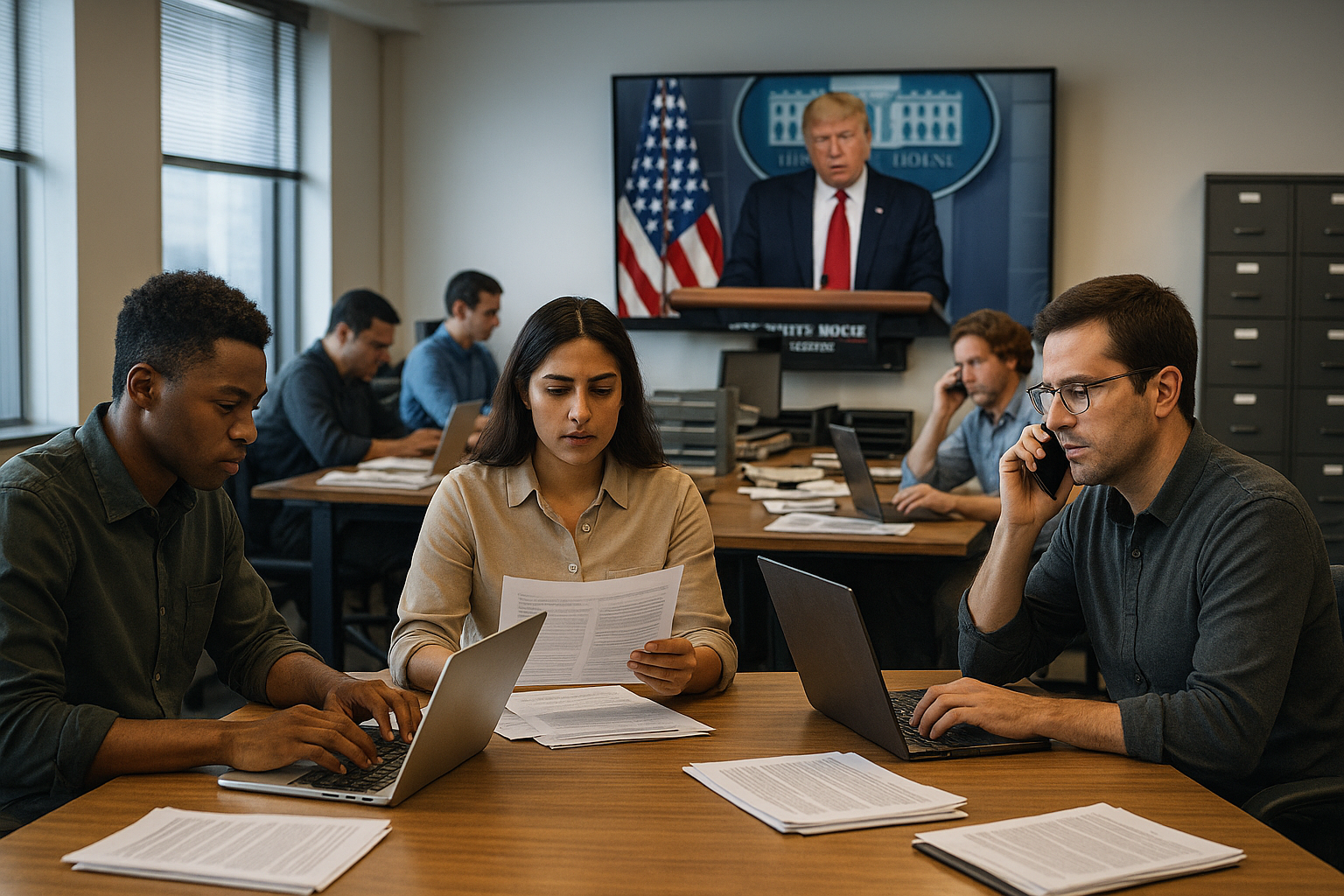
At a time when members of the national press corps based in Washington, D.C., are bullied, intimidated and sometimes just ignored by President Donald J. Trump and his administration, journalists outside the nation’s capital maintain that local reporters around the country need to take on a more active role in informing the public and protecting our democracy.
Picking up on the phrase “All politics is local,” famously stated by former House Speaker Thomas “Tip” O’Neill back in the 1980s, Professor Emeritus Ernest Wiggins at the University of South Carolina Journalism School believes that the focus must shift from current White House briefings, which are often riddled with misinformation and outright propaganda, to regions and states.
“By extension from O’Neill’s point, all political reporting is local,” Wiggins maintains, pointing out that since the current administration is determined to be uncooperative with mainstream national reporters who have not shown fealty to Trump and his agenda, local and regional reporters and media outlets must step up to the plate.
“If the news media’s goal is to maintain the flow of information vital to a well-informed citizenry, as the Society of Professional Journalists’ mission statement holds, then it would seem to me that switching off information sources that are unreliable would be smart,” he says, noting that Trump and his Cabinet secretaries don’t seem inclined to tell the truth.
A longtime journalist himself, Wiggins adds that local elected officials and other newsmakers are generally more accessible and responsive because a well-informed citizenry is more impactful on their success.
He further notes that many of Trump’s actions, whether cuts in Medicaid and the closing of hospitals in rural and poor urban communities or his push to send the military into local communities, directly impact people living in those areas.
“Consequently, the need for local media outlets to expand their coverage grows greater with each passing day,” Wiggins argues.
Richard Greb, who previously wrote for The Associated Press, Reuters and the Chicago Tribune, agrees.
“Local reporters must roll up their sleeves and report every Trump initiative that will potentially impact their communities,” he says, urging them to fully utilize accounts from national wire services and other resources for the big picture while bolstering their coverage with comments from local residents being affected.
Greb cites the Medicaid cuts as a case in point. “With so many health care providers and patients being impacted, local reporters can show how the causes go back to Trump.”
In this way, he believes that a national news story like this will get the more well-rounded coverage it deserves.
He also points out that local reporters and the outlets they work for don’t face the same kind of scrutiny from Trump that the national networks and the conglomerates who own them receive.
“They generally have more freedom to operate in providing in-depth coverage with less fear of being threatened,” Greb argues.
In a time when all except the largest and wealthiest news operations are facing staffing challenges and yet are under growing pressure to meet the expectations of consumers for constant updates on matters of interest, Wiggins believes that the time has come for revisiting some of the principles and practices of civic and public journalism, including the creation of citizen advisory boards and hyperlocal initiatives that invite members of the public to contribute to the reportage, especially about the impact of policy decisions on real people.
Along these lines, he concurs with the American Journalism Project in Washington, D.C., which promotes a return to local reporting because “it helps communities understand what’s at stake in local elections, equips them to get involved in the political process by voting, contacting officials and running for office, reduces political polarization and holds public officials accountable.”