

Kurt Roberts, Chief Experience Officer and Founder, Goodbeast— A Capitol Communicator Profile
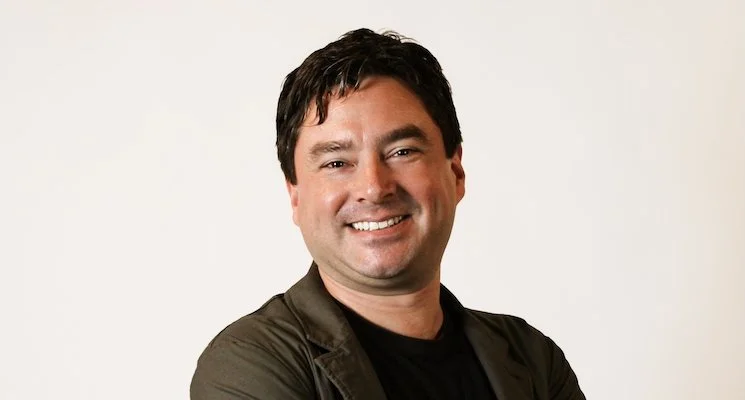
Photo credit: Catherine Kiesel, Goodbeast
Editor’s Note: Capitol Communicators is a profile series spotlighting the people shaping the present and future of advertising, digital, marketing and public relations in the Mid-Atlantic. This profile features Kurt Roberts, Chief Experience Officer and Founder, Goodbeast.
Kurt Roberts has a fascinating relationship with technology. His work is rooted in it. Yet he is equally passionate about stepping away from it when he isn’t working.
Roberts is co-founder of Goodbeast, an experiential marketing studio he launched in 2017 with his business partner, Jay McDowell. He describes himself as a creative technologist and storyteller, building worlds where the digital and physical collide. In a world dominated by digital noise, where technology can pull people apart, Roberts’ goal is a create human connections through technology; and marketing experiences where the audience becomes part of the story.
Yet, Roberts is intentional about unplugging. He prefers real books to digital feeds, time outdoors to scrolling, and places little emphasis on social media in his personal life.
He brings that sensibility to his work. As he tells us, “You get what you inspect, not what you expect.” It’s a simple idea – that it is important to slow down, pay attention, and fully engage in collaborations that can bring great work to life.
Goodbeast, with offices in DC and Portland, Oregon, counts Nationwide Children’s Hospital, the Portland Winter Light Festival, Children’s National Hospital, and George Mason University among its many clients. He measures success with the usual quantitative measures: increased donations, revenue, email sign-ups, etc. The hugely important measure for him, however, is qualitative – seeing people engage with a sense of wonder.
For Nationwide Children’s Hospital in Columbus, Ohio, a holiday “Light Up the Lawn, Light Up a Life” experience touched the hearts of patients, their families, hospital staff and community members with a lightshow of over 120 larger-than-life-sized butterflies on the hospital’s lawn. The butterflies would light up anytime someone donated to the fundraiser, raising money while creating a joyful experience. One year, a couple found the Portland Winter Light Festival’s immersive experience so wonderous, they got engaged to be married there!
Kurt, please tell us about yourself.
Professionally, I’m very interested in how technology makes us more human rather than less, and how it can be used to build deeper connections between people. I brought this interest to Goodbeast, the experiential studio I co-founded in 2017 with my business partner, Jay McDowell. We use a healthy dose of creative technology to tell stories and integrate tricky things like donation software and installation art that aren’t made to plug into each other.
In my personal time, I’d much rather be away from screens and spend my free time in nature, checking out new music, or buried in a book (a real, paper one). Unplugging shifts my perspective and reveals incentives and patterns in technology that is key to making our work more human.
For anyone who isn’t familiar with it, how do you explain experiential marketing?
Experiential marketing usually involves real-world, in-person interventions, such as an event, an installation, or another activation designed for you to engage with and hopefully share with others, either electronically or by bringing friends along. I think experiential marketing is a terrible name for it, but we have to call it something.
What are the things you are most proud of?
Our work.
I’m really proud of our piece for the Portland Winter Light Festival this year, Whispering Wishes. We created an interactive piece, dubbed as a wish amplifier. It asked people to step up to a microphone and say their wish to contribute hope for a better world. After contributing their wish, it added the message into a real-time sound collage, based on what everyone previously whispered. The sound collage was seeded with some found audio – radio broadcasts from Portland in the 60s, bits of folk songs and opera solos and some recorded spoken texts along with some electronic noise based on the sounds of old computers and analog circuitry.
We had a couple people ask us about analyzing the audio of people sharing their wishes and learning about what people wished for, and I was proud to say that’s not the point. The point of the piece, which didn’t save any of the audience contributed audio at all, was to make people think about what they wanted and how they could create a better world. Thinking about it is the important part – it’s about creating hope, not creating data. By sharing their wish, each person is making the artwork become whole.
What are the most significant changes or trends you see happening or coming in the communications industry in 2026?
Digital noise is the new reality. We’re going to continue to be in this hyper-saturated media environment that we see accelerating on our social networks, and with AI it is more prominent than ever. Facebook is pretty openly saying in the near future marketers won’t need creatives in the loop – with generative AI advertisers will just pick their segments and Facebook’s tools will create creative units tailored to each individual user they’re targeting.
I’m sure that sounds great to a certain subset of marketers. The problem is that LLMs and most of the “generative” AI we deal with today is an averaging machine. It’s using statistics to pick out the next most likely word. And as a result, it literally creates average outcomes.
We’re facing this onslaught of mediocrity by leaning into what makes us human. How do we facilitate person to person connections? How do you say something interesting, unique and human, and have it heard above the noise? Those are the questions we wrestle with at Goodbeast.
What tools should we be using to be successful?
Our brains. Chasing tool trends is a waste of time. If you can express yourself best on graph paper, use it. Or Photoshop. Or Sketch/Figma/whatever new design tool the community is raving about. Or go ahead, use agentic AI. But remember that a tool isn’t going to make you successful – to be successful, we need to use our brains, our creativity, and cultivate our sense of taste.
What are the social media tools and platforms that you find most valuable now and expect to use in 2026?
I’m pretty much down to Reddit, and I don’t even have a Reddit account. There’s lots of valuable insight on Reddit, but I also just find the things other people post about fascinating.
Lurking in Reddit Washington, DC isn’t going to change your life, but you begin to see what people value, and how we cooperate or don’t. Like the ice storm earlier this yeargenerated tons of posts about people’s bad shoveling and parking behavior. What’s sitting under those complaints is a real desire to have a community, to work together, to have neighbors that want to be part of your tribe. It’s not always constructive, but people are looking for support and a group
What advice helped you most in your career, and is that advice still relevant today?
When I was still a software developer full time, my boss shared the advice that to get ahead, I needed to learn to “program with hands other than my own.” He was pushing me to accept more management responsibilities. I’ve always been a little leery of the idea of being in charge; the best teams still feel like partners. But I agree with his point that rallying people together behind a vision lets you make bigger and better things than you ever could on your own.
I think it’s even more relevant today, given that some amount of work on teams, like it or not, is being outsourced to “AI.” That means a lot of different things in different fields and contexts – for us that’s usually more about computer vision models than text generation. When you do generate ad copy or code, though, you need to know what good ad copy or code looks like. And that’s fundamentally a question of supervision or understanding how to manage the AI tool.
What professional advice do you have for others?
Throughout my career I’ve collected quite a few aphorisms about how to operate. The one that comes to mind in our distracted present moment is “You get what you inspect, not what you expect.” Slowing down, taking the time to check the work you’re doing and to fully engage in the collaborations you are part of is the key to creating work you can be proud of.
Are you involved in any professional organizations and do you find them to be valuable? Why?
Having a professional community is incredibly important. I’ll shout out AAF-DC here. I got involved again about 3 years ago after a long break (starting a company takes a lot of time!) and I really value the relationships and connections I’ve made there. Sometimes it’s just a question of having people around you who face some of the same dilemmas as you, sometimes it’s great to see how you can help each other solve problems. Goodbeast isn’t an ad agency – we don’t buy media or make ad campaigns. But we’re in the ideas and storytelling business and having that support from your community is invaluable.
What keeps you up at night and what brings you joy during the day?
You mean beyond the normal laundry list of things that keep all small business owners up at night, right?
The thing that gives me joy is knowing that we’re all out here craving connection, trying to figure the world out and making things for one another. There’s nothing as satisfying as finishing something that you then get to share with the world.
You said you like to unplug by checking out new music or reading real books. Any recommendations for us?
I tend to read subjects in streaks, and I recently finished Alex Ross’ The Rest is Noise, a comprehensive non-fiction history of 20th-century “classical” music. Then I read Richard Powers’ Orfeo, which fictionalizes a similar subject, with the twist of a composer the government has decided is an eco-terrorist. It dictated my musical listening for a couple of months, as I made playlists of pieces based on both books.
But if you want a lighter suggestion, The Black Crowes new album, A Pound of Feathers, is a terrific throwback if you’re into that sort of thing. No one ever told them the 90s were over. And I thoroughly enjoyed The Murderbot Diaries by Martha Wells for a glimpse at a very different AI environment than the one we have in the real world.
Is there anything else you would like to add?
Persevere. We can do this together!
Capitol Communicators profiles will allow you to meet some of the most interesting and insightful pros in our region, learn how they stay ahead of the curve and pick up practical wisdom during a time of constant change.
Capitol Communicator is a sister company of CommPRO.