

Inside The New Yorker’s Masterclass On Storytelling That Every Communicator Must Hear
What you will learn from this article:
How The New Yorker’s top editors structure stories and transform drafts into compelling narratives.
Why tone, voice and collaboration matter more than raw facts in creating content that resonates.
What lessons communicators can take from elite editorial practices to sharpen press releases, pitches and brand storytelling.
You might expect this to be a “meet-the-media” piece—a write-up aimed at helping PR pros pitch client stories to editors at The New Yorker. But in this case, to file that story would be a dereliction of duty. Framing this The New Yorker Editorial Roundtable article as a rubric for pitching the publication would be like writing up an article about a Springsteen concert with only a set list.
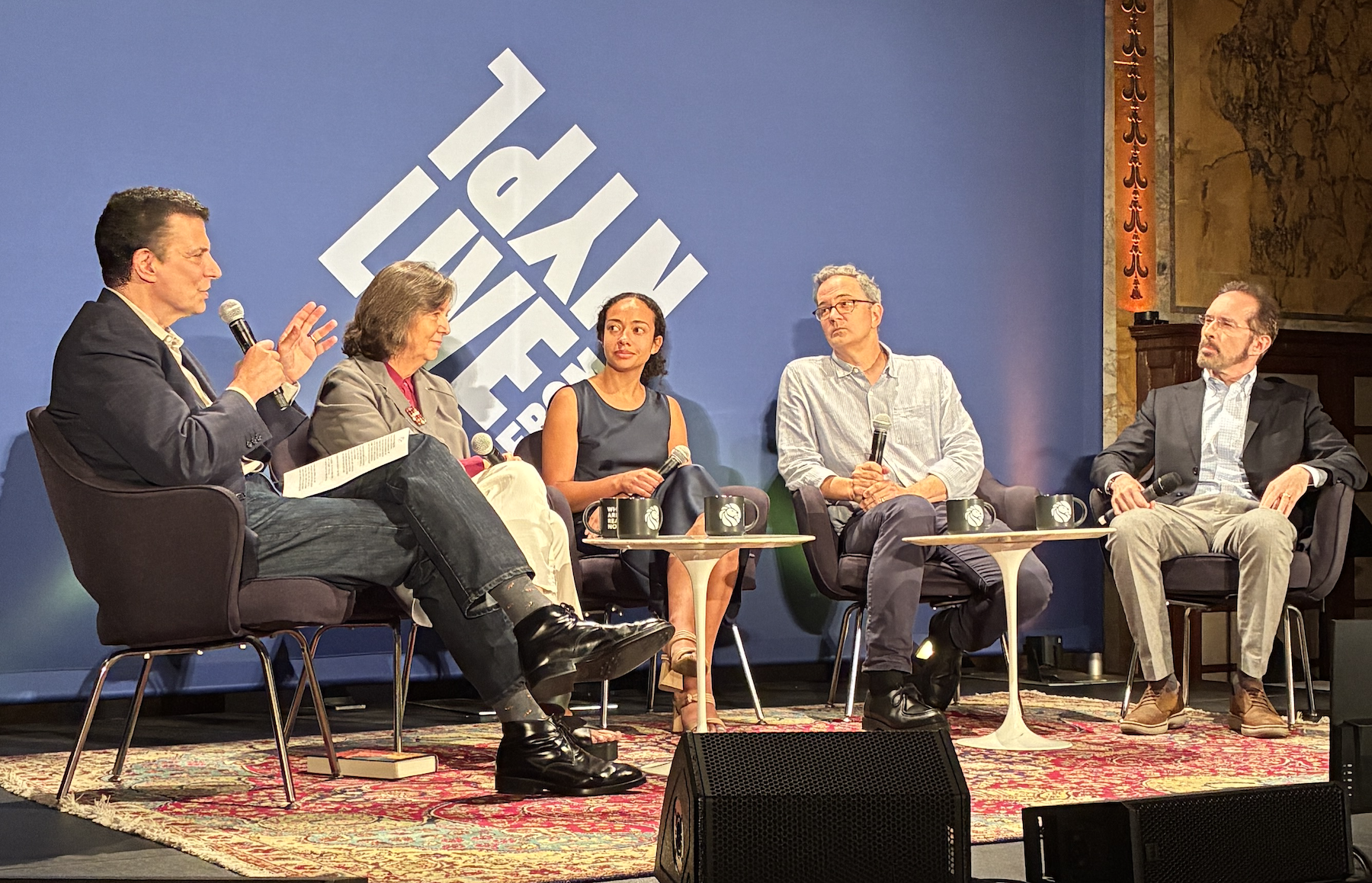
What unfolded inside the New York Public Library last night was a veritable masterclass in narrative editing, an editorial summit featuring The New Yorker’s most influential editors: David Remnick, Henry Finder, Susan Morrison, Tyler Foggatt and Daniel Zalewski. Convened in honor of the magazine’s centennial, the discussion offered a rare, behind-the-scenes view not just at how editorial decisions get made but at what it takes to write something worth reading.
Standing Room Only
Over an hour before the start time, the line of readers wrapped around the corner of the New York Public Library’s Schwarzman Building (sadly, no relation) down Fifth Avenue. In an auditorium situated below the first Gutenberg Bible brought to America, a book that predates the revolution of moveable type in the West, a multigenerational crowd turned out to hear how The New Yorker has maintained its gold standard for a century in an environment where most magazines have collapsed.
This wasn’t just a paint-by-numbers panel. It was the brain trust of modern journalism, discussing how they get the best work out of their writers and why good storytelling is harder, and more collaborative, than it looks.
David Remnick, editor since 1998, lobbed questions to his fellow editors like a jazz bandleader giving each soloist space to riff. What emerged was an evening filled with powerful lessons about storytelling for journalists, editors and business communicators.
Henry Finder, editorial director since 1997, described his role in clinical terms: running diagnostics on manuscripts. “Pieces go wrong in two broad ways,” he said. “They don’t know what they’re about, or they fail to execute.” His prescription: narrative. Without it, even the most fact-packed article falls flat.
Susan Morrison, Talk of the Town editor, framed it differently. A Talk piece, she said, should be “full of facts, but disdainful of facts,” citing James Thurber. Her goal: a tone she describes as “big town folksy,” a phrase that captures Talk of the Town’s personality— informed but conversational, elite but self-aware.
Tyler Foggatt, senior editor and host of The Political Scene podcast, put it this way: “We’re not interested in what’s happening. We’re interested in what we think about what’s happening.” In a newsroom ecosystem increasingly driven by clicks, that’s an almost subversive commitment.
What Makes Great Content?
The answer isn’t volume. It’s structure. Finder recounted how he once skimmed a 10,000-word draft in 100 seconds on his iPhone and knew it was structurally wrong. “You’ve written the overview piece,” he told the writer. “But this needs to be scene-driven.” After a phone call and a storyboard session, the revised piece landed perfectly.
Great content begins not with a subject but with a point of view. It’s not “Do a story on climate change.” It’s “Here’s a character, a conflict, a journey.” The panelists stressed that editors aren’t just polishers; they’re story architects coaxing narrative out of raw material. They know when to kill a lead. They know when a paragraph is dead weight. And they know when a joke isn’t funny—yet.
Executive Editor Daniel Zalewski described the ideal editor-writer relationship as “credibility by commitment.” The best editors, he said, “obsess over your text almost as much as you do.”
Morrison added: “The more senior the writer, the more grateful they are for suggestions.” Beginners, in contrast, want to track changes. But the pros? They accept that clarity, particularly on deadline, is collaborative.
Access in the Age of Instagram
In a discussion about how social media has changed reporting, Zalewski noted that many public figures—celebrities, politicians, CEOs—now refuse New Yorker profiles. Why? Because they don’t need The New Yorker. They have Instagram. “A list of powerful people who have declined to be profiled would be illuminating,” he said.
This shift makes old-fashioned reporting even more valuable. “Reporting,” said Finder, “is in crisis.” The collapse of local news has decimated the farm system of young journalists, and today’s editors are looking in different places—like Substack and college newspapers—to find sprightly voices that aren’t chasing algorithms.
But “voiciness” isn’t enough. Zalewski said the industry’s obsession with “voicy” young writers is a trap. Publishing copycat tones may feel fresh, but it fades quickly. What he wants isn’t voiciness. It’s vision.
Lessons for Communicators
What does all this mean for business communicators and PR professionals? It means the same editorial instincts that shape a 6,000-word feature can, and should, shape your next press release, pitch deck or blog post.
Ask yourself:
What’s the story here?
What’s the conflict?
Can the reader see it unfolding?
Is the tone delightful or dead?
Have I buried the lede?
Don’t confuse facts for meaning. As Morrison put it: “The tone, the pleasure—that’s what distinguishes what we do.” In a world saturated with information, your edge isn’t access. It’s whether you can say it in a way that makes someone care enough to read it.
To treat an event like this as just another “how to pitch the press” piece would be shameful. The takeaway wasn’t how to pitch your press release. It was how to think like an editor, and write like someone who deserves to be read.