

Dog Sledding Lessons for Stronger Leadership and Communication
On that Monday afternoon in November, I got the kind of news that lands in a room with HR following a vague calendar invite.
My role was being eliminated. I sat with that for a while and then did all the things one does. I ran through the questions, felt the disorientation and wondered what my story was going to be now.
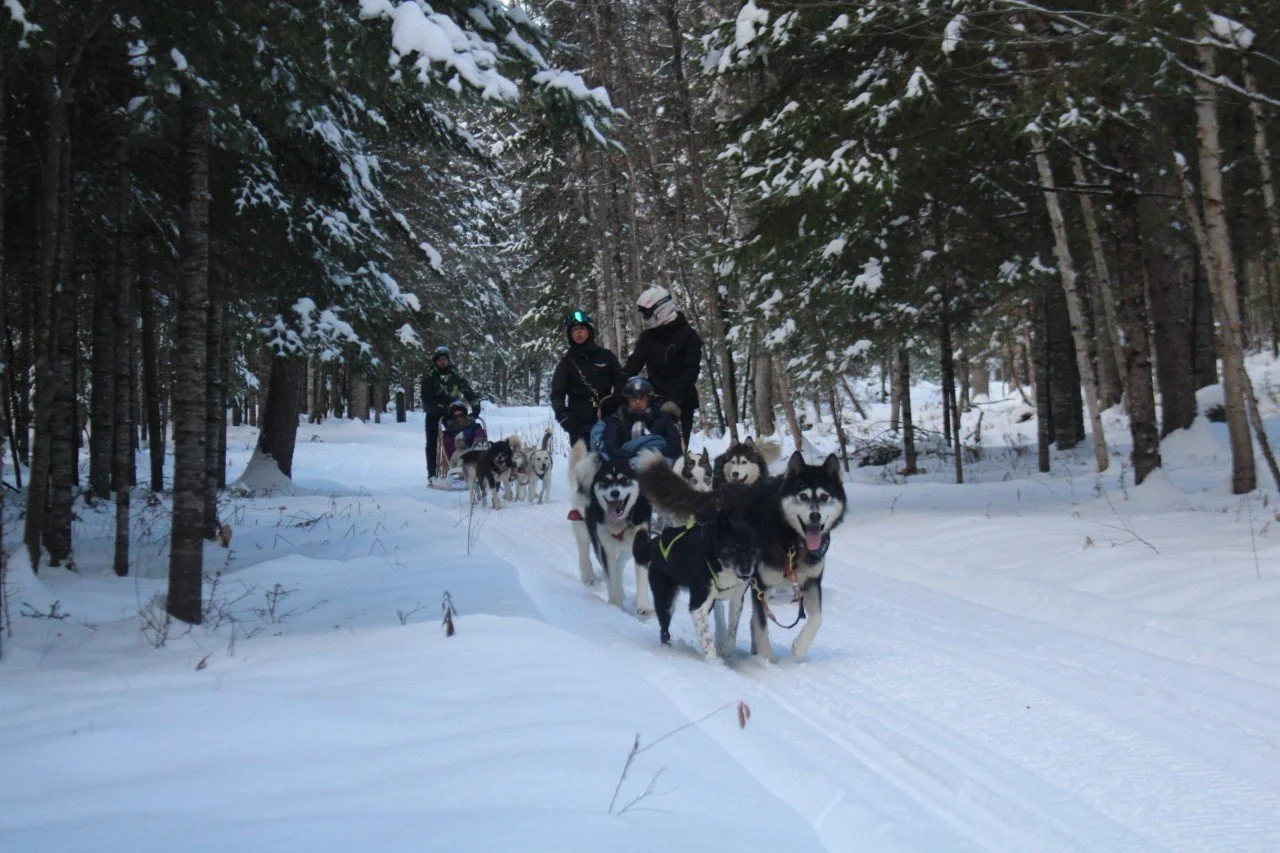
Then Saturday came. I had already booked a trip to Mont-Tremblant, Quebec, so I found a tour spending the morning on a trail with a team of sled dogs. I showed up, stepped onto the runners and handed myself over to something that does not care about missed earnings or restructuring announcements.
What happened over those hours in the snow evolved how I think about strategic communications and leadership.
When Alignment Does the Talking
The first thing you learn when you’re standing behind a sled team: the dogs already know what to do. They are not waiting for a memo. They are not second-guessing the direction. The moment they need is called — mush — they surge forward with all they have, pulling together toward a trusted and shared destination.
I had just spent a week in a world where almost every communication was careful, measured, and strategic. Where words were chosen to manage perception, protect positioning and minimize uncertainty. Here were dogs who had never heard of any of that and were doing the most coordinated, purposeful and powerful thing I’d ever seen.
In strategic communications, we spend enormous energy crafting the message. But the most effective communication I’ve ever witnessed — in organizations, in leadership or on that trail — wasn’t crafted. It was lived. The musher knew where they were going. The dogs knew their role. The direction was clear. When that alignment exists, you don’t need to manage the message. The message takes care of itself.
The Leaders Who Hold Direction
On a sled team, the lead dogs set the direction and read the trail ahead. They respond to direction and make decisions in real time that the whole team depends on. They are not the biggest dogs nor are they always the fastest. They are the ones with the clearest heads, the ones who can hold their line when the trail gets uncertain.
Watching them work, I kept thinking about the leaders I’ve most respected. They were not always the loudest or the most senior. They were the ones who stayed oriented when the conditions changed. The ones who communicated calm when others communicated chaos, and the ones who held their direction when the trail disappeared under new snow.
Lead dogs don’t perform confidence. They have it because they know the trail, know their team and know themselves. Not perfect messaging and not flawless delivery. Leaders have the clear internal anchor that others can follow.
Trust Is Built the Same Way Every Time
I should tell you about my two rescue huskies from my time in South Florida. Their names are Isla and Roma, and they came to me with stories I will never fully know.
Anyone who has worked with a rescue husky knows you cannot rush the relationship. You cannot simply tell a dog it is safe. You have to demonstrate it, consistently over time and through action. Through showing up the same way every day until the animal’s nervous system finally believes you. That is also exactly how organizational trust is built, inside and out.
I have spent more than 20 years helping organizations communicate through change, crisis, and complexity. The single most common failure I see is leaders who expect trust to follow a memo or those who believe that if you say the right things in the right order, people will feel safe. They won’t feel safe until the words and the actions line up, until the consistency compounds and they have enough evidence to believe that what they’re being told is true.
Isla and Roma didn’t trust me because I had a communication strategy. They trusted me because I showed up the same way every morning, every evening, without exception.
Clarity As the Story That Holds
Back to that Saturday morning. The chill was real as was the weight of what had happened five days earlier. Dog sledding reminded me of the difference between what is being told about you and what is actually true.
My role had been eliminated. But it was not my whole story. The whole story included 20-plus years of strategic communications work. Organizations that and colleagues who trusted me with their most complex challenges. Two huskies who run to the door when I come home. A new future to build around the belief that clear, honest, purposeful communication can move organizations forward the same way a musher’s command moves a sled team.
In moments of disruption, our instinct is to manage the narrative, to control how it looks and to get ahead of the story. But the most powerful communications response is clarity.
Mush is not a complicated message. It doesn’t come with a slide deck or message map. It’s a call to coordinated action, a signal that it’s time to move ahead together with clarity and purpose toward a shared destination and goals.
That’s what I believe strategic communications is for: coordinated action, clarity of purpose and movement.
Sled dogs figured that out long before we did. Isla and Roma remind me every single day. That dog-sledding trail in Quebec, five days after my world got reorganized, renewed my values, purpose and potential.
Strategic communication keeps moving us and our organizations forward. Let’s mush!
Reprinted with permission from Strategic Magazine.