

CMOs Warn Marketers to Stop Chasing Trends and Start Mastering Adaptability
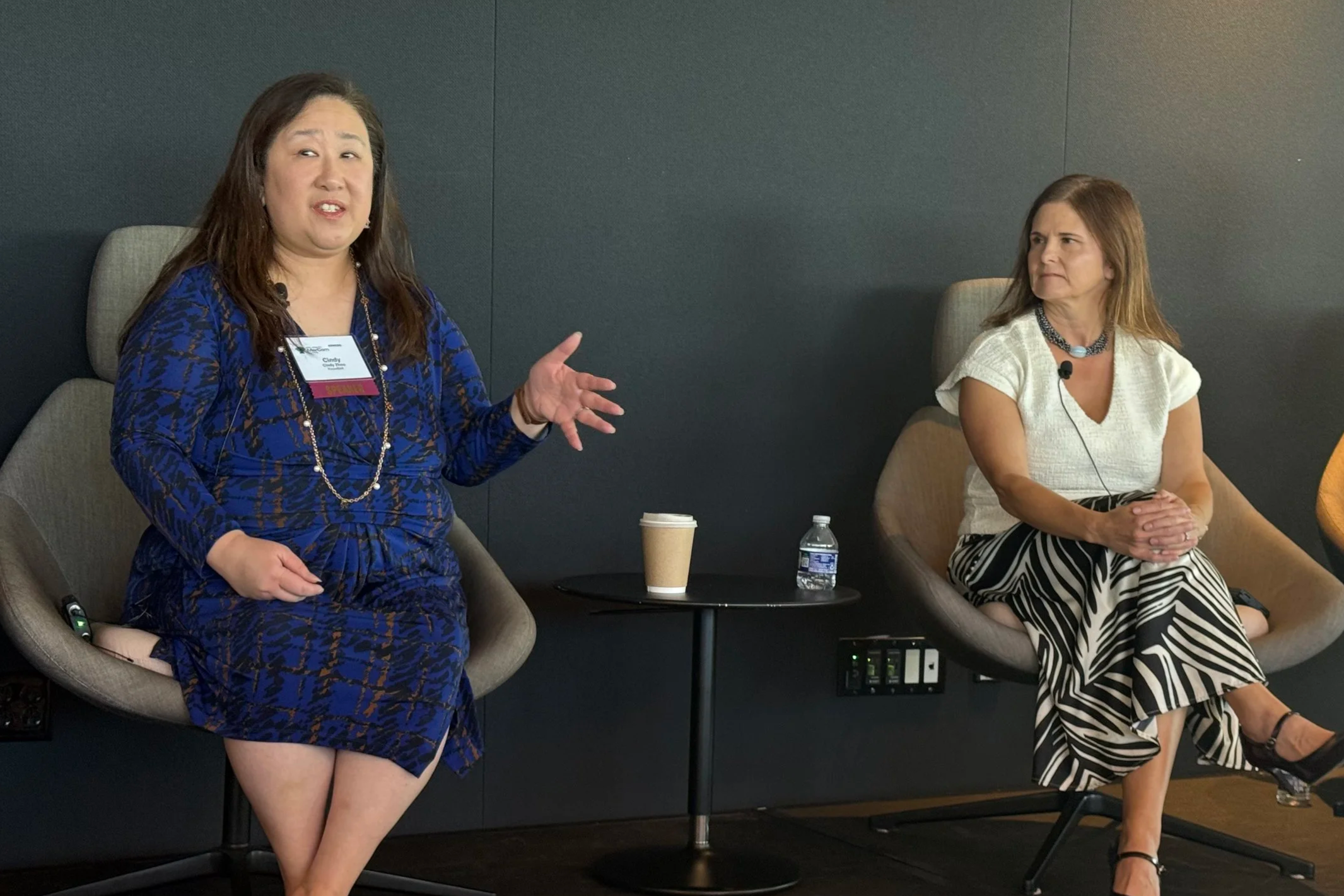
From left to right: Cindy Zhou and Stephanie Glashow
What you will learn from this article:
Why CMOs say adaptability and intellectual curiosity now outweigh traditional marketing skills.
How leading brands like GoodLeap, KnowBe4, and IntraFi are using AI and data to enhance customer experience without losing authenticity.
What communicators must do to balance innovation, credibility, and legal responsibility in the fast-changing marketing landscape.
At the 2025 Mid-Atlantic MarCom Summit in Arlington, a panel of chief marketing officers urged communicators to shift their focus from trend-chasing to adaptability, data fluency, and authentic storytelling. Moderated by Sean Carton, founder of Applied Understanding, the session featured Cindy Zhou, CMO of KnowBe4; Stephanie Glashow, CMO of IntraFi; and Jesse Comart, CMO and CCO of GoodLeap.
Zhou said success now depends less on credentials and more on mindset. “I used to joke that marketing changes every five years,” she said. “Now it’s every six months. The most important skill isn’t technical, it’s the willingness to learn and adapt.” Her approach includes giving every team an “AI teammate” to scale and localize content, from multilingual campaigns to cybersecurity training videos. But she cautioned communicators to verify everything. “AI will help you get 80 to 85 percent of the way,” Zhou warned. “But if you skip quality control, you risk your credibility.”
Glashow emphasized intellectual curiosity and clear communication as non-negotiable traits. “Everyone knows every company they deal with knows everything about them,” she said. “That raises expectations. The faster we can turn data into a better customer experience, the stronger our brand becomes.”
Comart underscored the growing need for marketing operations expertise. “Connecting SEMrush with Salesforce, with Marketing Cloud, with Sprout Social—that’s not glamorous, but it’s mission-critical,” he said. At GoodLeap, he is piloting conversational AI tools for contractors, allowing them to ask questions like “Who are my top prospects?” through a simple voice interface. “They won’t open an app,” he explained. “But they’ll talk to their phone. That’s how you meet people where they are.”
On data strategy, Zhou advised marketers to start small: “Pick one use case that really matters. Otherwise, you drown in it.” Her team uses AI to analyze sales calls, cross-referencing transcripts with internal research to identify coaching opportunities. Glashow called this the “democratization of data,” ensuring all teams can access insights quickly enough to act on them.
When asked about content and community, the panel agreed that authenticity now outweighs scale. Zhou said review platforms like G2 and Gartner Peer Insights influence both search visibility and buyer trust. Glashow added, “In B2B, content is what fuels the engine—advertising draws people in, but useful content keeps them.” Comart’s team is leaning on niche podcasts to reach hard-to-find audiences: “Bloomberg won’t let you repurpose their footage, but small-community podcasts will. That’s six pieces of content from one conversation.”
Zhou closed with a warning rooted in cybersecurity discipline: “Engage your legal and infosec teams early. It’s easier to build responsibly than to fix what goes wrong later.”
For marketers and communicators, the panel’s message was clear—success in 2026 will belong to those who combine agility with accountability, embracing AI and analytics without losing human judgment.