

Chris Matthews on Trust, Empathy and Leadership Today
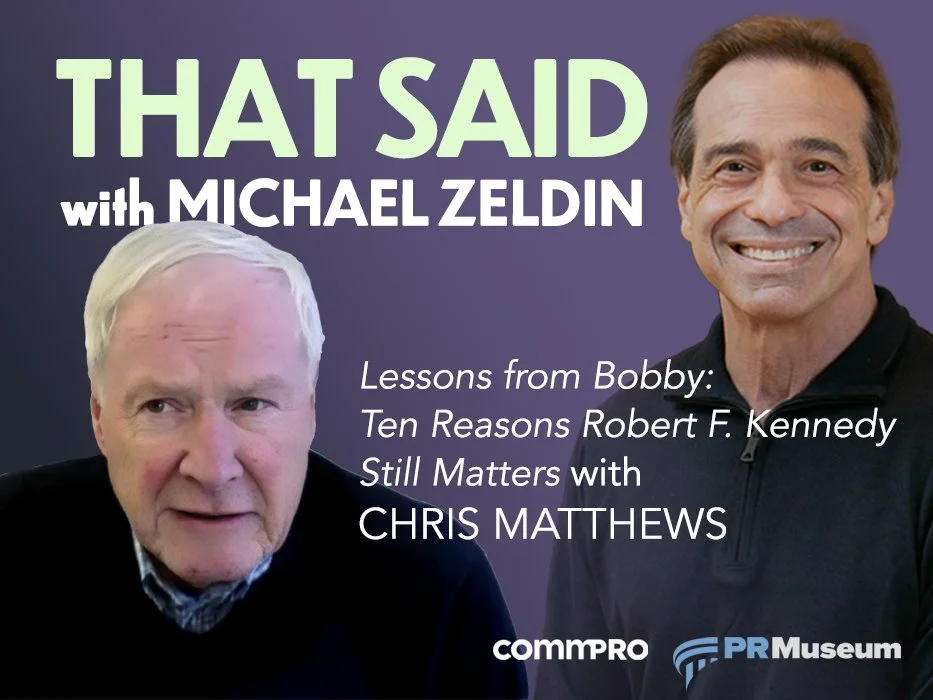
Chris Matthews may be best known to many of us as the longtime host of Hardball, but on this episode of That Said, he shows up in a more reflective role, as a storyteller, historian and believer in what good leadership can still look like. Matthews joins Michael Zeldin to talk about his latest book, Lessons from Bobby: 10 Reasons Robert F. Kennedy Still Matters, and why RFK’s values feel especially relevant right now.
The conversation starts with Matthews’ own journey, from the Peace Corps to Capitol Hill, the Carter White House, and eventually a decades-long career in television. It’s not just a résumé walk, it sets the tone for the larger theme of the episode: leadership that comes from being present, curious and genuinely connected to people, not just power or position.
That idea runs straight into Matthews’ portrait of Bobby Kennedy. He describes RFK as someone who insisted on showing up physically in tough places and listening to people who were often ignored. One line in the conversation lands especially hard. Kennedy, Matthews notes, “died reaching for the hand of a $75-a-week Mexican-American dishwasher.” It’s a reminder that empathy was not a talking point for RFK, it was something he practiced, even when it came with real personal risk.
Zeldin keeps pressing the conversation forward with a question that will resonate with CommPRO’s audience: what does this mean for today’s leaders, including those running companies and organizations? Matthews comes back again and again to the idea of accountability. RFK believed in owning mistakes, what Matthews calls “hanging a lantern on your problem.” Say what went wrong. Admit your role in it. Show how you’ve learned. It’s a lesson that feels just as relevant in boardrooms and brand leadership as it does in politics.
Another thread that runs through the episode is RFK’s ability to talk across divides without dismissing people. Matthews shares stories about working-class pride, loneliness, and how easily communities can feel left behind. RFK had a rare ability to meet people where they were, without condescension, and still challenge them to be better. He also believed deeply in democratic norms, especially the importance of conceding elections and respecting the system, a theme that feels very current.
For communicators, the takeaway is refreshingly practical. Trust isn’t built through slogans or positioning alone. It’s built through empathy, credibility, consistency and a willingness to be honest when things don’t go perfectly. Matthews and Zeldin ultimately frame RFK as a model of conscience-driven leadership, grounded in the simple but demanding idea that America, and any institution, is at its best when it keeps trying to be good.
If you’re thinking about how leaders earn trust in polarized times, this episode offers a thoughtful, grounded place to start.