
Aliza Bran of The International Spy Museum — A Capitol Communicator Profile
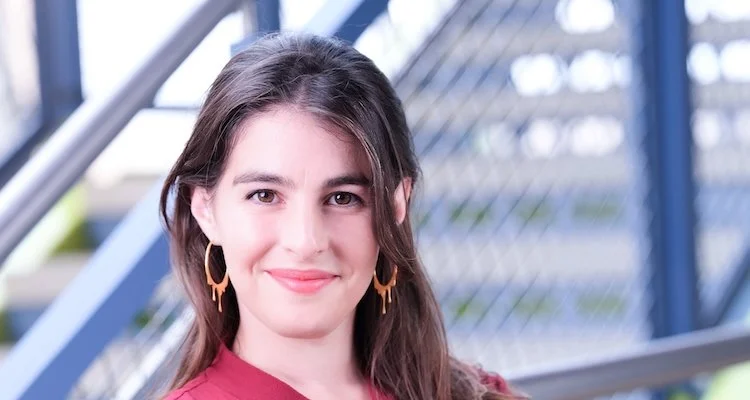
Editor’s Note: Capitol Communicators is a profile series spotlighting the people shaping the present and future of advertising, digital, marketing and public relations in the Mid-Atlantic. This profile features Aliza Bran, Director of Media Relations, International Spy Museum.
Aliza Bran has a cool job as Director of Media Relations at the International Spy Museum (SPY) in Washington, DC. It’s a place where you can test your wits with spy quizzes, learn about the history of espionage, and be fooled by fake exits. She’s busy now promoting its new exhibit on the history of camouflage. As with most downtown DC attractions, getting people to come to town and into the doors is a challenge. A veteran of the PR agency side before becoming an ‘operative’ at SPY, Bran is charged with keeping audiences coming and engaged during challenging times for downtown DC. She’s an idea person, a collaborator, and was recently elected to the Board of Governors at the National Press Club, a storied institution dedicated to building a vital media/communications community and supporting press freedom here and around the world
Aliza, tell us about yourself.
I’m the director of media relations at the International Spy Museum, a nonprofit institution in the heart of Washington, DC, sharing with the public the history of espionage and intelligence. I’ve been at SPY for over nine years, during which I led the PR campaign unveiling the new, reimagined Museum at L’Enfant Plaza (2019), opened the Museum’s first special exhibit about perhaps the most famous fictional spy, James Bond (2024), and announced our new collections Vault (2025).
Prior to my time at the Museum, I worked on the agency side for clients in the museum, health, government, and nonprofit sectors. And I’m a proud Washington University in St. Louis alumna.
What are the things you are most proud of?
I’m most proud of the work I did opening the Museum’s brand new 140,000 sq. ft. facility at L’Enfant Plaza. It was SPY’s biggest announcement since the original opening in 2002, requiring intensive research and strategy, full-scale PR plan development, individual press walkthroughs, media preview events, and innumerable hours. As a result, the earned media was a massive success, resulting in over 7 billion UMV online and 8 million print viewers, and including major placements like The New York Times, CBS This Morning, The Washington Post, the Associated Press, The Wall Street Journal, NPR, and AFP.
I’m an on-site PR team of one so for every reporter or journalist who came to the Museum, I had to be there with them to host their experience. It was intensely exhausting but immensely satisfying to accomplish a project of that size.
What are the most significant changes or trends you see happening/coming in the communications industry in 2026? How are you dealing with it?
The expanding use of generative AI will lead to an increase in GEO (generative engine optimization). In other words, comms teams will need to focus on optimizing their content for AI search engines. Where the audience goes to find information, communicators need to locate their messages and their brands. From a PR perspective, that means identifying the sources (media outlets, etc.) that are most likely to be pulled into GEO and pitching those sources and journalists as part of one’s strategy.
Other significant trends I foresee include a continued blurring of lines between positions that do earned, owned, and paid media, as well as journalists becoming more stretched-thin in an increasingly difficult media landscape. I expect to see more journalists with strong name recognition go out on their own via Substack (or the equivalent) where audiences will follow them and pay them directly for their work. We’ll also see more newsfluencers enter the game and a thinner line between opinion and news.
I could keep going, but that’s probably enough future stress for anyone to take in.
You’ve just taken on a new role as a member of the Board of Governors of the National Press Club. Tell us why you decided to take this on, why it’s important and what you hope to see for the Club in this chaotic time in journalism.
At a time in Washington when reality is debatable, journalism is going through another massive tectonic shift, and trust is at an all-time low, the National Press Club serves an immensely important job – as the beacon of community, free press, and professional development and opportunity that folks in journalism and communications need right now. It was important to me to be a part of the work the Club is doing and provide my support.
I’ve served as the Co-Lead of the National Press Club’s Communicators Team for the last two years, crafting professional development offerings and specialized programming, including an inspiring quarterly Women’s Salon Night program that brings together journalists and communications folks alike for some really fantastic conversations.
Getting elected to the Board of Governors in December was an honor and a privilege. I am ready to expand the work I’m doing with the organization, and I look forward to working with the team to identify the most critical needs for our communications professionals and journalists and fill those gaps.
What other professional organizations do you engage with, and do you find them to be valuable?
I am also a member of PRSA, which has some wonderful programming for communications professionals. Professional associations are an amazing way to build networks and community, to learn and develop further professionally, and to give back to others in your field.
What keeps you up at night? And what brings you joy during the day?
I work at the International Spy Museum, so the list of things that keeps me up at night is fairly robust. Anything from dis/misinformation and local infrastructure attacks to the trust crisis and dwindling of local media.
What brings me joy during the day is the passion of the people around me, the strong community I’ve built, and the vibrant culture of the city in which I live. DC has such a rich music and museum scene, with so many venues for live performances and ways to satisfy one’s intellectual curiosity.
And when I have the opportunity to help out with some of the Museum’s Access programming (e.g. Spy With Me for individuals living with dementia, our adult and youth/family events for neurodivergent individuals, or our robot Patrice, which allows pediatric patients to visit the museum), I am reminded of how hard our team works to make this place as accessible and welcoming as we can. It’s inspiring.
Is there anything about you that most people do not know?
Absolutely – as it should be! But I’m happy to let you in on a variety of fun/odd ones:
· I almost made it on a music game show two years ago.
· Last year, several slices of pizza rained onto my apartment balcony from the building roof.
· I went to the first night of the Eras Tour.
· I absolutely adore the Oxford comma.
· Merriam-Webster has long been one of my favorite brands on social media.
Capitol Communicators profiles will allow you to meet some of the most interesting and insightful pros in our region, learn how they stay ahead of the curve and pick up practical wisdom during a time of constant change.
Capitol Communicator is a sister company of CommPRO.