

Introducing The Trusted Advisor Initiative
Communication has never been more important, but our profession is still having the same conversation about earning a seat at the leadership table.
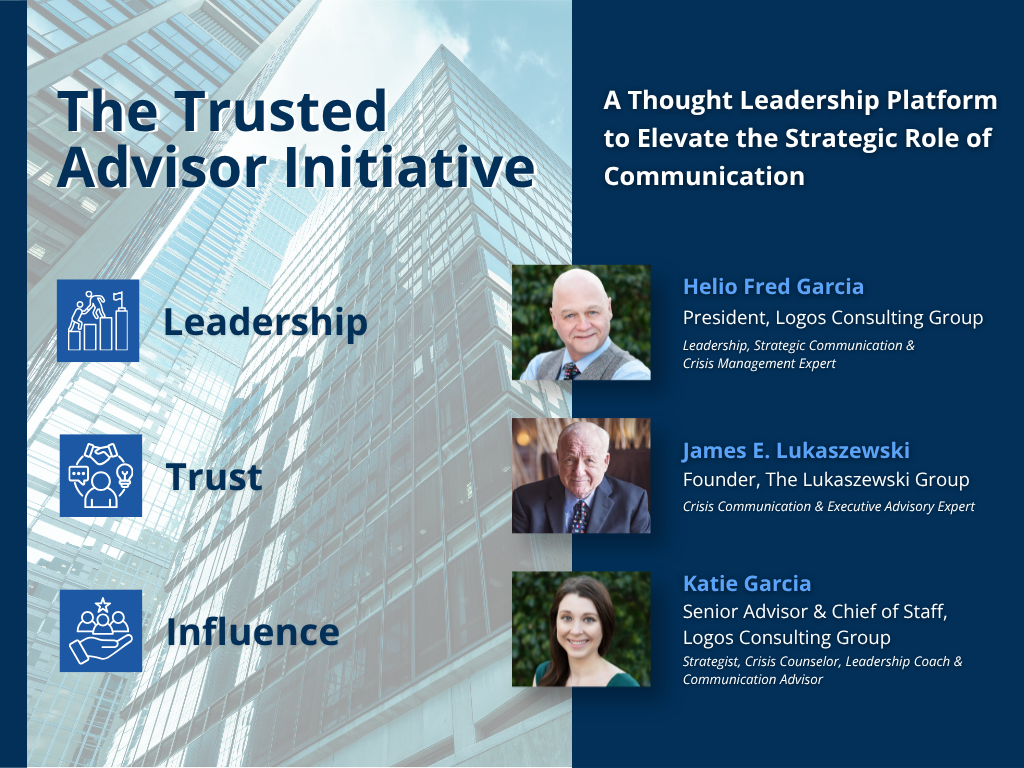
That’s one of the reasons I’m excited to launch The Trusted Advisor Initiative on CommPRO.
Over the next six months, we’ll be sharing ideas and insights from Helio Fred Garcia, James E. Lukaszewski and Katie Garcia about leadership, trust, influence and what it really means to become a trusted strategic advisor.
We’re beginning with Influencing Leaders: The Seven Disciplines of the Trusted Strategic Advisor, the new book from Jim Lukaszewski and Fred Garcia.
For years, communications professionals have talked about earning a “seat at the table.” But what if the table itself is a myth?
That’s where we begin.
James E. Lukaszewski, America's Crisis Guru®, and Helio Fred Garcia are co-authors of Influencing Leaders: The Seven Disciplines of the Trusted Strategic Advisor, which was released in August 2026. (Wiley)
Excerpt from Influencing Leaders
The Table is a Myth
Lucky for you, this “table” everyone talks about getting to (and that every top operating executive actually dreads being at) is a myth.
Yes, there are meetings, seminars, conferences, teleconferences, videoconferences, Zoom calls, task forces, study groups, working groups, podcast briefings, executive teams, work teams, collaborative websites, advisory committees, and boards—all populated by well-meaning, highly motivated, energetic individuals working to get things done. While each of these techniques can play a useful, often necessary role in the advancement of various organizational and business objectives, meaningful breakthroughs are made or achieved another way.
Significant progress and the crystallization of leadership aspirations are usually the work of trusted individual advisors interacting with a leader or leadership group within an organization, striving to have a constructive, measurable impact.
If you are a trusted strategic individual, you are the table. You bring the table with you. When you are in the room, the “table” is full. When you study the significant decisions leaders make, when you study successful organizations and the actions of those who lead them, you find that leaders seek out those with special insight, those with special skills and, who individually rather than collectively, provide the crucial information increments these leaders need to make significant decisions and progress.
The philosophy that underlies this book is that becoming and being a Trusted Strategic Advisor is an individual achievement and responsibility. The truth is that senior executives directly and intentionally choose those they trust to advise them on the issues that matter. Senior executives look for expertise, insight, wisdom, loyalty, commitment, and specialized knowledge as preliminary credentials for the position of trusted advisor. If the only thing you have to offer is communications advice, HR advice, legal advice, security advice, marketing advice, or financial advice, then, quite logically, that is when you will be called to help. The questions asked of you will be limited to your specific area of expertise. Once you undertake to achieve the disciplines of the Trusted Strategic Advisor—a permanent personal commitment, as described in the chapters of this book—you will experience significant individual rewards, like increased acceptance, access, impact, inclusion, influence, and most of all respect.
What matters is the constructive connection between the leader and the Trusted Strategic Advisor—the enhanced understanding and reliability that this relationship establishes, fosters, and nurtures.
You are the table because no matter how many well-meaning individuals you jam into a room, the likelihood of something productive occurring anytime soon, from the boss’s perspective or as compared to your meeting with the boss alone, can go down with each additional voice present. Remember, those in the room are the boss’s choice. One of the Trusted Strategic Advisor’s crucial responsibilities is to help the boss find appropriate talent and available outside voices.
Most of our careers have been spent working primarily in the fields of crisis communication management and response, leadership building, reputation recovery, and strategy. One of the most powerful early lessons we learned is that when big problems occur, the best strategy is to help the boss find truly knowledgeable, experienced people who have been through similar circumstances and could guide, coach, or be a truth revealer to the boss.
Teams are or may be needed for many things—putting out fires, rebuilding relationships and facilities, as well as re-educating and sometimes rehabilitating employee and community relationships. But when recovery missions get muddled, it is the boss who gets fired rather than the advisor or staff people.
The most important step on the way to becoming a Trusted Strategic Advisor is your personal commitment to becoming one, then publicly and purposefully undertaking the steps and decisions to achieve your goal.
