

Don't Be Fooled by Senator Paul’s Attack on Dr. Fauci
Last week Senator Rand Paul staged a vitriolic attack on Dr. Anthony Fauci.
Dr. Rachael Bedard, a geriatrician and New York Times opinion columnist, noted that Senator Paul, “has cast himself as a contemporary Joe McCarthy intent on ferreting out the truth about one man’s supposed crimes against his country. The Covid lockdown ‘could never have been inflicted without you aiding and abetting the crime,’ he said to Dr. Fauci during his opening statement. And ‘you have for years avoided responsibility.’”
It’s not the first time Dr. Fauci has been used as a convenient villain to blame for President Donald Trump’s failure to keep Americans safe in the 2020 COVID pandemic. I believe the attack is intended to rally what remains of Trump’s base ahead of the midterm elections less than 100 days away.
While such vitriol may succeed in rallying the base, it is unlikely to change the minds of those who are not already in the MAGA camp, or those who have recently defected from it. Senator Paul is using such incendiary language to distract from Trump’s overwhelming disapproval, with harm to Dr. Fauci as just collateral damage along the way. It is unlikely to work.
This is part of a larger pattern in American civic life and communication: Mischaracterize an expert’s opinion in order to attack not only the person’s expertise but person’s integrity and competence. It’s a play described by George Orwell in his classic 1946 essay (and precursor to his 1948 novel 1984), Politics and the English Language.
Orwell notes that even as thought can corrupt language, language can also corrupt thought. He argues that an effect can become a cause, and a cause can become an effect. It’s the cycle that matters. The result is a citizenry that remains intentionally ignorant of the issues that matter, unaware of what is happening to them, and easily manipulated by politicians.
Communicators are quite familiar with the play. But it is also up to communicators to see through the disinformation and to call it for what it is.
Just one example: Senator Paul attacked Fauci for flip-flopping on the need to wear masks. President Trump, who used Fauci as a punching bag throughout the last year of his first term, weighed in on Senator Paul’s savaging of Dr. Fauci, telling an oft-repeated lie that Dr. Fauci was originally opposed to mask-wearing: “Fauci wanted to have nobody wearing masks, if you remember, and then everybody had to wear five masks, as many masks as you could get... I mean, he made a lot of mistakes."
In fact, Fauci never was opposed to mask-wearing. And he said so at the time. It’s all part of a disinformation campaign that I document in my 2024 book on the failed U.S. response to COVID. Here’s the real story:
The unsung hero of the U.S. government’s initial attempt to respond to COVID in early 2020 is Dr. Rick Bright, then the Deputy Assistant Secretary for Preparedness and Response at the Department of Health and Human Services (HHS). He was the official in charge of securing supplies to protect the nation in the event of an infectious disease outbreak.
Bright, a 25-year career HHS administrator, began advocating for the federal government to acquire N95 masks and other critical supplies in mid-January 2020. But his persistent pleas fell on deaf ears, including HHS Secretary Alex Azar.
An August 2019 infectious disease wargame in which Bright had taken part had revealed that the United States would need 3.5 billion N95 masks just to protect healthcare workers in the event of an infectious disease outbreak. That number doesn’t include the billions more masks that would be needed to protect ordinary citizens. At the time the U.S. stockpile had only 30 million.
In mid-January 2020, COVID was already a serious concern among career health and national security professionals. Leaders in the medical supply industry, including companies that manufacture N95 masks, told Bright that the supply chain was strained, and that other countries from which the U.S. had previously acquired the masks were blocking exports to the U.S. Some were even buying up the available American supply.
Bright forwarded those alerts to HHS senior political leadership. His warnings were met with indifference.
On January 22, Bright received an email from an executive at a Texas-based company that is the largest American manufacturer of surgical masks. The company had four unused N95 manufacturing lines. The executive said: “Reactivating these machines would be very difficult and very expensive but could be achieved in a dire situation and with government help.”
The same executive followed up: “We are the last major domestic mask company… My phones are ringing now, so I don’t ‘need’ government business. I’m just letting you know that I can help you preserve our infrastructure if things ever get really bad.”
On January 23, three days after the first confirmed COVID-19 case in the U.S., Bright made the case to surge manufacturing of N95 masks to HHS’s senior leadership. He presented the anticipated needs and the likely costs. Bright testified to a congressional committee later in the spring that in this meeting Secretary Alex Azar seemed taken aback by the need for more funds. Bright explained: “My request was met with a bit of surprise and puzzlement. I remember Secretary Azar looking around the room and saying ‘Money? You need money? Maybe there’s money somewhere.’ I mean, it was just something that I can tell hadn’t been thought of.”
After the meeting, Bright’s boss’s chief of staff admonished him that he had caused “quite a shit storm” by asking for money in front of Secretary Azar.
Two days later, the mask manufacturing executive wrote that he was getting lots of requests from China and Hong Kong for masks. Bright worried that American hospitals would run out of masks if the U.S. did not start manufacturing its own. But once again, he found HHS leadership unresponsive.
The mask manufacturing executive wrote again on January 27: “I think we’re in deep shit. The world.”
On February 7, Bright attended a meeting with HHS senior leadership. He repeated his view that the nation needed to ramp up production of masks. The leaders’ proposed solution if masks should be in short supply: Limit who could receive the masks. Bright later told a Congressional hearing, “They informed me that they did not believe there was a critical urgency to produce masks [sic]… I indicated that we know there will be a critical shortage of these supplies, we need to do something to ramp up production. They indicated that if we notice there is a shortage that we will simply change the CDC guidelines to better inform people who should not be wearing those masks, so that would [sic] save those masks for our healthcare workers. My response was, I cannot believe you can sit and say that with a straight face. That was absurd [sic].”
As Bright had feared, in late February the federal government began rationing the masks for healthcare workers and discouraging the public from wearing masks. And the government began to adopt this rationing as official policy.
On February 27, Centers for Disease Control and Prevention Director Robert Redfield told a House of Representatives committee hearing that healthy people did not need to wear masks.
Two days later, on the day of the first U.S. COVID-19 fatality, as stores began to run out of masks, Surgeon General Jerome Adams tweeted: “Seriously people: STOP BUYING MASKS! They are NOT effective in preventing general public from catching #Coronavirus, but if healthcare providers can’t get them to care for sick patients, it puts them and our communities at risk.”
On March 8, Dr. Anthony Fauci, the head of the National Institute of Allergies and Infectious Diseases, told CBS 60 Minutes: “The masks are important for someone who is infected to prevent them from infecting someone else… Right now, in the United States, people should not be walking around with masks… When you think masks you should think of healthcare providers needing them, and people who are ill.”
In that 60 Minutes interview Fauci said he was not against people wearing masks, but “it could lead to a shortage of masks for people who really need it.” In other words, Fauci was simply repeating official government policy.
For Bright’s advocacy of surging both masks and testing equipment, he was removed from his job. He filed and won a retaliation claim, and HHS was ordered to restore him to his job. It never did. Bright left government service in October, 2020.
Dr. Fauci soon fell out of favor with President Trump and his close circle, and Trump began to denounce Fauci, who received multiple death threats from Trump supporters and needed a robust security detail to keep him safe.
As the 2020 election approached, Trump denounced Fauci: “People are tired of hearing Fauci and these idiots, all these idiots who got it wrong… Every time he goes on television, there’s always a bomb, but there’s a bigger bomb if you fire him. This guy’s a disaster.”
The day before President Trump left office in 2021, he awarded Fauci and others a presidential commendation for work on the COVID vaccine.
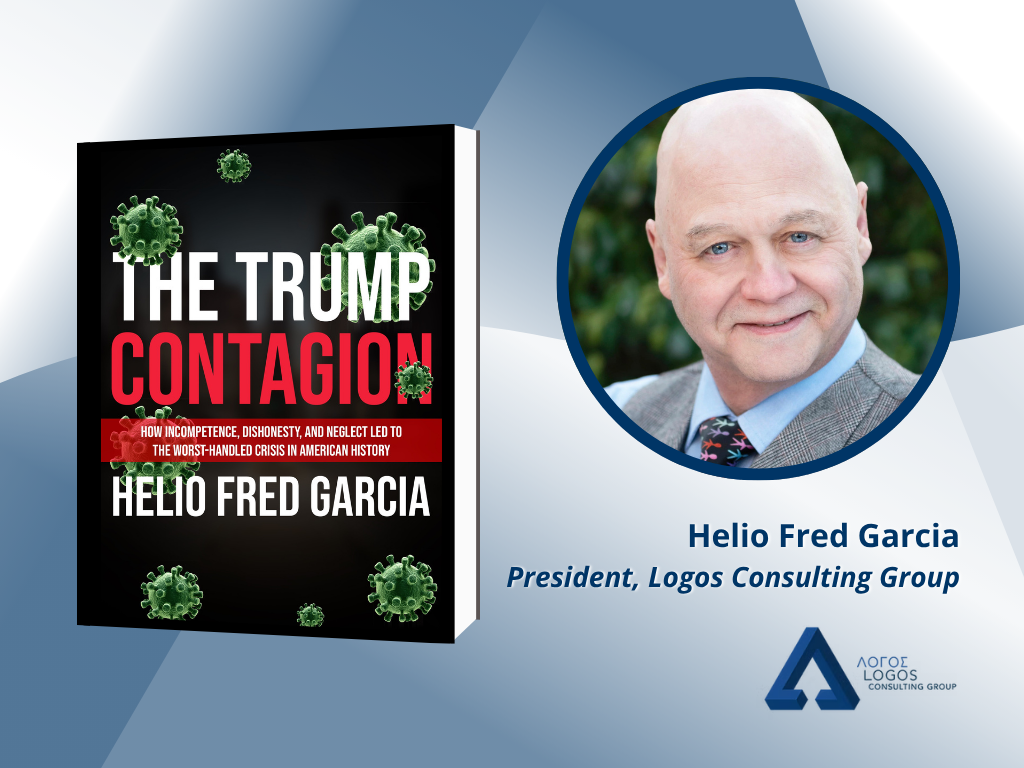
Note: This piece is adapted from the author’s 2024 book, The Trump Contagion: How Incompetence, Dishonesty, and Neglect Led to the Worst-Handled Crisis in American History.
Editor's Note: The views and opinions expressed in this commentary are those of the author and do not necessarily reflect the views of CommPRO, its publisher, or its editorial team.