

AJ Jones II of Monumental Sports & Entertainment — A Capitol Communicator Profile
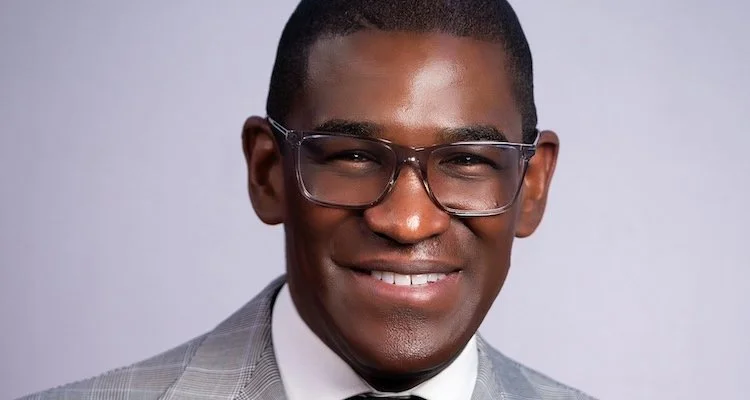
Editor’s Note: Capitol Communicators is a profile series spotlighting the people shaping the present and future of advertising, digital, marketing and public relations in the Mid-Atlantic. This profile features AJ Jones II, Executive Vice President, Chief Strategic and Corporate Communications Officer, Monumental Sports and Entertainment.
AJ Jones II has led communications in the C-suites of some of our most iconic and well-known brands. But communications didn’t always come easily to him. He had to triumph over stuttering as a young person. He says that made him very aware of words, how you use them, and how important it is to feel heard. His takeaway: don’t let your current circumstance put boundaries around what you can become.
That “can-do” attitude has guided a career that has taken him from Capitol Hill to C-Suites around the world. He came to Monumental in March 2025, after navigating multi-million dollar challenges for Starbucks, Vanda Pharmaceuticals, the W.K. Kellogg Foundation and Gilead Sciences. He held leadership roles at Burson and the Podesta Group. His work has taken him to Hong Kong, South Africa, the UK and UAE, among others.
Now, he reports directly to Monumental founder and CEO Ted Leonsis and his portfolio includes all consumer, fan, employee, media and brand-experience communications and corporate marketing for Monumental’s global sports and entertainment empire, which includes the Capitals, Wizards and Mystics.
Jones credits being curious, continuous learning, building trust and relationships, and getting a deep understanding of business to his success. He also values being part of the larger community, both in professional organizations, and volunteer activities close to his heart, such as Blue Star Families.
Jones will be the keynote speaker at the Mid-Atlantic MarCom Summit, October 14th, at the Martin Luther King Library in DC. In this crazy, chaotic and consequential period of change for communicators, this should be a don’t-miss session.
Being EVP, Chief Strategic and Communications Officer for Monumental’s vast sports and entertainment empire is a huge job. Now that you are settled in, what surprised you about the role? What’s been the most rewarding part of it?
The scale and complexity are extraordinary. Sports touches people in a way very few businesses do. Our fans don’t simply consume our products — they have deep, emotional relationships with our teams. That changes how you think about communications and reputation.
Monumental is much more than a collection of sports teams. We have iconic teams, venues and a media network that comprise a truly differentiated platform that fuels our ability to meets our fans where they are—from seat to screen.
We’re undertaking a massive transformation of Capital One Arena, thinking about the future of the industry how technology will reshape our industry. The reimagining of Capital One Arena is a bet on the enduring power of live sports. The more digital our lives become, the more valuable shared live experiences become. We like to think of sports as the antidote to AI.
The most rewarding part of the role is the people. There is an incredible amount of expertise and passion across this organization, and I get to work with people who care deeply about what they do and about the fans and communities we serve.
Gotta ask. Ted Leonsis is a legend. What’s it like working with one of Forbes “greatest living self-made Americans”? Someone who is a global business leader, billionaire, and yet reportedly worries about fans’ feelings about ketchup dispensers and bathrooms at Capital One?
That combination actually tells you a lot about Ted. He can move seamlessly between a conversation about the future of sports, media and technology and a very specific conversation about something a fan experienced at the arena. He understands that the big vision only matters if you execute the details.
Ted is intensely curious. He asks questions, he challenges assumptions and he is always thinking about what comes next. But he also understands that sports is ultimately about people. A fan may not see the strategy deck or know about every investment we’re making, but they absolutely know whether they had a great experience when they walked through our doors.
His vision is ultimately what has brought us to the moment we are in. The Capitals, Wizards and Mystics are building for success, Capital One’s transformation for the next generation of fans will be completed next fall and Monumental has established itself as a driving force in making the nation’s capital a premier, global destinations for sports and entertainment.
You have worked in the C-Suites of some of the most well-known brands in our country. But a very diverse group of products and services – you’ve represented pharma, coffee, media, technology, fashion and now sport. What is the thread that weaves together this diversity? What is the chief skill you need to be in all these different “rooms where it happens”?
The industries change, but the fundamentals don’t. Every organization has a reputation to protect, stakeholders it needs to understand and a story it needs to tell.
The most important skill is listening.
When you enter a new industry, you can’t assume that what worked somewhere else will work there. You have to learn the business, understand its culture, listen to the people who know it best and ask good questions. Then you can apply the experiences you’ve accumulated throughout your career.
I also think good communications executives need business judgment. Communications shouldn’t sit on the sidelines and simply explain decisions after they’ve been made. The best communications leaders understand the business well enough to have a voice in the decisions themselves and can demonstrate communications’ impact on the business’ objectives.
What are the things you are most proud of?
Professionally, I’m most proud of the teams I’ve helped build, the people I’ve had an opportunity to mentor and the organizations I’ve helped navigate important moments.
At Monumental, I’m particularly proud of the work underway to tell the story of a company that is transforming on so many fronts at once. We have incredible teams and properties, we’re transforming Capital One Arena, growing our media business and investing in the communities we call home. Bringing those pieces together into a larger story about where Monumental is going is enormously rewarding.
You’re going to be the keynote speaker at the MidAtlantic MarCom Summit! Can you give us a sneak preview of the key message you want to convey?
We are living through one of the most consequential periods of change marketing and communications professions have experienced.
AI is changing how content is created and consumed. Traditional media is changing. Everyone has a publishing platform in their pocket. Information travels instantaneously, and organizations are operating in an environment where trust is increasingly difficult to earn and incredibly easy to lose.
That makes marketing and communications more important, not less.
The opportunity for our profession is to move beyond being viewed primarily as the people who produce marketing materials and communications and establish ourselves as strategic counselors who understand business, reputation, culture and stakeholders. Technology can make us faster and more efficient. But judgment, relationships, empathy, creativity and trust are going to become even more valuable.
What are the most significant changes or trends you see in the communications industry? How are you dealing with them?
The biggest change is that communications has become more fragmented, faster and more direct. There is no longer one channel or one audience that shapes the conversation. Employees, fans, customers, media and other stakeholders are all consuming information differently — and increasingly expect to hear directly from organizations and their leaders.
At the same time, AI is fundamentally changing both how content is created and how people discover and consume information. That creates enormous opportunities for communicators, but it also makes trust, authenticity and judgment more important than ever.
For us, the response is to be much more integrated and intentional. We’re investing in our owned channels, building the voices of our leaders, using data and technology to better understand our audiences, and making sure communications is connected to the business and involved early in decision-making. We’re also embracing AI as a tool to make our teams smarter and more efficient, while recognizing that the things technology can’t replicate — relationships, judgment, credibility and a real understanding of your stakeholders — are becoming even more valuable.
You’ve talked about the fact that as a younger person, you had to deal with stuttering and stammering. What powered you to overcome this, and go on to become a chief spokesperson for Fortune 500 companies?
It taught me perseverance at a very young age.
When communication doesn’t come easily, you become very aware of words — how you use them, how other people receive them and how important it is to feel heard. I think that experience ultimately made me a better listener and, ultimately, a better communicator.
I wouldn’t say there was a single moment when I “overcame” it. It was a process of building confidence, putting myself in situations that weren’t always comfortable and refusing to let something I struggled with determine what I could or couldn’t do.
There is a lesson in that which has stayed with me throughout my career: don’t let your current circumstances put boundaries around your ambitions.
What do you see as the key factor in your success as a corporate executive?
Curiosity and adaptability.
I’ve worked across very different industries, and I’ve never walked into a new role assuming I already had all the answers. You have to be willing to learn quickly, surround yourself with people who know things you don’t and be comfortable asking questions.
I also believe strongly in relationships. Your credibility isn’t established during a crisis or a difficult decision. It’s built over time, through consistency, judgment and how you treat people.
Who do you most admire and why?
First, my younger sister who had a traumatic brain injury when she was nine-months-old resulting from a car accident with a drunken driver when I was eight-years-old. Watching her navigate all of life’s struggles has taught me the importance of gratitude and grace. Second, my adult sons, who have come of age in the most unstable times our world has faced and yet stayed true to themselves, are thriving in their respective careers/vocations and have excelled in every way. Third, would be the late great Dr. George A. Jackson from Iowa State University. In short, I would not be who I am or where I am today without him. Finally, would be my grandparents, particularly on my father’s side. They molded me and sharpened me into who I am as a man, gave meaning to my life and understanding of this world far beyond my years.
What advice helped you most in your career, and is that advice still relevant today?
Don’t be afraid to take the assignment that forces you out of your comfort zone.
Some of the biggest opportunities in my career have come from being willing to step into unfamiliar situations, learn something new or take on a challenge before I felt completely ready for it.
That advice may be even more relevant today. Careers are becoming less linear, industries are converging and technology is changing jobs incredibly quickly. Being comfortable with discomfort is a competitive advantage.
Are you involved in any professional organizations and do you find them to be valuable? Why?
I’m a member of the Page Society and Forbes Communications Council, serve on various boards, and stay involved with a number of other professional and community organizations.
It is incredibly valuable to engage with other communications leaders who are navigating different industries, challenges and perspectives — and often wrestling with many of the same fundamental questions around reputation, trust, leadership and change.
I also serve on the board of Blue Star Families, which has particularly special meaning to me because my father served in the military. Supporting military families and giving back to a community that was part of my own family’s experience makes that work deeply personal.
And like most things, you get out of these organizations what you put into them. The real value comes from participating, building genuine relationships and being willing to both learn from and help others.
What are the skills that are necessary to be successful?
To be truly effective, you need to understand the business. Communications can’t operate on the sidelines; you need to understand the organization’s priorities and challenges so you can be a strategic advisor and help drive the business forward.
I also think strong judgment is critical. Communications moves incredibly fast, and you need to be able to quickly understand an issue, anticipate how different audiences may respond and know when to engage — and sometimes when not to.
Relationships still matter enormously. The best communicators build trust — with colleagues, leaders, employees, media and other stakeholders.
What tools should we be using to be successful?
We need tools that help us listen better, move faster and make smarter decisions. That means strong media and social listening platforms to understand what people are saying and identify issues early; analytics that help us understand what is resonating and with whom; and AI tools that can accelerate research, analysis and content development.
But technology is only valuable if you know what you’re trying to accomplish with it. The goal isn’t to adopt every new platform — it’s to use technology to give our teams better information, create efficiencies and free up more time for the work that requires human judgment, creativity and relationships.
What professional advice do you have for others?
Stay curious and never stop learning. The communications profession changes constantly, and the people who succeed are the ones who are willing to evolve, ask questions and get outside of their comfort zones.
I’d also encourage people to learn the business, not just communications. Understand how your organization operates, how it makes decisions and what matters to the people you’re advising. That’s how you earn a seat at the table and become a trusted counselor rather than simply the person brought in to communicate a decision after it has been made.
And invest in relationships. Your network, your reputation and the trust you build over time will ultimately be some of the most valuable assets you have in your career.
What keeps you up at night? And what brings you joy during the day?
What keeps me up at night is the speed at which everything moves. In communications, an issue can emerge and change incredibly quickly, so I’m always thinking about what might be around the corner, whether we’re prepared and whether we’re doing enough to protect and strengthen the reputation of the organization.
What brings me joy is the people. I love seeing our teams succeed, watching someone take on a new challenge and grow, and working alongside talented people who care deeply about what they do. And in sports, we have the added benefit of seeing the impact of our work firsthand — whether it’s a great moment for a fan, a packed arena or something we’re doing in the community. Those moments are a great reminder of why the work matters.
What’s the coolest thing you’ve ever done?
Unexpectedly delivered my youngest son while at home as my wife went into labor before the EMS team arrived. Yeah, that was amazing as both of my sons were born on the same day five years apart, May 16th.
Capitol Communicators profiles will allow you to meet some of the most interesting and insightful pros in our region, learn how they stay ahead of the curve and pick up practical wisdom during a time of constant change.
Capitol Communicator is a sister company of CommPRO.