

AI, M&A and the New Disinformation Threat Landscape
AI has changed the M&A and financial communications landscape with the ability to scale disinformation, manipulate markets and drive fraud. M&A and financial communications professionals are on the front lines and need to take steps to protect content, detect misinformation, correct the record to manage AI-driven crises.
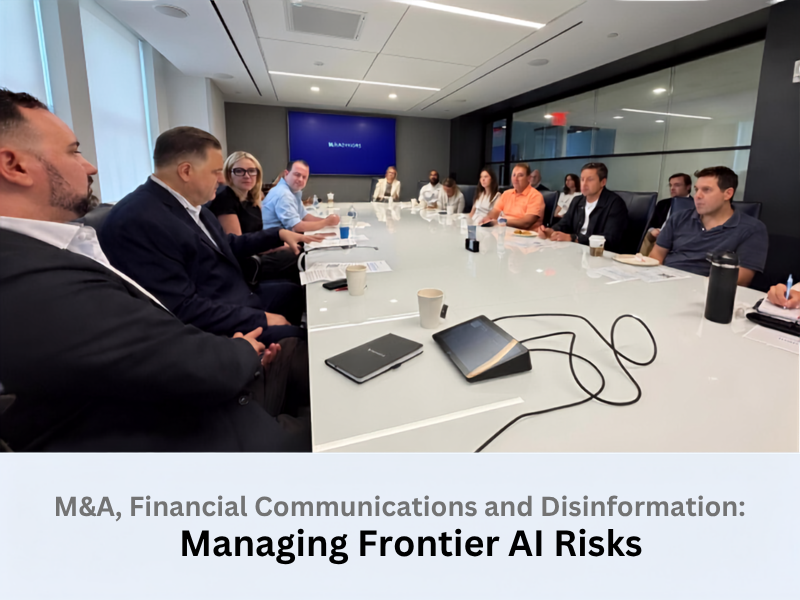
These were just some of the takeaways from an H/Advisors hosted PAGE society breakfast roundtable in July, organized in partnership with Tauth Labs, and with experts from Lancea and Lowenstein Sandler.
At the event, M&A, Financial Communications and Disinformation: Managing Frontier AI Risks,” Carina Davidson, CEO at H/Advisors-U.S., highlighted the new challenges around M&A and financial communications and led the roundtable discussion. Panelists included Peter Duda, Head of Crisis Communications at H/Advisors – U.S.; Brendan Koeth, a Lowenstein Sandler Partner and M&A leader at the leading New York law firm; Greg Young, CEO of Lancea; and Simon Erskine Locke, CEO of Tauth Labs. It was attended by senior communications leaders in New York.
The speakers outlined a number of important takeaways for corporate communications leaders, including:
With AI tools the cost to create misinformation or fake content is now close to zero.
AI Slop is not necessarily the most significant issue facing communicators. “Shadow Content” – malicious content designed to look like it is from your company and intended to deceive and defraud should be the focus of attention.
Not all information or misinformation is necessarily fake – AI may be able to find unsecure and unannounced transaction information which may be shared by malicious actors to manipulate stocks. Revisiting information security around transactions is essential.
The new technology of “content authentication” builds trust and discoverability into high-value content. When incorporated into newsrooms, press releases, corporate disclosures and client communications, it gives journalists, analysts, clients and the financial market infrastructure the ability to differentiate between authentic and fake information before they act on it or share it.
Detection tools have a key role to play in the identification of misinformation and its’ sources. In the “Protect, Detect, Correct and Comply” framing of digital security, detection and insights tools designed to help companies make decisions about how to respond provide ways to implement effective programs and respond to crises.
Crisis communications experts with the experience to help companies both prepare for potential frontier AI crises and manage through them is critical. Specific transaction, proxy or financial communications domain expertise is key to making decisions around when to and when not to engage.
AI is driving new solutions to address communications challenges. Content authentication is in the process of being widely implemented in the digital infrastructure (Claude is the latest platform to do so). AI disclosure is now required with the California and EU AI acts, and legislation in New York and other states.
In the rapidly shifting communications landscape in which AI is both an opportunity and a threat, the event underscored ways to reduce the risk of reputational damage from disinformation and more effectively keep control of the narrative in financial communications and corporate communications overall.
Find out more at Page.org, us.h-advisors.global, Lancea.ai, Lowenstein.com and Tauth.io.