

What Should Messaging Be for Burgeoning AI Centers?
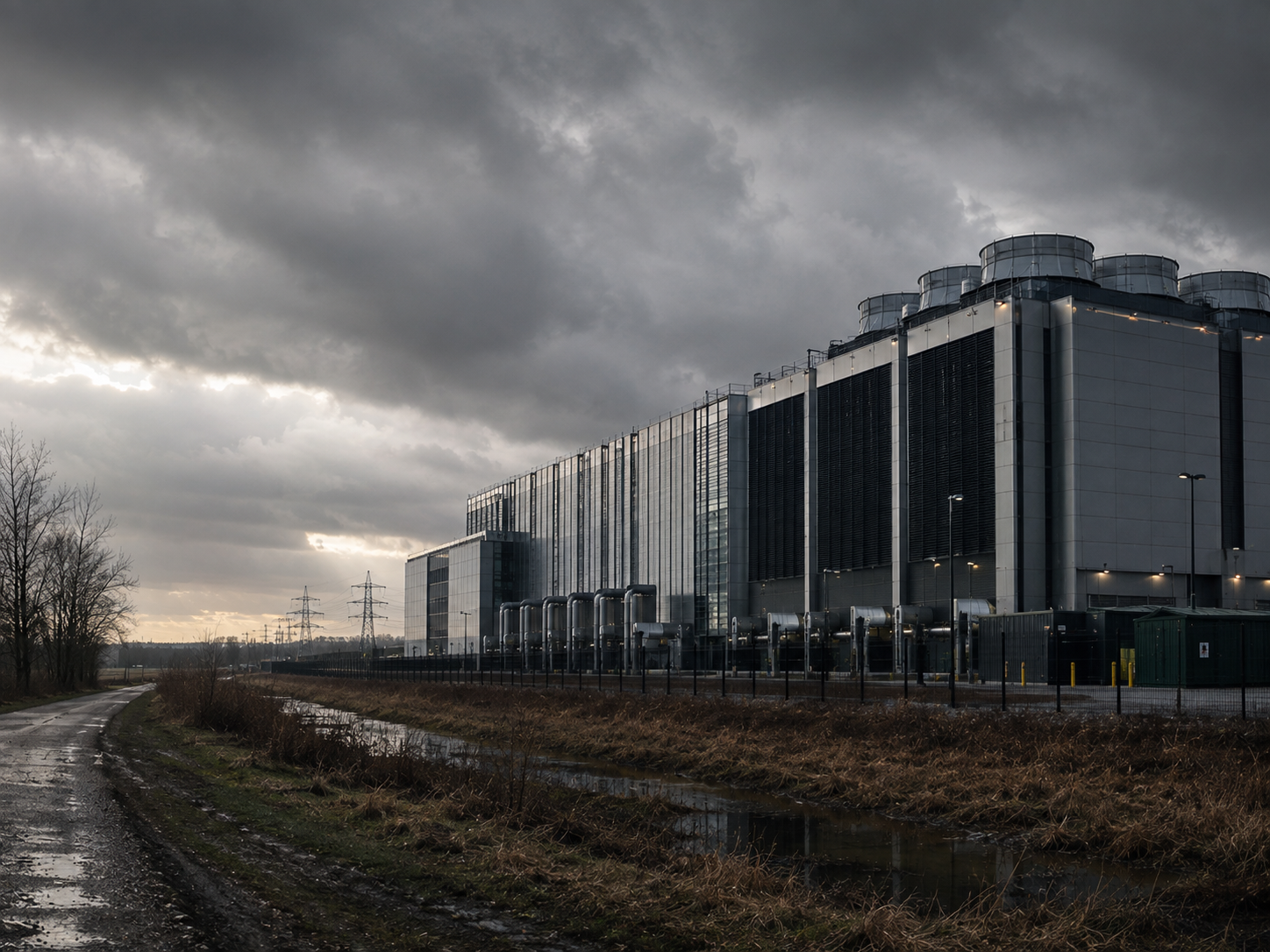
One of the most significant developments in America today is the explosive growth of artificial intelligence (AI) and, in turn, AI data centers, which are sprouting up in communities large and small across the nation to train, run and host artificial intelligence systems.
While spreading rapidly, these highly specialized facilities are generating controversy and proving unpopular with residents of many communities in which they are being built. Among the reasons cited are rising utility and electric bills, large-scale resource consumption and threats to the environment.
In fact, a recent Gallup Poll found that approximately 70% of Americans oppose building these data centers in their communities because of these concerns.
Given the importance of AI to our national economy, as well as its increasing presence in all our lives, CommPRO wanted to examine the messaging, both pro and con, behind these centers and, in particular, how the media can more effectively cover them.
"Americans in virtually every phase of life have much to consider when it comes to establishing data centers in our cities and states," says Delores J. Brooks, a longtime Chicago-based writer and marketing professional, adding that the pros and cons are ample and significant.
While critics point to disruptions in daily life brought about by greater noise pollution, higher costs from increased electrical usage and water consumption, Brooks notes that advocates emphasize the importance of these centers because data management and access have become part of virtually every segment of our lives, from cell phones and computers to cloud storage and artificial intelligence used in offices, homes, banks, medical establishments, educational institutions and for recreational purposes.
"The complexity of data center construction and operations would require a lot of preparation for both news media and news consumers," says Ernest L. Wiggins, a writer, independent scholar and professor emeritus at the University of South Carolina's Journalism School. Wiggins notes that this challenge is exacerbated by the fact that neither group seems especially adept at handling difficult information.
"Local reporting on the prospects of a data center coming to town must prime the pump responsibly for audiences and not just restate developer projections for employment, though this would be tempting to focus on," he observes, maintaining that a more constructive approach would be to explore what the center would cost the community in both the short and long run.
While noting that concerns about utility costs, including electricity and water, have already been covered in other venues, Wiggins maintains that essential, responsible reporting must also consider the consequences of missed goals, whether involving employment or cost containment, as well as unexpected and potentially untenable environmental damage.
He adds that in order to more fully inform the public, the media must ask political leaders like Senator Darline Graham of his home state of South Carolina who has expressed support for the expansion of AI centers questions about accommodating those residents who may be adversely impacted and to spell out in some detail the benefits of these centers to the state.
"The media must press Senator Graham and other local and state leaders all over the country on these matters to ensure that residents and stakeholders are fully informed of the consequences of the AI centers," he says.
Ellen Ferrera, contributing writer for the Moultrie County (IL) News-Progress and founder and past president of the Illinois Association of Non-Profits, agrees, adding that a major challenge facing communicators is that AI centers are growing so fast that oversight and environmental protection regulations are playing catch-up.
"Most of these centers are privately owned and the owners have grabbed up valuable farmland, forest preserves and animal habitats, mostly without any knowledge or input from the local residents or governments," she says.
One example she cites is Elon Musk, who, without the knowledge of local residents, built a huge center near Memphis.
"The facility is operated by 69 gas turbines which sound like jets taking off while emitting a tremendous amount of poisonous pollutants into the air in clear violation of the Clean Air Act," she notes, adding that residents and the NAACP have sued Musk.
Ferrera points out that AI centers are now an issue in 40% of primary races, with both Democrats and Republicans campaigning against the centers.
She maintains that better communication could help ameliorate much of the controversy surrounding their construction.
"The builders of the centers should hold community meetings before even purchasing land and work with local residents to address their concerns about how this center will impact their lives and community," she says, adding that they should select sites that are not near homes or schools.
Ferrera further urges that agreements be made regarding the proper disposal of waste, air and noise pollution, and that changes to utility bills be addressed and liaison groups created.
"The AI owners could do much to improve the community and should partner in community development that is safe for all," she states. "This takes a lot of dialogue and communication, but it usually pays off in better relations."
In addition to protesting, Ferrera suggests that residents write letters to their local papers, appear on TV and radio to express their concerns and invite others to join their groups.
She also encourages them to work with local, state and federal agencies, especially environmental protection agencies; join forces with other groups such as the NAACP to sue center owners in extreme cases; and serve on the boards of directors of the centers so there is an opportunity for constant dialogue with key management personnel.
"The key to successful cohabitation should be open, honest and participatory dialogue from the beginning, before the centers are even built," Ferrera emphasizes. "Perhaps they are not for every community, and this should be acknowledged instead of forcing the centers on antagonistic residents."
To help ensure that AI centers aren't forced on communities that don't want them, Brooks urges that a comprehensive oversight board be created to advise, review, license and monitor the complexities of data centers, looking at everything from proposed locations to on-site operations.
"This oversight body must have district units that provide local regulation of the centers," she adds. "Simultaneously, a whole new body of laws will need to be created to govern data center operations and growth."
To help alleviate their negative impact on populated areas, Brooks further argues that the centers should be located in remote sites that can support their massive water, electrical and other extensive infrastructure requirements.
"The operation of these facilities cannot be permitted to disrupt family lives and communities with constant noise and higher taxes in support of their existence while placing undue burdens on people working and living their daily lives," she says.
"Any effective and coherent messaging about AI centers must address the concerns of those residents who are directly impacted."