

Editor’s note: The Nvidia framing is CommPRO editorial context, not commentary by the excerpt’s authors on Nvidia or its leadership. As Nvidia faces questions about leadership, trust, and accountability, two books from Helio Fred Garcia and his colleagues offer timely lessons on the responsibilities of trusted strategic advisors.
When one of the world’s most influential CEOs faces scrutiny, who is responsible for telling that leader what they need to hear, not simply what they want to hear?
That question has taken on new urgency amid public attention surrounding Nvidia CEO Jensen Huang. The evolving situation raises a broader question for every organization: What role should trusted advisors play when the judgment, credibility or conduct of a powerful leader comes under scrutiny?
The timing is particularly meaningful for CommPRO’s Trusted Advisor Initiative.
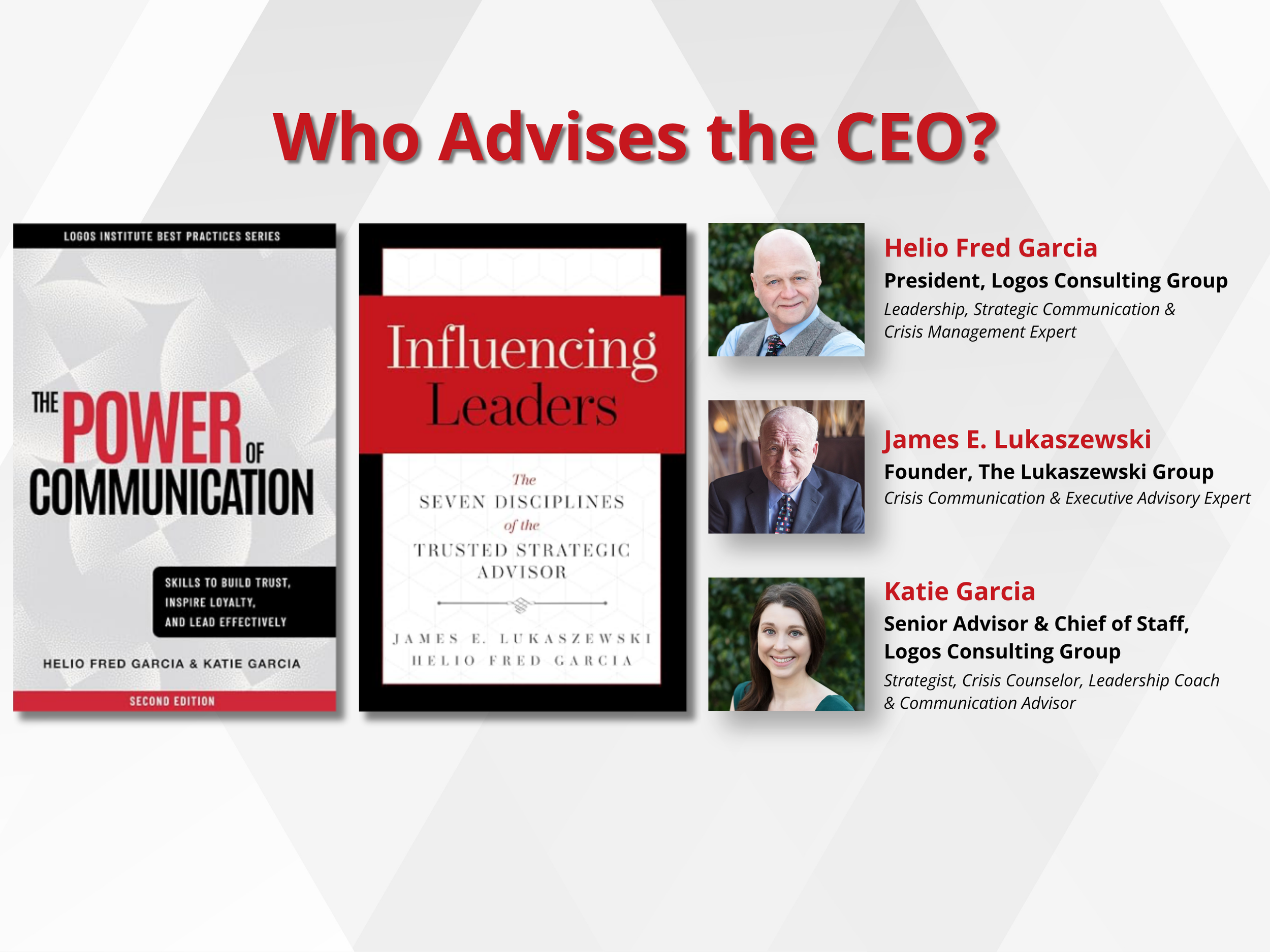
Nov. 10 marks the publication of The Power of Communication: Skills to Build Trust, Inspire Loyalty, and Lead Effectively, Second Edition, by Helio Fred Garcia and Katie Garcia. The book explores how leaders communicate strategically to build trust, inspire confidence and engage stakeholders.
At the same time, CommPRO continues its editorial series featuring insights from Influencing Leaders: The Seven Disciplines of the Trusted Strategic Advisor, Second Edition, by James E. Lukaszewski and Helio Fred Garcia.
The two books approach leadership from complementary perspectives. One examines how leaders communicate and earn trust. The other examines the responsibilities of those who advise them.
Together, they offer an important reminder: Effective leadership depends not only on the decisions executives make but also on the quality, courage and independence of the counsel they receive.
In this installment, “Talents Advisors Need,” Lukaszewski and Garcia identify six essential abilities: initiative, inspiration, intuition, loyalty, urgency and, perhaps surprisingly, inconsistency.
One lesson stands out: Loyalty does not mean unconditional support. The authors describe a “loyalty exception,” arguing that ethical boundaries must ultimately take precedence over personal or professional allegiance.
For chief communications officers, corporate counselors, agency leaders, and board advisors, the message is especially relevant. The most valuable advisor is not necessarily the person who agrees with the CEO. It is the person who has earned enough trust to challenge assumptions, confront difficult realities, and help leaders make better decisions.
Below is the latest excerpt from Influencing Leaders: The Seven Disciplines of the Trusted Strategic Advisor.
Talents Advisors Need
Successfully meeting the expectations of CEOs and leaders requires six special abilities: initiative, inspiration, intuition, loyalty, urgency, and, maybe surprisingly, inconsistency.
Initiative
The most common criticism we hear about outside and inside advisors is that although ideas abound, few advisors seem capable of picking up an idea, developing it, and moving it forward without prompting or specific direction.
Initiative at very senior levels carries significant risks and, quite often, the higher the altitude the more risk-adverse individuals become. Since leaders, for the most part, spend time waiting for things to happen, finish, or progress, those advisors with initiative earn higher levels of respect, attention, and often better pay.
Inspiration
Inspiration is the ability to positively energize others in ways that benefit them emotionally and privately from their perspective. Those who inspire help others see (from their own perspectives) new truths and special insights that affect their emotions, behaviors, and beliefs. Identify those who inspire you.
Quite often, unless someone makes a comment or reveals themselves, inspiration is a private moment of revelation between the individual who presents the opportunity and the individuals who benefit. The isolation of leadership both triggers and inhibits the inspiration of new ideas and creative thinking. The Trusted Strategic Advisor brings the inspirational ingredient to each encounter they have with the boss and others.
This is a quality that can be learned and developed. The best way to learn to inspire is to observe those who inspire you. Learn how they do it. Focus on how they do it. Then do what they do and see if it works for you. Then use that knowledge to develop your own inspirational style. Inspire others. It is truly a gift that is appreciated although often not acknowledged.
Early in his career Fred was inspired by Jim. Fred spent much of his time studying how Jim inspired others, then trying to do the same thing, but in his own voice. Over time, Fred expanded his universe of inspiring behaviors building on those he learned from Jim, doing the same, and also learning by studying other mentors and colleagues.
Intuition
Intuition is among the most unique of the advisor’s special abilities. It is difficult to develop and to cultivate. This exceptional quality of the trusted advisor—the ability to “see” solutions and next-step elements with little evidence and data—is a highly prized skill. You can discipline yourself to develop your intuitive abilities.
On the other hand, those who run organizations, especially large organizations, have a limited tolerance for intuitive solutions and recommendations. Managers today pride themselves on fact-based decision-making.
But it’s one thing to develop an insight based on intuition; it’s another to be able to explain that insight in a way that leaders respond to. Let the intuition be the starting point but explain the insight without using the vocabulary of intuition. Present intuitive recommendations using a process approach so that you can be understood and your ideas acted upon by those you counsel. This includes being able to forecast consequences.
Loyalty
The loyalty of the Trusted Strategic Advisor is based on three factors:
1. Alignment of fundamental principles of behavior, goals, and aspirations.
2. The productive and constructive chemistry created between individuals who work well together toward mutually agreed-upon goals.
3. A relationship based on candor and responsiveness to issues and questions that matter. Loyalty is the conscientious alignment of goals, interests, and actions.
Loyalty is an intentional element in a relationship. It is a key ingredient between the trusted advisor and those who are coached and counseled.
Advising at senior levels also automatically makes you the eyes and ears for those you counsel. It is a part of the information base that informs your advice. Successfully advising and coaching senior people requires a high level of personal candor, about the leaders themselves, and about the what and the why of what is happening around them. Loyalty is more than following, it is actively engaging in the successful progress of leadership ideas combined with continued verbalization and analysis of organizational behaviors, decisions, and actions.
The Loyalty Exception: The loyalty exception refers to the fact that sometimes we stay and help people who either don’t deserve it or who are having problems we think we can help with, but it never really works out that way. So the loyalty exception says if it is immoral, impossible, irregular, or unethical, you need to leave, rather than continue helping people in those positions.
Urgency
Time is the universal perishable. Urgency is achieved when time is, or is used as, a driving force. Urgency is created when the loss of time has real consequences. If things are important, it is because time is a big factor. If matters are urgent, it is because time may be running out. From an advisor’s point of view, urgency means using time wisely by saying things powerfully and briefly. And by using the pressure of time to constructively increase the importance of all actions.
Setting priorities establishes a sense of urgency. Resolving issues and problems quickly and effectively also creates urgency. Applying pressure to get things done at the earliest possible time, often for the most important of reasons, creates urgency.
Urgency is a double-edged tool. Used to motivate, inspire, and energize, urgency can be a constructive and productive force. Used to intimidate, badger, and bully, urgency can be destructive, corrosive, and have long-term negative impact.
Inconsistency
One of the greatest gifts of the strategist is the ability, in fact, the intention to see things from multiple points of view. Sometimes, this may seem to be recommending things that are inconsistent. Organizations that seek consistency are rarely successful for lengthy periods of time. The hallmarks of inconsistency are:
• Always seeking alternatives.
• Believing in laggership and entropy, as opposed to speed and stealth.
• Intentionally explore different views and analyses.
• Question all assumptions.
• Simplify, simplify, simplify.