

Phil Nardone on 2027, AI and the Changing Value of Communications

It's always a pleasure catching up with Philip A. Nardone Jr., CEO of PAN Communications. Phil and I have known each other for years, and I've always appreciated his perspective on our industry, particularly his understanding of the relationships that make this business work. We last spoke about six months ago, so with 2027 planning now underway, I wanted to reconnect and hear what he's seeing in the marketplace, how PAN is approaching artificial intelligence and what he believes communications leaders should be thinking about as they prepare for the year ahead.
We began with the pressures facing agencies and their clients, and Phil was quick to point out that expectations are changing. "Clients want more and more of an impact from every dollar that they're spending," he told me. "Budgets are under a microscope, and every line item has to show its value to the business." It's a reality that many of us are experiencing, but Phil sees additional challenges coming from changes within client organizations themselves. CMOs are moving between positions more frequently, new executives are taking responsibility for agency relationships and each leadership change can bring a different set of priorities and expectations. Add economic uncertainty and the broader business environment, and agencies are finding themselves under increasing pressure to demonstrate their value while navigating relationships that may be changing around them.
"Everyone, including CCOs and corporate marketing people and agency executives, are all being asked to do more for less," Phil said. That pressure is helping accelerate the industry's adoption of AI, although he believes the conversation needs to move beyond the technology itself and focus on how it can make agencies more effective. Phil laughed when he mentioned an upcoming Page Up conference where he'll be speaking about mentoring and developing the next generation of leaders. The organizers have decided to limit the AI discussion to just three minutes because, as he pointed out, it could easily consume the entire hour. That says something about how much attention AI is receiving, but it also raises an important question about how agencies are actually putting it to work.
At PAN, Phil explained, the goal is to improve efficiency while giving employees more time to concentrate on the work that requires human experience and judgment. AI is increasingly being used for time-consuming activities such as research, drafting, monitoring and reporting, allowing teams to devote more attention to creativity, strategy and client counsel. What interested me was his emphasis on involving employees in the process rather than simply introducing new technology and expecting everyone to adapt. Phil believes agency professionals should help shape the tools they use, and PAN is taking that approach as it prepares to launch PANda, its own in-house AI platform. The agency has also established policies emphasizing transparency and oversight, with the intention of ensuring that AI supports and strengthens the expertise of its people rather than replacing it.
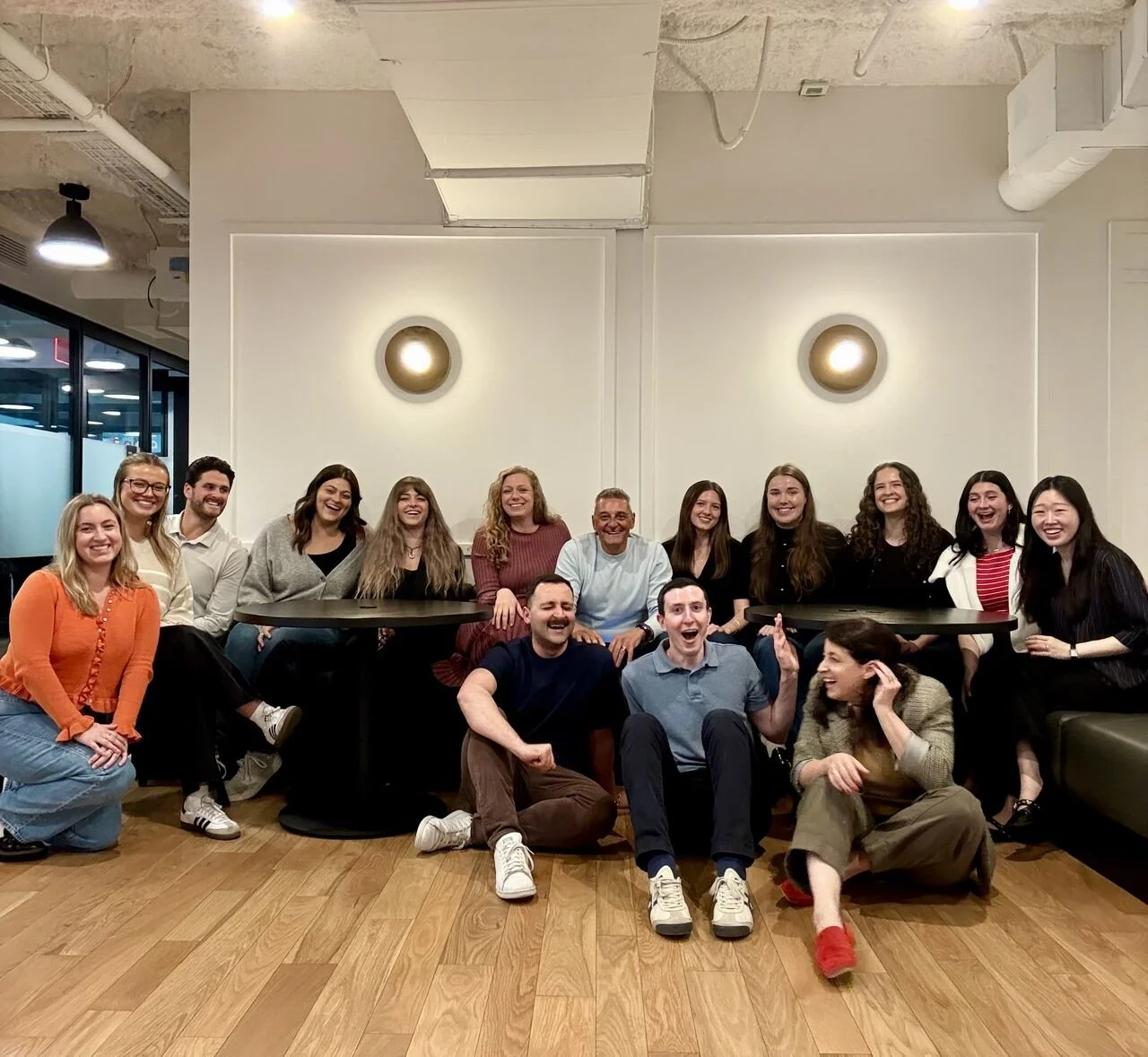
Phil with employees from PAN’s New York City office.
Our discussion about AI naturally led to a broader conversation about what clients will expect from agencies in 2027. Phil believes the traditional agency model, which many of us grew up with, is undergoing a significant shift. For years, public relations was largely an activity-driven business, with agencies evaluated on the work they produced and the results they delivered. Media placements, campaigns, reports and other deliverables were important measures of performance, but Phil believes clients now expect agencies to connect those activities much more directly to business outcomes. "Agencies that are only selling activities are going to struggle," he said, adding that the agencies that thrive will be those that connect brand strategy to demand and can demonstrate the impact of their work.
That shift also has implications for how organizations communicate across different channels, particularly as AI changes the way people search for and receive information about brands. Phil emphasized the importance of consistency across earned, owned, paid and shared media, explaining that disconnected messaging can become apparent in AI-generated answers. For communications leaders, this means thinking beyond individual campaigns and making sure the organization's broader communications efforts are working together. It's no longer enough for different teams to operate independently if the audience, or an AI platform answering questions on its behalf, is drawing information from multiple sources. The brand needs to tell a consistent story, and communications professionals need to understand how that story connects to the organization's business objectives.
When I asked Phil what he would tell a CCO preparing a 2027 plan, he returned to the importance of measurement and accountability. His advice was to invest in measurement that can be brought into conversations with the CEO and CFO, particularly information that demonstrates how communications contributes to business performance. At PAN, the agency uses PANoptic reports to measure performance across areas including share of voice, lead generation and the connection between brand-building activities and demand. But Phil's larger point was about the questions communications leaders should be asking of their agency partners and their own teams. What are we accomplishing? How are we measuring it? And can we explain the value of that work in terms that business leadership understands?
I've heard variations of this conversation throughout our industry for years, particularly when we talk about communications earning greater influence in the C-suite. What struck me about Phil's comments was how closely he connected that influence to the changing expectations of clients. Agencies need to be more than providers of services, and communications executives need to be more than managers of programs. They need to understand the business, anticipate what leadership needs and demonstrate how their recommendations contribute to the organization's success. AI may help them work faster and provide better information, but it doesn't eliminate the need for experience, strategic thinking or the ability to earn someone's trust.
And that brings me to what I appreciated most about our conversation. After talking about budgets, AI, changing agency models and measurement, Phil returned to something that has always been central to his leadership philosophy: people. "Don't lose sight of people," he told me. "Certainly AI changes the work, but the talent, the judgment, and relationships to me are still what carry a brand through a tough market." Anyone who knows Phil understands how strongly he believes in developing talent and building relationships, and I was glad to hear him emphasize that those priorities remain just as important as agencies embrace new technology and adapt to changing client expectations.
As we head into 2027, I think Phil has given us a lot to consider. Our industry is being challenged to demonstrate greater business value, adopt new technologies and rethink some of the ways we've traditionally worked. Those changes are real, and they aren't going away. But what stayed with me after our conversation was Phil's belief that the future of the agency business still depends on the people behind it, their ability to provide sound counsel, build trusted relationships and help clients navigate an increasingly complicated business environment. Technology will continue to change how we do the work, but understanding people and earning their trust will remain at the heart of what makes communications valuable.
