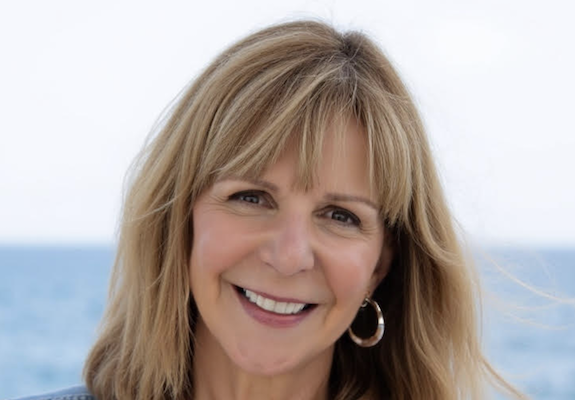

Lauren Lawson-Zilai — A Capitol Communicator Profile
Photo credit: Shala Wilson Photography
Editor’s Note: Capitol Communicators is a profile series spotlighting the people shaping the present and future of advertising, digital, marketing and public relations in the Mid-Atlantic. This profile features Lauren Lawson-Zilai, Founder and Principal, Zeal Communications.
“A woman of causes,” is how Lauren Lawson-Zilai describes herself. Indeed, she’s focused her PR work on mission-driven nonprofit organizations; and is always volunteering for causes dear to her heart. In fact, the list of her volunteer activities – past and present – goes on for pages. It includes leading both PRSA-NCC and WWPR; serving on the PCDC Steering Committee and advisory boards of the National Digital Roundtable, Ragan Communications, NBC Washington’s Community Action Board; being a PRSSA advisor and active in her church, and always finding time for the Girl Scouts, as a member of the National Capital chapter’s Women’s Advisory Board and troop co-leader.
As many of us shared our 9/11 memories, she revealed that she was in New York, volunteering and watching children at an emergency operations center, while their parents went off to search for loved ones and victims.
Somehow, she manages to do all of this with full time jobs, having held leadership roles at national and international nonprofit organizations before founding her own firm, Zeal Communications, almost a year ago. She continues to support nonprofits and has expanded her work into other areas that interest her, such as promoting books and book authors. The name of her firm embodies her drive and energy.
One of her favorite quotes is Winston Churchill’s “we make a living by what we get, but we make a life by what we give.” No matter how busy she is, Lauren is a person who shows up. And our community is better for it.
Lauren, please tell us about yourself.
I like to say I’m powered by purpose. I have more than two decades of philanthropy and nonprofit experience, including senior communications leadership roles at Goodwill Industries International, the National Head Start Association and the Children’s Defense Fund. On a professional level, I am committed to equitable opportunities for children and youth and to helping people reach their full potential, work I now carry forward as founder and principal of Zeal Communications, where I partner with entrepreneurs, mission-driven organizations and authors aiming to strengthen their leadership voice, clarify their positioning and increase their influence. I stay deeply engaged in the field by serving as a steering committee member of the Progressive Communicators of PCDC, the Hall of Fame Chair for the Public Relations Society of America, a Community Action Board member for NBC4 Washington and as an Advisory Board Member for the National Digital Roundtable and PR Daily.
On a personal level, I am a volunteer and board leader, serving on the President’s Leadership Council at my alma mater, Lycoming College and the Girl Scouts Nation’s Capital Women’s Advisory Board.
What are the things you are most proud of?
People who know me won’t be surprised by this answer. I’m most proud of founding the Emerging Leaders Awards for Washington Women in Public Relations (WWPR). It’s highly regarded to this day and distinctive for what it symbolizes.
The ELAs were created in 2010 as a special accolade for young women active within the communications field who were making a significant impact on the industry but were not being recognized due to age or years of experience, even if they had founded businesses at a young age or done extraordinary things in their careers. Most industry awards reward tenure and titles. This one exists specifically because talented young women were being overlooked by those criteria.
The ELAs were intentionally created in 2010 to mark a milestone in WWPR’s history as it was the 30th anniversary so the program has a built-in institutional weight. The award initially recognized three honorees. Six years after its debut, I was asked to lead a group to focus on the strategic vision for the awards. It was during that time that we conceptualized broadening the nominees to represent various categories including, global and large agencies, small/boutique and mid-sized agencies, and government, corporate, trade association and nonprofit organizations, to represent the full spectrum of communications leaders.
Another unique aspect about the ELAs is that they’re exclusive to the D.C. market and rare in that respect. WWPR describes itself as the only professional society for female communicators in the greater capital area, so the ELAs function as the singular “rising star” recognition for women in this specific, high-density PR market rather than competing with a dozen similar regional awards.
One of our first honorees was Carrie Fox so it seems fitting that she is one of three finalists selected for this year’s WWPR Woman of the Year.
Lauren, you have a most amazing list of volunteer activities! Why is volunteering so important to you?
Volunteering has been part of who I am since long before it became anything else. I would say it only grew stronger during undergrad, because service wasn’t treated as an extracurricular there. It was woven into the mission itself. I have always had an undeniable conviction to help people in the world: people with economic challenges, people with disabilities or disadvantages. I have been called “a woman of causes.” I believe that service is what holds us together as a community and a nation. It’s the backbone we don’t often see, but it’s what makes us whole.
We all come into this world with enormous potential to create, to contribute and to achieve. Tragically, millions of us see those possibilities evaporate as we encounter inadequate education, limited access to opportunity, poverty, and even violence or other trauma.
Later in life, reclaiming that potential becomes extremely difficult for a variety of reasons including multigenerational, community health or systemic inequalities or discrimination.
It’s imperative that all people have access to quality education and training, and to essential needs like housing, nutrition, health care, transportation and wraparound supports, so that individuals, communities and our entire society can thrive.
I remember a friend gifted me an air freshener that hung from my rearview mirror 20 years ago that read, “Stop me before I volunteer again.” It was meant to be funny, but it resonated with me so much. I have always felt a calling to volunteer and to be part of something bigger than myself. It’s what I’m most passionate about. Volunteering has always introduced me to people I admire and shown me a version of resilience and generosity I wouldn’t have encountered otherwise.
You recently went out on your own, opening Zeal Communications. What sparked that change, and how is it going?
I’d always been encouraged to go out on my own, but the idea felt overwhelming and intimidating. Several factors were at play. While leading brand and communications work at Goodwill and Head Start, I was essentially counseling matrixed, chapter-based organizations with complex, mission-driven operations. At Goodwill, that meant overseeing marketing and communications tied to nearly $100 million in grant investments and serving as national spokesperson and crisis lead. At Head Start, it meant shaping public affairs communications for a mission touching more than 700,000 children nationally. In both roles, I functioned as the internal agency and a strategic counselor to leaders at every level on media, messaging and reputation, and increasingly, some of that complexity became politically driven.
That experience made launching my own agency by representing Head Start state associations across the country feel like the natural next step. Because these associations depend on federal funding, they typically have lean teams with often one person leading communications alongside several other roles. At a moment when many Head Start programs were facing the greatest unprecedented threat to the program’s future in its 60-year history, I stepped in to fill that gap: leading webinars for stakeholder audiences, providing media training, building messaging, templates and toolkits, and supporting local grassroots advocacy.
My client base has since grown to include authors, thought leaders, and local and national nonprofits. I credit that growth almost entirely to past connections, valued relationships and word of mouth. On a personal level, given where I am in life — aging parents and a soon-to-be teenage daughter — it felt like the right time to make the leap. My client roster is certainly busy, but I also can be there for my family in ways I haven’t been previously.
Did all your connections and volunteer work help you when you decided to go out on your own?
When I decided to go out on my own, everything I’d built over the previous two decades, both my professional connections and my volunteer relationships, became the foundation I built from.
What has been interesting is that I have found myself having a full-circle moment as I am representing thought leaders and authors, which is work I did early in my career at Penguin Putnam, Simon & Schuster, Hachette and Regnery after completing the Denver Publishing Institute, an invite-only graduate program covering editing, marketing, textbooks and journals. Back then, I represented physicians, politicians, celebrities, wealth-building thought leaders and commercial fiction authors, and later, when I moved into the nonprofit sector, I promoted books for the founder of the first major national food allergy organization and Marian Wright Edelman, founder of the Children’s Defense Fund.
At a time when the publishing world is changing, with much more reliance placed on the author to build and sustain their own audience, my work today is focused on developing speaking events, cultivating influencer relationships, and generating media coverage that supports long-term platform building rather than a single launch moment. It’s the same instinct I’ve always had for finding the right story and the right home for it.
You have worked at three large nonprofits. What recurring challenges or lessons have you seen across all three—and what have those experiences taught you about what makes a nonprofit thrive?”
My career has spanned national nonprofit organizations, including, Goodwill, the National Head Start Association, the Children’s Defense Fund and Shatterproof. These organizations couldn’t look more different on the surface: job training, early childhood education, and addiction recovery; however, I’ve noticed the same handful of challenges show up everywhere.
The first is the importance of trust. At Goodwill, I spent years combating a viral rumor about executive pay that had circulated for over a decade and had nothing to do with reality. It didn’t matter how much good the organization did on the ground; the story people believed shaped whether they would donate or shop there. At Shatterproof, we worked daily to end stigma related to addiction and substance use disorder, which meant we had to educate and dismantle a false narrative at the same time. The lesson is that nonprofits can’t just do good work and assume the public will find out. You have to actively and continually defend and shape the story or someone else will write it for you.
The second is that funding cycles create a structural tension between mission and survival. Whether it’s grant-funded workforce programs at Goodwill, federal appropriations tied to Head Start, or a newer organization like Shatterproof building sustainable revenue from scratch, I’ve seen how dependent impact is on the health of the next funding cycle. The nonprofits that thrive are the ones that treat fundraising and communications as inseparable. Rising Together, the initiative we built at Goodwill to get a million people into sustainable careers, only worked because we could show funders and partners like Bank of America and Google exactly what their investment produced.
The third is high-impact partnerships that help advance a mission, expand relevance, drive measurable value and help an organization move the needle at scale. At Head Start, that meant unlikely alliances, like Natalie Merchant donating an early-learning arts curriculum, or Girl Scouts partnering on school readiness. At the Children’s Defense Fund, a policy organization founded by Marian Wright Edelman out of the Civil Rights Movement, partnerships with the faith community, coalitions of child advocates and state and federal officials are what turn research into actual legislative change. At Goodwill, it was corporate donors, influencers and celebrity ambassadors that played a role in the number of people we could serve as well as engagement, brand visibility, and program innovation.
The common theme is that no nonprofit, however mission- or talent-driven, has enough resources on its own. The organizations that thrive are the ones whose leadership treats external relationships as core strategy. The nonprofits that struggle are the ones that treat storytelling, funding and partnership as separate departments instead of one interlocking system that must work together for the mission to survive.
What are the skills that are necessary to be successful today?
I would say a lot of what is stated in the Cision “Inside PR” 2026 report is what is needed in today’s PR environment including, storytelling and content creation, which I see cited more and more in job listings along with media relations, strategic planning, AI integration and adoption, and writing. Beyond these skills, adaptability, emotional intelligence, critical thinking and being a lifelong learner is so important. When I gave the commencement speech to my alma mater in 2012, I said that most of the jobs that would be available in their graduation in four years were not yet in existence. That still applies today.
There are also attributes that are essential. One is networking in terms of building relationships, showing genuine interest in people and listening to their stories, especially in D.C., which I consider a small town. This helps people buy into your vision and strategy.
The second is being tenacious and persistent to chase down the elements of the great story you want to tell, to persuade people to take a desired action or pitch stories to the media.
How are you employing AI in your work?
I use it in my work to refine content, conduct research, generate project reports for clients, monitor a client’s media coverage, pull media lists and run competitor analysis. I also lean on it for early-stage idea generation and brainstorming, proofreading and sentiment tracking across a client’s coverage. I’ve heard the expression that AI is like a glorified intern, and I think that is true. You need to train it, guide it and check its work. You can’t hand over the keys without guardrails.
What brings you joy during the day?
Being in community, collaborating and making an impact brings me joy.
What advice helped you most in your career, and is that advice still relevant today?
Live your life in seasons. I was told this when I was part of the senior leader program at Goodwill and was balancing a demanding career and a two-year-old at home. This really reframed everything for me. I used to think success meant a straight, upward line: bigger title, bigger organization and bigger platform. That mindset is exhausting, and honestly, it sets you up to feel like you’re failing a season anytime it looks different than the one before it.
Once I started thinking in seasons instead, my whole career made more sense. There was a season for learning the craft, when I was early in my communications career and needed to absorb everything that I could. There was a season for depth, 15 years at Goodwill, where I expanded my portfolio rather than jumping every two years for a title bump. There was a season for mission-driven urgency, when I moved to the National Head Start Association at a moment when the program was facing real, existential threats to its funding and I felt called to be in the fight directly. And there is the season I’m in now, building Zeal Communications, which requires a completely different skill set: not just doing the work, but building the business around it.
None of those seasons looked like “career progression” in the traditional sense. Founding my own firm later in my career, after two decades in-house, isn’t the linear path most people expect. But it was the right season for it, shaped by everything I had learned and the relationships I have built along the way.
This advice feels particularly relevant today, given the accelerated pace of change in our industry and in the world. To think in seasons gives you permission to fully commit to where you are right now, whether that is a season of building, a season of learning, or a season of stepping back, without treating every transition as a detour from some fixed plan. I felt this was particularly helpful for me as a driven, type A, perfectionist person.
Is there something about you that might surprise people?
I was Mitt Romney’s first book publicist for his book called Turnaround: Crisis, Leadership, and the Olympic Games. It chronicled his time as president and CEO of the Salt Lake Organizing Committee (SLOC) for the 2002 Winter Olympics, which he took over after a bribery scandal left the Games in disarray. The book details how he restructured the organization, closed a massive projected budget deficit, rebuilt sponsor and public trust, and ultimately delivered what is still widely regarded as a successful, profitable Olympics. It’s often cited in business and leadership contexts as a case study in crisis management and organizational turnaround. He was gracious and lovely to work with and I felt honored that among our team I was chosen to lead his book campaign.
What’s the coolest thing you’ve ever done?
I went paragliding at Torrey Pines in San Diego. It was an in-the-moment decision and I’m so glad I did it though it’s probably the most adventurous thing I’ve done. Earlier in my career, I was working for an agency that had to unexpectedly close its doors. The team had enough lead time. At the same time, an opportunity to travel to South Africa as part of a mission trip opened at my church. I spent three weeks in Sedgefield, Smutsville, and Cape Town, South Africa, working with local children and families.
Given my career, I’ve had the opportunity to meet, work with or represent many celebrities including Cybil Shepherd, Don Knotts, Nicholas Sparks, Kristian Bush (part of Sugarland), Coach K, Natalie Merchant and Whoopi Goldberg. The most interesting was spending a day filming at a Goodwill store in Houston with Beyonce’s mom as part of a philanthropic partnership called “BeyGOOD.”
Capitol Communicators profiles will allow you to meet some of the most interesting and insightful pros in our region, learn how they stay ahead of the curve and pick up practical wisdom during a time of constant change.
Capitol Communicator is a sister company of CommPRO.