
How 'Disability Minute' Became a Model for Inclusive Journalism
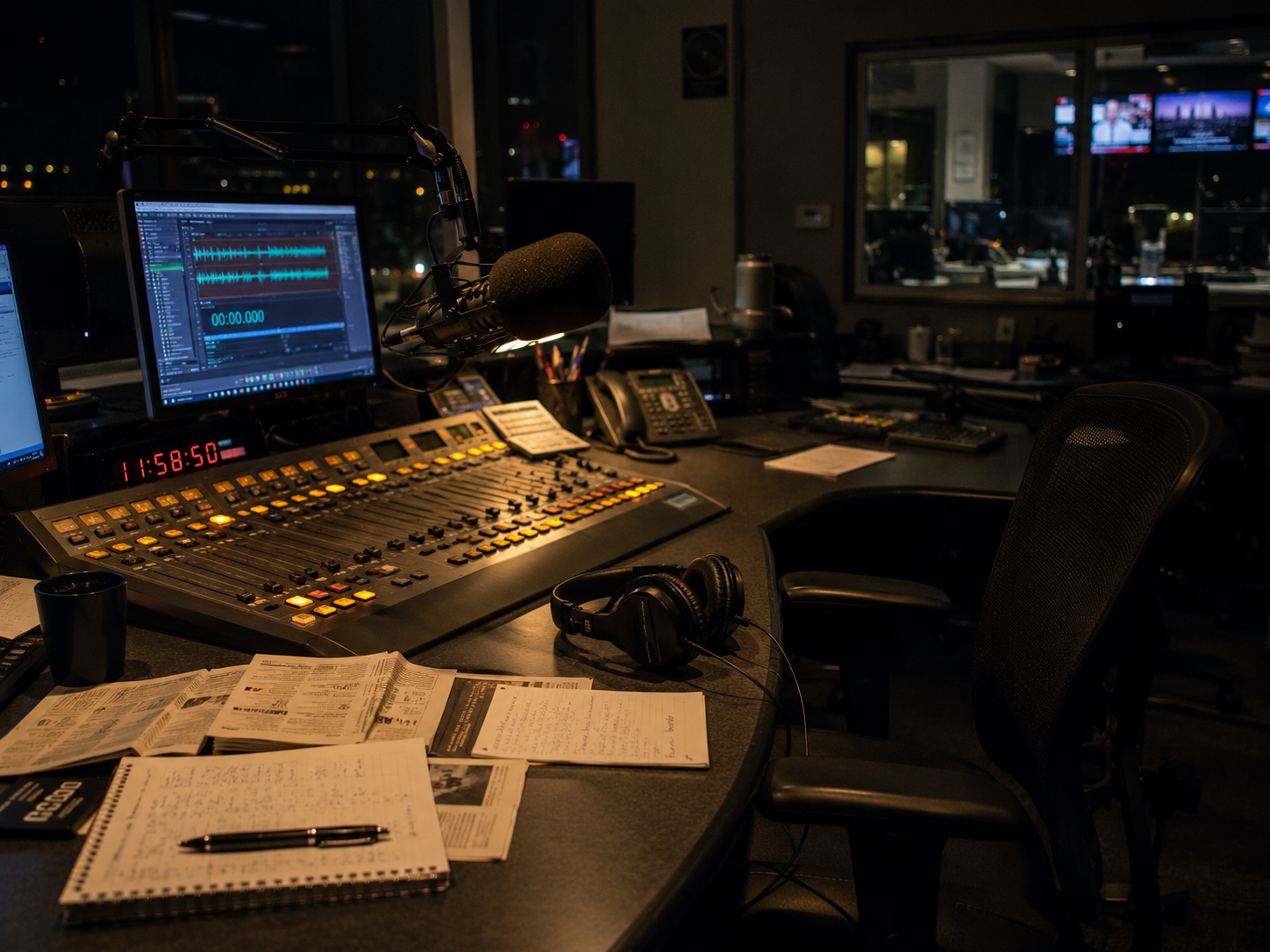
It occupies a special place in broadcast circles.
It is unique in that it may be the only feature segment in America focused on disability-related issues that is produced entirely by people with disabilities.
And at a time when efforts at inclusion are facing pushback, it continues to thrive as it marks its fifth anniversary this summer.
Welcome to the "Disability Minute," a popular segment on Chicago's WBBM Newsradio 105.9 FM that highlights disability news, accessibility, public policy, community resources, and other topics.
"We give Chicagoans with disabilities—and their loved ones—a voice and valuable source of information that they rarely find elsewhere," says Sandy Murillo, associate producer at Chicago Lighthouse Media, a division of The Chicago Lighthouse, which creates and distributes the segment to WBBM, where it airs several times each week.
Celebrating its own 120th anniversary this year, The Chicago Lighthouse is a widely respected social service organization serving individuals who are blind, visually impaired, disabled, and veterans.
In addition to serving as lead producer, Murillo, a journalist by training, is co-host of the "Disability Minute." She also happens to be totally blind.
A 2012 graduate of the University of Illinois, Murillo became only the second totally blind graduate of the university's journalism program.
She describes herself as a staunch advocate for disability inclusion.
"I frequently use journalism to educate the public about equal employment opportunities, accessible technology, transportation, and other issues affecting people with disabilities," Murillo says.
She explains that the seeds for the "Disability Minute" were first sown in 2019-2020 when then-Senior Vice President of Lighthouse Public Relations Dominic Calabrese reached out to now-retired WBBM News Director Ron Gleason and pitched the idea.
"As Chicago's premier news and information station, we all felt it was only natural for WBBM to carry a special segment about the city's large and growing disability community," Murillo says.
Although the idea was put on hold during COVID, WBBM revisited it in 2021, and the first segment aired that August.
Murillo was immediately tapped as lead producer and co-host. She notes that all of her colleagues and co-hosts at Chicago Lighthouse Media—including Kalari Girtley, Maureen Reid, and Nicki Purpura—are blind, while Isabella Chojnacki, also a co-host, is neurodivergent. The studio itself is fully accessible.
"This enables those of us with vision loss to research, write, and record the 'Disability Minute' from start to finish," Murillo says. "Since the mission of Chicago Lighthouse Media is to share news and information produced by and for people with disabilities, the 'Disability Minute' provides us with a perfect vehicle to do that."
Asked to identify highlights from more than 200 segments produced over the past five years, Murillo says it is difficult to choose.
Among her favorites is a four-part series on healthcare disparities affecting patients with disabilities and what medical schools are doing to improve access. She also points to segments about the importance of Braille, sign language, and closed captions.
"These segments help the public understand the importance of each of these methods of communication," she says. "They also teach the Disability Minute team something new."
Murillo says one of her favorite interviews was with Liz Gutman, a writer of audio descriptions for popular series including Netflix's Bridgerton.
"For me personally, it was fascinating to learn what it takes to write effective audio descriptions for viewers who are blind."
For co-host Nicki Purpura, who recently joined Lighthouse Media to further her lifelong interest in advocacy, a favorite broadcast featured Bryan Bashin, president of the Be My Eyes Foundation.
"This interview really stood out to me," Purpura says, "because Mr. Bashin was incredibly passionate about the Be My Eyes app and how it has helped so many blind people. He enthusiastically shared that the future of the app is bright."
Purpura adds that it was especially meaningful to see another blind person serving in a leadership role.
"Representation is still lacking, and it's reassuring to know that an app created for blind people is led by a blind person."
Murillo, Purpura, and the rest of the Chicago Lighthouse Media team are unanimous in their praise for WBBM as a supportive partner.
"From Day One, we have had nothing but positive experiences with WBBM," Murillo says, noting that Ron Gleason was instrumental in helping coordinate the partnership and coaching the team on producing the segment.
"This was essential because we had never produced this type of broadcast before."
She also extends appreciation to current WBBM producer Chris Lopez, who ensures the segment airs on time each week, as well as Craig Schwalb for his continued support.
Lopez says the station's diverse audience includes many people with disabilities, making the feature especially valuable.
"We're very fortunate to have this partnership with The Chicago Lighthouse and for what they bring to our airwaves every week," he says.
"The 'Disability Minute' is unlike anything else we do at Newsradio. While we have partnerships with organizations across Chicagoland, the content from The Chicago Lighthouse stands apart. We're grateful for the opportunity to shine a light on an important part of our larger Chicago community."
Looking ahead, Murillo says there are many topics still to explore.
"One area we want to cover more is invisible disabilities and the issues people with those disabilities face. Disability cannot always be seen, so covering invisible disabilities is just as important as talking about vision impairment, cerebral palsy, and other more visible conditions."
Purpura would like to examine the pros and cons of using a white cane versus a guide dog and explain the orientation and mobility skills required before someone can qualify for a guide dog.
"I would also like to discuss the benefits and drawbacks of AI when it comes to accessibility," she says.
Purpura notes that members of Chicago's disability community have responded enthusiastically.
"My disabled friends who have heard the program have been interested in learning more about the topics we've covered. They've also been impressed that the recording studio is fully accessible and that everyone on the team has a disability."
Murillo says Lighthouse Media regularly hears from both disabled and non-disabled listeners.
"They often comment on how much information we're able to pack into one minute and how it has helped them or their loved ones," she says.
"In the past couple of years, we've also received calls from organizations and individuals pitching story ideas for the 'Disability Minute.' That's a great indicator of how widely respected the segment has become—not just in the Chicagoland area, but in other states as well."
Looking ahead to the next five years, Murillo hopes the segment will continue to grow.
In addition to airing on WBBM, the "Disability Minute" is shared through The Chicago Lighthouse's social media channels, YouTube, and reading services across the country.
"While that's wonderful, we'd love to see other national outlets someday share the 'Disability Minute' on their platforms," Murillo says.
Purpura shares that optimism.
"I am thrilled to be part of such a dynamic team and to work on a broadcast that engages and informs both disabled and non-disabled people. With the momentum we've built over the last five years, I can't wait to see what the next five years have in store."