

Consumers Declare the Browser Broken as Digital Fatigue Forces a Revolution
What you will learn from this article
Why traditional “one-size-fits-all” browsers are fueling digital burnout and what that means for audience attention.
How personalization, focus, and AI-driven organization are redefining productivity and user experience online.
What communicators can learn from Shift’s user-first model to build digital experiences that respect time, privacy, and intent.
The browser, the gateway to our digital lives, has officially hit a breaking point Legacy browsers are no longer serving the users they were built for.
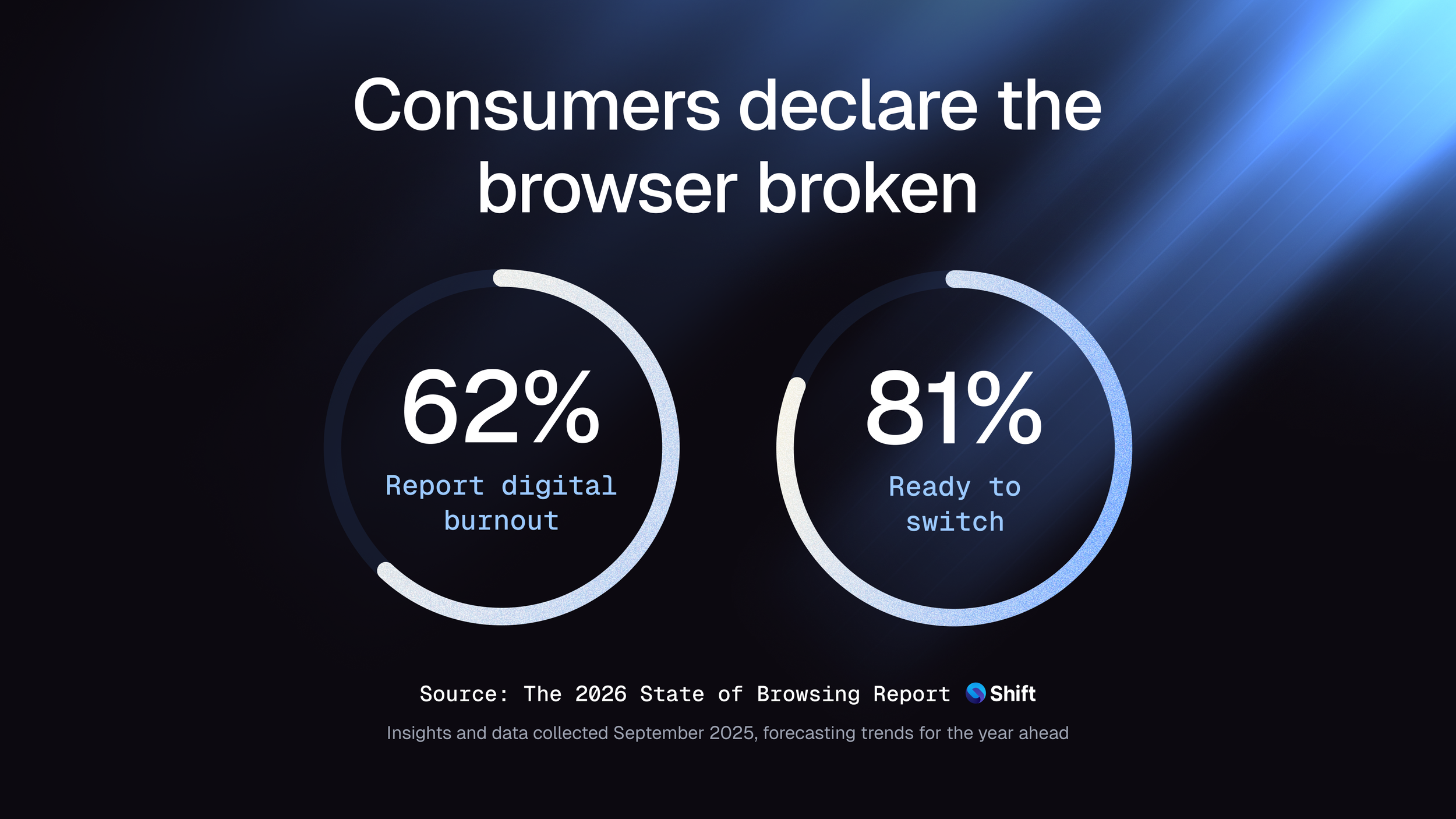
Shift’s 2026 State of Browsing Report, based on a September 2025 survey of 1,000 U.S. adults, exposes a deep well of digital fatigue. More than half of Americans (62%) experience regular or occasional burnout from technology that is indifferent to how they actually work and live. Eighty-one percent of users are willing to switch for greater personalization, signaling that the passive “container” era is over.
Neil Henderson, CEO at Shift, puts it bluntly, “The one-size-fits-all browser is the source of the problem. For years, browsers have acted as static windows to the web. This data shows users want something more dynamic, a browser that reflects how fragmented, fast, and personal our online lives have become.”
The report makes it clear: clutter is the enemy of focus. Thirty-one percent of users say they struggle to disconnect, and another 31% rarely unplug at all. The result of the old model is a "tangle of tabs, windows, logins, and apps." The main culprits of distraction—constant tab switching (20%) and endless notifications (16%)—have turned the passive browser into a chaos engine. The result: 43% of users admit to losing focus at work multiple times a day, with social media ranking as the top culprit.Audiences are demanding simplicity, control, and authenticity in every digital interaction. Just as consumers now expect their browsers to adapt to them, they expect brands to deliver communication experiences that fit their personal rhythms—contextual, frictionless, and human.
The Browser as a PR Control Hub
For agencies and in-house teams alike, personalization starts at the browser level. Having a customized workspace built for communicators means no more juggling dozens of client logins, content platforms, and analytics tabs.
Shift’s customizable workspaces allow professionals to organize clients, campaigns, and tools into dedicated Spaces, keeping everything from Google Drive folders and media lists to social dashboards and reporting tools within reach but never overlapping. The result? Less chaos, faster collaboration, and more control over what truly matters.
Communicators can move seamlessly between client profiles, social accounts, and content management tools without logging in and out or losing track of context. It’s a smarter way to work in an industry that thrives on precision and speed.And for agency teams, that personalization starts at the browser level. Having a customized workspace built for communicators means no more juggling dozens of logins, open tabs, and client dashboards. Instead, PR professionals can organize client profiles, campaigns, and tools into dedicated Spaces which helps keep projects organized, media lists, content calendars, and analytics dashboards all within a custom space or dashboard.
Designing for Focus and Flexibility
The data backs it up. Ninety-two percent of users say having a browser that fits their workflow matters. They want features that streamline focus: multiple account management (39%), project organization (34%), and distraction blockers (31%) top the list.
For agency teams managing multiple clients or campaigns simultaneously, these same capabilities translate into measurable time savings and better control of message alignment across channels.
And while AI adoption is climbing, privacy concerns remain significant, with 45% citing data use as their top barrier. Still, nearly half of users (49%) see AI as an ideal tool for research and insight—signaling an appetite for technology that supports, not supplants, human thinking.
A Blueprint for the Future of Work
Shift’s next-generation browsing experience points to a broader transformation underway across industries: a return to intentional, human-centric design.
For communicators, it’s a timely reminder that technology should amplify clarity, not clutter it. As Henderson notes, the browser revolution isn’t just about software, it’s about reclaiming focus in a fragmented world and empowering professionals to work, think, and communicate with purpose.