

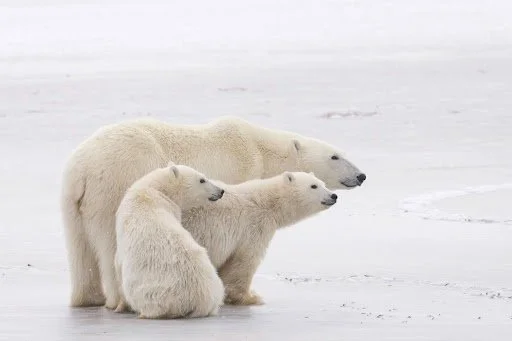
© Erinn McNicol, Polar Bears International
Fifteen years ago, a handful of partners set out to bring the polar bear migration to audiences around the world. What we built together became a global platform for conservation, education and climate action, and a lasting lesson in why communications belong at the start of the plan.
Most of what we work on in a given week eventually fades into the background. We move from one project to the next, meet our deadlines, tell our stories, and hope the work makes a difference. Every so often, though, a project we're part of becomes something far bigger than any one of us could have built alone.
That's what happened in Churchill, Manitoba. Fifteen years ago, Fabric Media was invited to work alongside Polar Bears International, explore.org, and Frontiers North Adventures as they launched live cameras documenting the annual polar bear migration. Looking back, the most valuable thing about our role wasn't any single tactic. It was that we were brought in early enough to help shape the story from the beginning.
A Shared Idea, Built Together
Working with our partners, we helped shape the idea behind Polar Bear Week, an annual campaign designed to draw global attention to polar bears and the rapidly changing Arctic they depend on.
None of us fully anticipated what would happen next. We expected the live feeds to earn media attention and draw viewers curious to see polar bears in the wild. We didn't expect how many people would tune in, or how deeply something as simple as bears gathering along Hudson Bay would resonate with millions around the world.
What began as a campaign grew into an annual global event, embraced by scientists, schools, zoos, wildlife organizations and families. The cameras became an important part of explore.org's live nature network. Churchill gained wider visibility as a wildlife destination, and a global audience came to know the scientists, conservationists and local residents working to protect polar bears.
A Front-Row Seat to a Changing Arctic
The story unfolding on those cameras is both extraordinary and increasingly concerning.
Every autumn, hundreds of polar bears gather along the shores of Hudson Bay near Churchill, waiting for the sea ice to freeze so they can return to hunting seals. It's one of nature's great seasonal gatherings and a rare chance to observe the world's largest land predator.
But the bears now spend three to four weeks longer on land than they did in the 1980s, as rising temperatures delay the return of sea ice. With less time to hunt, they must rely longer on stored fat. The Western Hudson Bay population has declined by approximately 50% since 1979, and researchers are seeing fewer females becoming pregnant.
For communities like Churchill, more time on land also means more opportunities for dangerous encounters between bears and people. So while Polar Bear Week began as a way to celebrate and understand the species, its mission now includes an increasingly urgent question: How do we help people and polar bears coexist in a rapidly changing Arctic?
From Cameras That Inspire to Cameras That Protect
This year's Polar Bear Week, held November 1–7, showed how far that original story has traveled. Polar Bears International spotlighted new technologies designed to protect both polar bears and Arctic communities.
Among the newest is Bear-vision, a smart camera system being tested at Churchill's waste facility. Think of it as a doorbell camera for polar bears. Built on security camera technology and image-recognition software, it is being developed to recognize approaching bears and give early warning before a dangerous encounter. The first deployment is gathering data to refine the system and train it to send automated alerts.
Bear-vision builds on PBI's Bear-dar radar detection system, with the goal of a more affordable, accessible tool that remote communities and camps could one day use. It's a fitting full circle: cameras that once invited the world to watch polar bears are now being designed to help keep bears and people safe.
PBI is also working with Brigham Young University and Churchill's Polar Bear Alert Program to test drones as a non-lethal way to move bears away from populated areas. Preliminary research shows promise, and scientists are investigating new deterrents involving sound, conductive materials and specialized sprays.
Some of the most effective solutions are decidedly low-tech. After a 2024 fire destroyed Churchill's waste facility, PBI worked with the community to strengthen electric fencing, improve landfill security and install bear-resistant waste bins. Later this month, PBI will launch a Dumpster Drive fundraiser to buy eight more bear-resistant bins and support waste management in other polar bear communities.
Together, these efforts reflect a broader change in conservation: connecting research, technology and local knowledge to build practical solutions for communities already living with climate change.
What Fifteen Years Taught Us
Technology has changed. The audience has grown. The challenges facing polar bears have become more urgent. But the idea at the heart of the partnership hasn't changed: when people have a chance to connect with the natural world, they are more likely to understand what's at stake.
For anyone leading a mission-driven organization, bring communications into the room while the strategy is still taking shape, not after the decisions are made. When storytelling is part of the plan from day one, a campaign can become a platform for education, a live video feed can build an international community, and a simple idea can sustain support for science and conservation long after the launch.
Awareness alone won't save polar bears. Addressing climate change remains essential to protecting the sea ice they depend on, and the work in Churchill shows how much science, community collaboration and continued investment it takes. But meaningful change often begins when people are given a reason to care.
Fifteen years ago, we were proud to help our partners invite the world to watch polar bears waiting for the ice. Today, we're watching scientists and communities develop new ways to help those bears survive as the ice arrives later. The work carries on, and so does the story.
To experience the migration and learn about this year's conservation innovations, visit Polar Bears International or watch the live polar bear cameras on explore.org.